

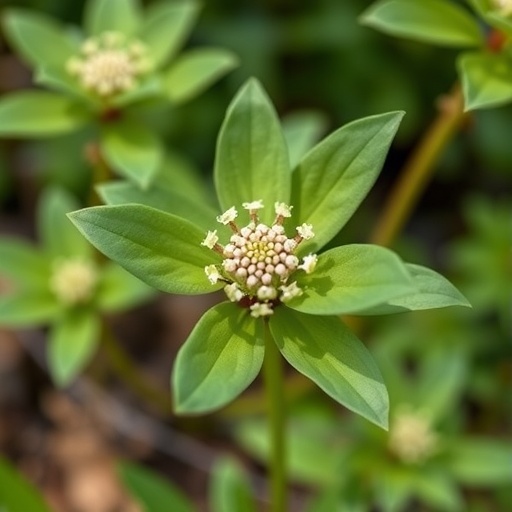
In the rapidly evolving field of ecological research, a groundbreaking study has emerged that tackles one of the most persistent challenges in biodiversity science: mapping the vast and intricate spectrum of global plant traits. This study, spearheaded by Lusk, Wolf, Svidzinska, and colleagues, published in Nature Communications in 2026, deploys the power of crowdsourcing to dramatically enhance biodiversity monitoring, filling critical gaps that have stymied scientists for decades.
Plant traits—the measurable features such as leaf size, seed mass, and wood density—are essential for understanding the roles plants play within ecosystems, their adaptations to environmental pressures, and their responses to climate change. Traditional methods of trait measurement, however, are labor-intensive and geographically limited, leaving wide swaths of the planet’s flora underrepresented in global datasets. This paucity of data undermines our ability to predict ecological responses and craft effective conservation strategies on a planetary scale.
The innovation brought forward by Lusk and colleagues is the implementation of a large-scale, crowdsourced platform that leverages the growing public interest in ecology and citizen science. By combining state-of-the-art mobile technology with rigorous data validation protocols, the authors effectively democratized the process of plant trait data collection. Participants from around the world — including amateur naturalists, students, and professionals — submit detailed observations and images via an intuitive app interface, creating an unprecedented pool of trait information spanning multiple continents and diverse biomes.
One key technical advancement enabling this project is the integration of machine learning algorithms designed to automatically validate, filter, and standardize the submitted data. These algorithms assess image quality, identify plant species using visual recognition, and cross-reference entries against existing taxonomic databases. This not only preserves the scientific integrity of the dataset but also alleviates a traditional bottleneck in biodiversity monitoring: the need for expert verification, which often lags behind rapid data collection.
Importantly, the study addresses geographical and taxonomic gaps that have persisted in global plant trait databases. Regions such as tropical rainforests, mountainous zones, and arid deserts, historically under-sampled due to logistical challenges, experienced a surge in data submissions. The varied backgrounds of contributors, combined with localized expertise, contributed to capturing native and endemic species often neglected in conventional datasets. This novel crowdsourced dataset reveals previously underestimated trait diversity and niche specialization, refining predictive models of ecosystem function.
From a methodological perspective, the authors also detail the calibration and harmonization efforts employed to reconcile crowdsourced data with legacy databases. They applied advanced statistical models to correct for observer bias and uneven sampling intensity, ensuring that emerging patterns reflect true biological variation rather than artefacts of data collection methods. This harmonization process sets a new standard for integrating heterogeneous sources of ecological information in large-scale biodiversity studies.
Beyond just quantity, the quality of trait data collected via crowdsourcing stands as a testament to the potential of public engagement in scientific endeavors. The study highlights cases where citizen scientists collected high-resolution leaf trait data, such as photosynthetic rate proxies obtained through smartphone-based chlorophyll meters or digital leaf area quantifications. These sophisticated data points, once thought accessible exclusively to equipped labs, now surface from field sites across remote ecosystems, substantially enriching the dataset.
The implications for global ecological modeling are profound. Enhanced and more complete trait datasets enable more accurate simulations of vegetation dynamics under various climate change scenarios. Models incorporating these enriched datasets forecast ecosystem responses with greater spatial and temporal resolution. This capability is especially crucial in anticipating shifts in carbon sequestration potential, vegetation community composition, and resilience to disturbances like drought or pathogen invasion.
Furthermore, this crowdsourcing initiative fosters a decentralized and iterative scientific process. By actively incorporating new data in near real-time, researchers can continuously update trait maps, identify emerging patterns, and adapt conservation priorities accordingly. This dynamic monitoring contrasts with traditional static databases often updated sporadically, representing a paradigm shift towards agile biodiversity science.
The study also includes a comprehensive discussion on the ethical and social dimensions of citizen science in biodiversity monitoring. The authors emphasize the importance of designing inclusive platforms that respect local knowledge systems and leverage diverse cultural understandings of plant ecology. They argue that empowering communities not only democratizes science but can catalyze stronger conservation outcomes through enhanced local stewardship.
Notably, the research team collaborated with global botanical gardens, academic institutions, and non-governmental organizations to scale the project infrastructure and outreach. This collaborative model exemplifies the increasingly networked nature of contemporary ecological research, where data sharing and cooperative partnerships are essential elements in addressing planet-wide environmental challenges.
While the crowdsourced approach offers many advantages, the authors also candidly address limitations. For instance, certain subtle or highly specialized traits remain difficult to capture remotely without expert intervention or specialized equipment. Additionally, despite machine learning safeguards, some species misidentifications persist, necessitating ongoing refinement of algorithms and user training.
Looking forward, the researchers propose integrating emerging technologies such as drone imagery, hyperspectral sensors, and environmental DNA sampling to complement and further enhance crowdsourced trait datasets. These hybrid approaches promise to unlock new dimensions of biodiversity assessment, moving beyond traditional morphological traits to molecular and physiological characterizations at unprecedented scales.
In essence, this study represents a watershed in ecological science by harnessing collective intelligence to map the living characteristics of plants on a global scale. By bridging technological innovation, public participation, and rigorous scientific methods, Lusk, Wolf, Svidzinska, and their team open new frontiers in understanding and protecting Earth’s botanical heritage amidst accelerating environmental change.
As humanity confronts the twin crises of biodiversity loss and climate disruption, the implications of this research resonate far beyond academia. It demonstrates the transformative power of integrating technology and citizen engagement to generate actionable knowledge essential for securing a sustainable future for both natural ecosystems and humankind.
Subject of Research: Crowdsourced biodiversity monitoring and global plant trait mapping
Article Title: Crowdsourced biodiversity monitoring fills gaps in global plant trait mapping
Article References:
Lusk, D., Wolf, S., Svidzinska, D. et al. Crowdsourced biodiversity monitoring fills gaps in global plant trait mapping. Nat Commun (2026). https://doi.org/10.1038/s41467-026-68996-y
Image Credits: AI Generated


