


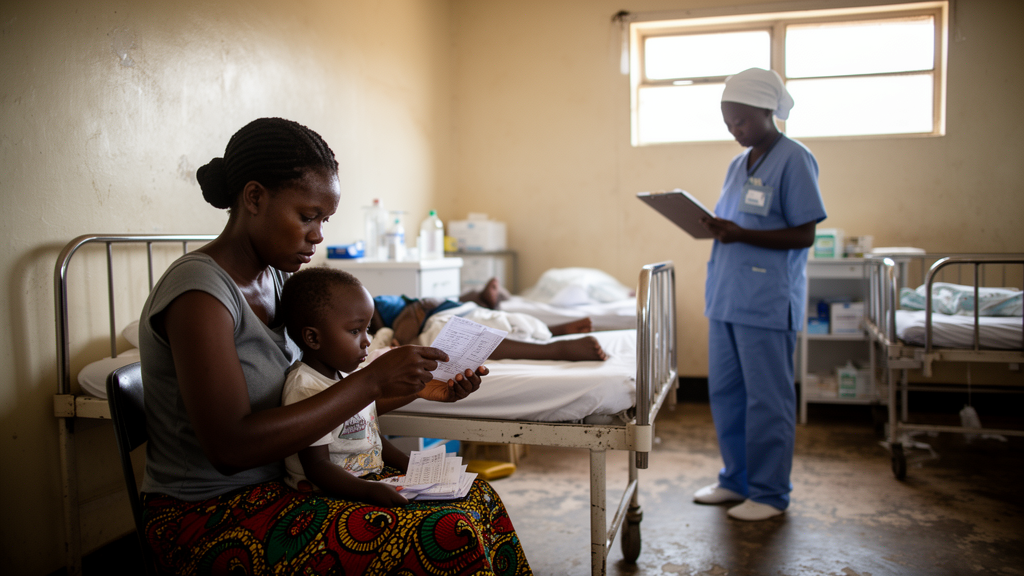
One in three parents or guardians surveyed while accessing paediatric surgery at Zambia’s highest-level tertiary hospital experienced catastrophic out-of-pocket health expenditure, according to a cross-sectional study of 380 participants. The research was conducted at University Teaching Hospital in Lusaka District, where 127 respondents, or 33.4%, met the study’s threshold for catastrophic health expenditure. Overall out-of-pocket expenditure was approximately US$36, with an interquartile range of US$22.5–58.2.
The survey also documented wider household hardship, including difficulty meeting basic needs, paying school expenses, borrowing money, selling assets and losing income or employment. Researchers recruited parents and guardians of paediatric patients consecutively over three months and collected responses through a 36-item electronic questionnaire. The primary outcome was catastrophic health expenditure, determined using the budget-share approach.
The secondary outcome was the socioeconomic burden associated with accessing paediatric surgery, assessed through the coping mechanisms reported by households. Data were analysed in R version 4.5.1 using descriptive and inferential statistics. As a cross-sectional study at one Lusaka hospital, the research measured reported costs and circumstances at a single point in time; it did not establish causal relationships or directly evaluate the effects of particular policies or interventions.
Several factors were associated with a greater likelihood of catastrophic expenditure. Participants who travelled from outside Lusaka Province had higher adjusted odds of experiencing catastrophic health expenditure than those who travelled within the province, with an adjusted odds ratio of 4.06, a 95% confidence interval of 2.21–7.85 and a p-value below 0.001. Participants with no formal education also had higher adjusted odds than the reference group, although the estimate was less precise, with an adjusted odds ratio of 2.59, a 95% confidence interval of 1.05–6.62 and a p-value of 0.041.
The absence of health insurance coverage was associated with higher adjusted odds of catastrophic expenditure, with an adjusted odds ratio of 1.95, a 95% confidence interval of 1.10–3.53 and a p-value of 0.024. Household resources were also associated with the reported financial burden. Each additional contributor to household income was associated with lower adjusted odds of catastrophic health expenditure, with an adjusted odds ratio of 0.65, a 95% confidence interval of 0.44–0.94 and a p-value of 0.025.
Together, the adjusted estimates show associations between catastrophic expenditure and province of origin, formal education, insurance coverage and the number of income contributors. They do not demonstrate that any one of these factors directly caused the expenditure. The findings nevertheless identify circumstances in which surveyed families were more likely to report costs beyond the study’s catastrophic-expenditure threshold.
The socioeconomic consequences reported by participants extended beyond the measured healthcare expenditure. These figures describe coping responses and burdens reported in the survey rather than measured long-term changes in poverty. The authors proposed public education, comprehensive insurance coverage and expanded specialised surgical care outside Lusaka as national intervention priorities.
Because the study included only families presenting to one tertiary facility, it cannot by itself represent all families requiring paediatric surgery across Zambia or determine whether the proposed measures would reduce catastrophic spending.
Subject of Research: Catastrophic household expenditure and socioeconomic burdens associated with accessing paediatric surgery in Zambia
Article Title: Household catastrophic out-of-pocket expenditure and the socioeconomic burden of paediatric surgery: a cross-sectional study at the highest tertiary hospital in Zambia
Article References: Mumphansha, H., Ngongola, A., Kalota, S., Tembo, N. N., Ntebeka, B. M., Sampa, M., Kamau, J., Chanda, C., Bvulani, B., Kunda, M. K., Chiwele, M., Kasoma, D. M., Singoyi, L., Mulewa, M., Kampata, L., Phiri, G., Makasa, E., Mutale, W., & Newton, M. (2026). Household catastrophic out-of-pocket expenditure and the socioeconomic burden of paediatric surgery: a cross-sectional study at the highest tertiary hospital in Zambia. BMC Health Services Research. https://doi.org/10.1186/s12913-026-15515-w
Image Credits: AI Generated
DOI: 10.1186/s12913-026-15515-w
Keywords: paediatric surgery, catastrophic health expenditure, out-of-pocket costs, Zambia, health insurance, household finances, healthcare access, University Teaching Hospital, Lusaka, socioeconomic burden, Household, catastrophic
Cite Scienmag News
Ophelia Keating. (October 26, 2026). Cross-sectional study links paediatric surgery costs to household financial strain in Zambia. Scienmag. https://scienmag.com/cross-sectional-study-links-paediatric-surgery-costs-to-household-financial-strain-in-zambia/
Ophelia Keating. "Cross-sectional study links paediatric surgery costs to household financial strain in Zambia." Scienmag, 26 October 2026, https://scienmag.com/cross-sectional-study-links-paediatric-surgery-costs-to-household-financial-strain-in-zambia/. Accessed 26 October 2026.
Ophelia Keating. "Cross-sectional study links paediatric surgery costs to household financial strain in Zambia." Scienmag. October 26, 2026. https://scienmag.com/cross-sectional-study-links-paediatric-surgery-costs-to-household-financial-strain-in-zambia/


