A cross-country questionnaire study of sports science students found that French respondents reported more body dissatisfaction and a stronger drive for thinness than German students, while motives for using fitness-related social media were associated with each body image measure examined. The analysis included 523 students from Germany and 611 from France, making it a direct comparison of body image concerns among sports science students in the two countries. Because the study was observational, its results identify patterns and statistical associations rather than showing that national context or social media use caused the differences.
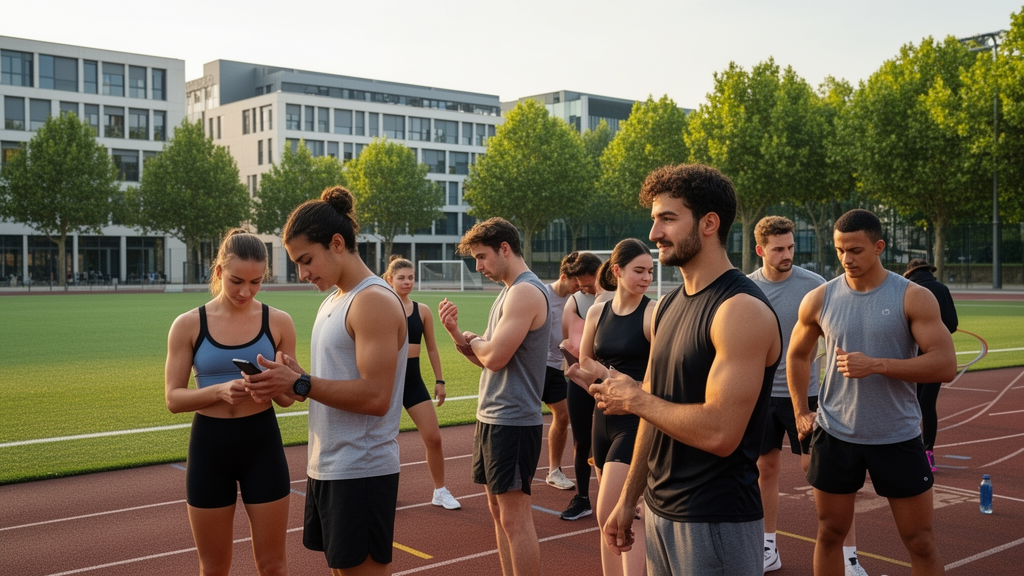
The comparison is relevant because physical education teachers, fitness instructors and other sports professionals may be expected to embody an idealized “healthy” body. In that setting, appearance and physical performance can be especially prominent, and comments from peers or educators may add to body image concerns. The students surveyed were already highly active: 93.8% of German participants and 97.1% of French participants reported exercising regularly outside scheduled university sports classes.
The findings therefore show that substantial physical activity did not coincide with uniformly positive body image in either country. Researchers recruited participants from five German universities, including institutions in western, south-western and eastern Germany, and one university in eastern France. The German sample comprised 275 men, 238 women and four participants with diverse gender identities, with a mean age of 21.22 years.
The French sample included 386 men, 221 women and three nonbinary students, with a mean age of 19.85 years. Eligible participants included undergraduate students in their first through third years, graduate students in their first or second years, and people training to become physical education teachers. Questionnaires were completed during lessons, with participation described as voluntary and without negative consequences.
Body dissatisfaction and drive for thinness were measured with German and French versions of the Body Dissatisfaction and Drive for Thinness scales from the Eating Disorder Inventory-2. Drive for size was assessed with the corresponding scales from the Muscle Dysmorphic Disorder Inventory. Each measure used a six-point response scale ranging from “never” to “always.” The questionnaire also collected self-reported height and weight, from which body mass index was calculated, along with weekly physical activity outside university sports courses, competitive sports participation, general social media use, time spent viewing fitness-related content and the reasons students used such content.
Those reasons included finding inspiration to diet, eat healthily, improve body shape, build muscle or enhance appearance. French women had a mean body dissatisfaction score of 3.01, compared with 2.85 for German women, while French men scored 2.89 against 2.52 for German men. The drive-for-thinness mean was 2.78 among French women and 2.49 among French men, compared with 2.52 and 1.78, respectively, in Germany.
The largest standardized difference was the French-German difference in drive for size among women, at Cohen’s d of 1.00. The difference among men for drive for thinness was also large, with d of 0.82. Differences in drive for size followed a different pattern: French women scored 2.74, well above German women’s 1.80, whereas no significant country difference was detected among men.
Two-way factorial analyses of variance found significant interactions between gender and country for all three outcomes, indicating that the national differences were not identical for male and female students. The proportion reporting body image issues more than “sometimes” was 37.2% for French women and 31.4% for German women; among men, it was 31.8% in France and 13.5% in Germany. Frequent drive for thinness was reported by 32.2% of French women, 28.6% of German women, 22.9% of French men and 6.8% of German men.
For drive for size, 40.4% of French men and 34.7% of German men crossed that threshold, compared with 29.1% of French women and 7.5% of German women. Hierarchical regression models explained a modest share of the variation in the outcomes, with R² values of 0.22 for body dissatisfaction, 0.29 for drive for thinness and 0.20 for drive for size. Country and gender were associated with all three measures, while BMI was associated with body dissatisfaction and drive for thinness.
Motives for using fitness-related social media added information beyond total social media use. Seeking dieting ideas was the strongest reported predictor of drive for thinness, while using fitness content for inspiration to build muscle was the strongest predictor of drive for size. General and fitness-specific social media use were also associated with greater drive for size, while competitive sports participation was associated with a lower drive for size.
These associations leave two possible pathways open. Fitness content may reinforce an “athletic body” ideal that combines leanness and muscularity, encouraging students to pursue appearance goals that can pull in different directions. Alternatively, students who are already dissatisfied may deliberately seek diet, exercise or appearance advice online because they want to change their bodies.
The cross-sectional design cannot distinguish between these explanations or establish direction of causation. Self-reported BMI, physical activity and social media use may also contain measurement error. The researchers handled missing information with analysis-specific complete-case analysis, so sample sizes varied; the principal regression models included roughly 920 to 932 participants.
The study has important scope limitations. It was conducted at a single French institution and at each of five German universities, with relatively small numbers of students from the individual German sites. The findings should therefore not be treated as representative of all sports science students in either country.
The models also omitted potentially relevant influences identified in earlier research, including family environments, internalization of appearance ideals and appearance-comparison tendencies. Because the regression models explained only part of the variation, the authors characterized the results as preliminary and hypothesis-generating. The results also cannot establish clinical eating disorders or mental health outcomes, and the questionnaire measures were indicators of body image concerns rather than diagnoses.
What the data suggest is that the assumption that regular exercise alone protects students from body dissatisfaction is incomplete. French men and women in the study displayed stronger thinness concerns than their German counterparts, and French women also displayed a greater drive for size. At the same time, students in both countries frequently used fitness-related social media in ways associated with appearance and body goals.
Because sports science students may later become educators and role models, the authors argue for future research into how courses, peers and institutional culture shape these pressures. They also call for qualitative work in both countries, particularly in France, to identify the mechanisms behind the unusual combination of body goals and to develop culturally sensitive support for body diversity and healthy behavior.
Subject of Research: Cross-country comparison of body dissatisfaction and fitness-related social media motives among French and German sports science students
Article Title: Body dissatisfaction among French and German sports science students – a cross-country comparison
Article References: Grimminger-Seidensticker, E., Le Bot, G., Savage, D., & Chaplais, E. (2026). Body dissatisfaction among French and German sports science students – a cross-country comparison. International Journal of Public Health, 71, Article 1610065. https://doi.org/10.3389/ijph.2026.1610065
Image Credits: AI Generated
DOI: 10.3389/ijph.2026.1610065
Keywords: body dissatisfaction, body image, sports science students, fitness social media, drive for thinness, drive for size, France, Germany, cross-country study, physical activity, Body, dissatisfaction
Cite Scienmag News
Ophelia Keating. (October 21, 2026). Cross-country survey finds greater body dissatisfaction among French sports science students. Scienmag. https://scienmag.com/cross-country-survey-finds-greater-body-dissatisfaction-among-french-sports-science-students/
Ophelia Keating. "Cross-country survey finds greater body dissatisfaction among French sports science students." Scienmag, 21 October 2026, https://scienmag.com/cross-country-survey-finds-greater-body-dissatisfaction-among-french-sports-science-students/. Accessed 21 October 2026.
Ophelia Keating. "Cross-country survey finds greater body dissatisfaction among French sports science students." Scienmag. October 21, 2026. https://scienmag.com/cross-country-survey-finds-greater-body-dissatisfaction-among-french-sports-science-students/