


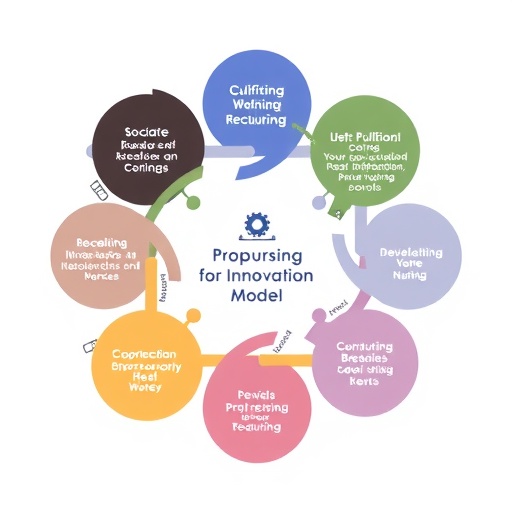
In an era where healthcare is becoming increasingly complex, nursing education is evolving to meet the demands of modern medical practice. A recent study conducted by Heydari, Rakhshan, Torabizadeh, and colleagues explores a significant development in this educational landscape—the introduction of an individual innovation model specifically designed for nursing students. This initiative aims at enhancing students’ capacities to think creatively and adaptively, essential traits in tackling real-world healthcare challenges.
The study utilizes a mixed-method approach, intertwining both qualitative and quantitative research methodologies to gain a comprehensive understanding of how innovation can be fostered among nursing students. By employing diverse data collection methods, including surveys, interviews, and focus groups, the researchers were able to capture the multifaceted nature of educational innovation. This robust approach not only validates their findings but also enhances the credibility of the model they propose.
The individual innovation model is rooted in the understanding that nursing education must not merely disseminate knowledge but also cultivate critical thinking, problem-solving abilities, and creativity. Traditional methods of nursing education often emphasize rote learning and standard procedures, which may stifle inventive thought and adaptability. The study highlights an urgent need for curricula that empower students, encouraging them to pursue innovative solutions to patient care challenges.
One key aspect of the study is the identification of various factors that influence nursing students’ innovation capacity. These factors include individual characteristics such as personality traits, prior education, and exposure to real-world clinical environments. Furthermore, systemic elements like institutional support, faculty engagement, and resources available for creative projects play a critical role in shaping the innovative potential of nursing students.
By developing and evaluating this individual innovation model, the researchers aim to create a framework that can serve as a blueprint for nursing schools around the world. Central to this model is the idea that fostering innovation within nursing education can lead to improved patient outcomes and a more dynamic healthcare environment. As healthcare providers with the ability to innovate, nurses will be better equipped to respond to evolving patient needs and complex health issues.
The mixed-method evaluation of the model revealed promising results. Students reported increased levels of creativity and confidence in their problem-solving abilities after engaging with the innovation framework. Additionally, faculty feedback indicated a shift in the classroom dynamics, with more interactive discussions and collaborative projects emerging as students took ownership of their learning process. These outcomes suggest that the model not only enhances individual student performance but also transforms the educational environment.
Implementation of the individual innovation model in nursing curricula requires a collaborative effort from educational institutions, faculty, and students alike. Institutions must ensure that they provide adequate resources, such as access to innovative technologies and platforms for collaborative learning. Faculty must be trained in facilitating creative thinking and encouraging risk-taking in educational settings. Students, on their part, should be motivated to embrace uncertainty and explore novel ideas without fear of failure.
Looking ahead, the implications of this research extend beyond nursing education. As healthcare systems worldwide cope with unprecedented pressures, the need for innovative practices becomes more urgent. The lessons learned from this study can inform broader educational strategies across varied disciplines, highlighting the intersection of creativity and professional practice in addressing global health challenges.
As the healthcare landscape continues to change, so too must the educational strategies that prepare future nurses for their roles. This study serves as a timely reminder of the importance of fostering a culture of innovation within nursing education, enriching the field with creative thinkers capable of influencing positive change in their workplaces and communities. Moreover, the model has potential applications in various healthcare training programs, paving the way for future research in educational innovation.
In summary, the development of an individual innovation model represents a pivotal advancement in nursing education, emphasizing the critical role creativity plays in professional practice. By equipping future nurses with the necessary skills to innovate, we build a foundation for a resilient healthcare system that can adapt to the unique challenges of the 21st century. The findings underscore a promising path for educational reform, highlighting the necessity of nurturing the innovators of tomorrow in nursing.
As the research team prepares to publish their findings in upcoming editions of BMC Medical Education, the anticipation within the academic community grows. Their work stands to influence nursing education and practice for years to come, inspiring educators and students alike to prioritize innovation as a core component of healthcare training.
In conclusion, the future of nursing education is not just about imparting knowledge; it is about nurturing a mindset capable of embracing change, challenging norms, and ultimately improving patient care through innovative practices. This study is a beacon for educational institutions aiming to transform their programs, positioning them to thrive in an increasingly complex healthcare environment.
Heydari, N., Rakhshan, M., Torabizadeh, C. et al. Development and evaluation of an individual innovation model for nursing students: a mixed-method study.
BMC Med Educ (2026). https://doi.org/10.1186/s12909-025-08508-6
Cite Scienmag News
Courtney Benton. (January 27, 2026). Creating and Assessing an Innovation Model for Nursing. Scienmag. https://scienmag.com/creating-and-assessing-an-innovation-model-for-nursing/
Courtney Benton. "Creating and Assessing an Innovation Model for Nursing." Scienmag, 27 January 2026, https://scienmag.com/creating-and-assessing-an-innovation-model-for-nursing/. Accessed 3 September 2026.
Courtney Benton. "Creating and Assessing an Innovation Model for Nursing." Scienmag. January 27, 2026. https://scienmag.com/creating-and-assessing-an-innovation-model-for-nursing/


