

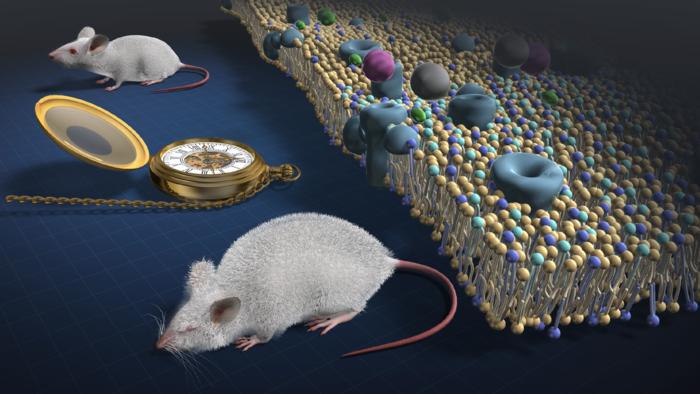
Researchers at the RIKEN Center for Integrative Medical Sciences (IMS) have discovered numerous age-related changes in the lipid metabolism of mice, across both organs and sexes. Among these changes was the selective accumulation, throughout the body, of certain lipids produced by gut bacteria as the mice aged. They also discovered a sex difference in the kidneys and a gene responsible for it. Published in Nature Aging, this study could lead to better understanding of chronic age-related conditions like Alzheimer’s disease, atherosclerosis, kidney disease, and cancer.

Credit: RIKEN
Researchers at the RIKEN Center for Integrative Medical Sciences (IMS) have discovered numerous age-related changes in the lipid metabolism of mice, across both organs and sexes. Among these changes was the selective accumulation, throughout the body, of certain lipids produced by gut bacteria as the mice aged. They also discovered a sex difference in the kidneys and a gene responsible for it. Published in Nature Aging, this study could lead to better understanding of chronic age-related conditions like Alzheimer’s disease, atherosclerosis, kidney disease, and cancer.
Lipids, often in the form of fats or oils, are essential molecules for storing energy in our bodies, among other things. In addition, lipids act as signaling molecules and as components of cell membranes. Metabolism—the breakdown of biomolecules such as lipids and sugars into their component parts—slows down as we age, which helps explain why it’s easier to gain weight, and more difficult to lose it, as we get older. Although this has been known for over 50 years, how changes in lipid metabolism in particular affects lifespan and health remain unclear. In their recent study, Hiroshi Tsugawa and his team at RIKEN IMS reasoned that before this question can be fully answered, we need to know what the actual changes are, in great detail. Only then can scientists begin looking for links between aging lipid metabolism and human health. Toward this end, they used mice to develop an atlas of age-related changes in lipid metabolites.
By using a cutting-edge technique to take multiple snapshots of the mouse lipidome—all lipid metabolites present in a biological sample—the researchers found that BMP type lipids increased with age in the kidneys, liver, lungs, muscles, spleen, and small intestine of the mice. These lipids play key roles in cholesterol transport and the breakdown of biomolecules within cellular recycling centers called lysosomes. Age-related lysosomal damage might result in cells making more BMPs, which could lead to further metabolic changes, such as increasing cholesterol derivatives in the kidney.
The researchers also investigated the impact of gut bacteria on the lipidome, discovering that while gut bacteria produced many structurally unique lipids, only sulfonolipids increased with age in the liver, kidney, and spleen. In fact, no other group of lipid metabolites from gut bacteria were even detected in these peripheral tissues. “As this kind of lipid is known to be involved in regulating immune responses, the next phase of our research will involve testing the gut bacteria-derived sulfonolipids to determine their structure and physiological functions,” says Tsugawa.
The researchers also found age-related sex differences in the mouse lipidome, particularly in the kidneys, with levels of the lipid metabolite galactosylceramide being higher in older male mice than in older females. This discrepancy was attributed to increased expression of the UGT8 gene in male mice. Understanding sex-specific metabolic differences like this could shed light on susceptibility to age-related diseases humans.
“Our research has comprehensively characterized the changes in the lipidome that occur in the mouse with aging. In doing so, we have created at atlas that will serve as an important global resource,” says Tsugawa. “Next, we must extend this type of study to the human lipidome and microbiome.” The findings highlight the importance of understanding how lipid metabolism changes as we age, and the potential of targeting the lipidome when designing treatments for age-related diseases.
Journal
Nature Aging
Method of Research
Experimental study
Subject of Research
Animals
Article Title
A lipidome landscape of aging in mice
Article Publication Date
12-Apr-2024

