

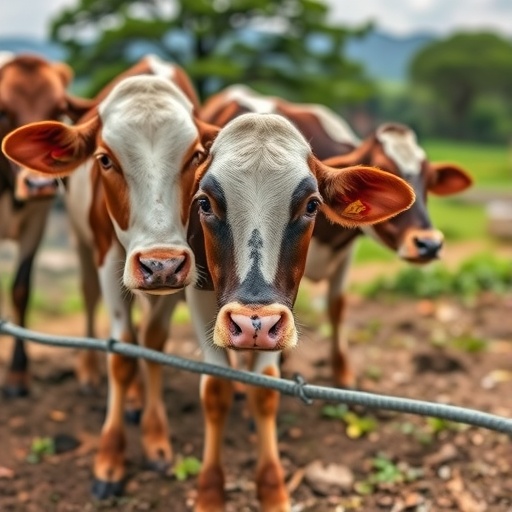
In the heart of Sidama region, Southern Ethiopia, a transformative phenomenon is reshaping the landscape of food security among smallholder dairy producers. The commercialization of cow milk has emerged as a critical intervention that not only enhances the economic well-being of households but also significantly bolsters their food security. Researchers, led by Kifle E., Zemedu L., and Jemal K., have delved into this pressing issue, highlighting the interconnection between dairy production and nourishment in a vibrant, yet challenging rural context. Through their study, they uncover how the sale of milk is a lifeline for many households, pushing the boundaries of traditional subsistence farming into the realm of sustainable livelihoods.
The findings of this research are grounded in rigorous data collection and analysis, underscoring the multifaceted benefits derived from cow milk commercialization. The transition from subsistence to market-oriented dairy production has equipped smallholder farmers with the means to generate additional income. This revenue not only supports families but also allows them to invest in essential resources, such as agricultural inputs, health care, and education. It is a dynamic shift that reflects broader trends in agricultural economics, where market participation is becoming increasingly vital for rural households seeking to improve their livelihoods.
In the Sidama region, cow milk commercialization serves as an engine for food security. As incomes rise, so does access to a more varied diet, which is crucial for overcoming nutrition-related challenges faced by many households. The study reports that enhanced financial stability allows families to diversify their food sources, moving beyond staple grains to incorporate fruits, vegetables, and protein-rich foods. This nutritional uplift is particularly significant in areas where malnutrition rates are high, providing children and families with the vital nutrients necessary for healthy development.
Interestingly, the research reveals the socio-cultural dimensions of dairy commercialization. In many communities, cows are not just a source of milk; they hold cultural significance and symbolize wealth and status. The sale of milk has transformed gender roles, with women increasingly participating in the dairy economy. This engagement not only empowers women financially but also promotes their agency within the household and community. The research highlights that women’s involvement in dairy production often translates into improved child nutrition and education, as they are more likely to allocate resources towards family health and children’s schooling.
However, the path to harnessing the full potential of cow milk commercialization is fraught with challenges. The study identifies numerous obstacles that smallholder farmers face, including limited access to markets, inadequate infrastructure, and fluctuating market prices. Furthermore, issues related to milk quality and safety can hinder market opportunities. To navigate these challenges, the researchers advocate for targeted interventions, such as the establishment of cooperatives that can enhance bargaining power for farmers and improve access to necessary resources.
Policy frameworks play a pivotal role in facilitating the growth of the dairy sector. The research emphasizes the importance of supportive policies that encourage investment in dairy infrastructure, such as transport and cooling facilities, which are crucial for preserving milk quality and extending shelf life. Moreover, training and education programs for farmers can significantly impact their productivity, quality of output, and subsequent income. Policymakers must consider integrating these elements into broader agricultural strategies to elevate the dairy sector sustainably.
In terms of economic potential, the research hints at the significant untapped market. The growing urban populations in Ethiopia present a lucrative market for dairy products. As consumer demand for fresh milk and dairy derivatives rises, smallholder dairy producers can leverage this trend to enhance their economic viability. The researchers suggest that strategic marketing initiatives and branding could help local dairies engage with urban consumers more effectively, allowing producers to command better prices for their products.
Moreover, the environmental considerations intertwined with dairy production cannot be overlooked. The research discusses the need for sustainable practices in cattle rearing to ensure ecological balance. While the increasing demand for dairy poses stresses on land and water resources, there’s an opportunity for implementing regenerative practices that can support both animal welfare and environmental health. By adopting sustainable feeding and breeding practices, smallholder farmers can not only increase their productivity but also contribute to the resilience of the ecosystem in which they operate.
In summary, the commercialization of cow milk among smallholder dairy producers in the Sidama region is a multi-dimensional issue with profound implications for food security and economic empowerment. The benefits that flow from this transition are apparent, but so too are the challenges that lie ahead. Continued research, policy support, and community engagement are essential to cultivate an environment where smallholder farmers can thrive and contribute to the overall resilience of the agricultural sector in Ethiopia.
Through this research, Kifle et al. shed light on the intricate dynamics of food security linked to dairy commercialization, providing a roadmap for future interventions. The insights garnered from this study not only speak to the Sidama region but also resonate with similar farming communities across the globe, where transitioning from subsistence to market-oriented practices can redefine food security in meaningful ways.
As the dairy economy continues to evolve in Ethiopia, the ongoing dialogue surrounding these findings will be crucial in guiding agricultural policies and community practices that promote sustainable livelihoods and food security for generations to come.
Subject of Research: The impact of cow milk commercialization on household food security among smallholder dairy producers in the Sidama region of Southern Ethiopia.
Article Title: The impact of cow milk commercialization on household food security among smallholder dairy producers in the Sidama region of Southern Ethiopia.
Article References: Kifle, E., Zemedu, L., Jemal, K. et al. The impact of cow milk commercialization on household food security among smallholder dairy producers in the Sidama region of Southern Ethiopia. Discov Sustain (2026). https://doi.org/10.1007/s43621-026-02700-4
Image Credits: AI Generated
DOI: 10.1007/s43621-026-02700-4
Keywords: cow milk, commercialization, household food security, smallholder dairy producers, Ethiopia, Sidama region.


