

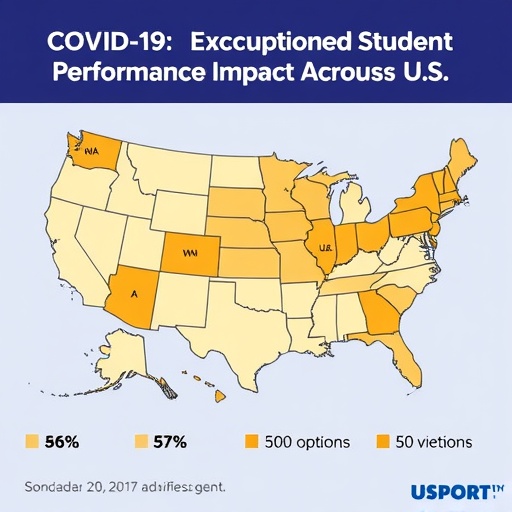
The COVID-19 pandemic has profoundly affected student performance across the United States, reshaping the educational landscape in unprecedented ways. A recent study conducted by Castellano, McCaffrey, and Xi delves deep into these changes, offering insights that highlight disparities in learning outcomes during this critical period. Their research not only examines overarching trends but also elucidates variations among different demographic groups, revealing the multifaceted impact of the pandemic on education.
As schools transitioned to remote learning, the mechanisms that drive student engagement and success were severely tested. The findings suggest that while some students thrived in a virtual environment, benefiting from newfound flexibility, others struggled with the lack of direct interaction and support. The digital divide, which has long been a pressing issue in education, was further exacerbated as access to technology and reliable internet became crucial for learning continuity. The researchers highlight that these disparities led to differential performance outcomes that varied not only by socioeconomic status but also by geographic location and community resources.
In their analysis, Castellano and colleagues employed a comprehensive methodology that integrated data from various educational assessments conducted before and during the pandemic. By analyzing standard test scores and other measures of academic performance, the study paints a nuanced picture of how learning loss was not uniform. Certain groups, particularly those already facing challenges, experienced significant declines in performance, raising concerns about the long-term implications for educational equity.
Furthermore, the research emphasizes the mental health aspects intertwined with academic achievement during the pandemic. Many students faced increased anxiety and stress as they adapted to a new way of learning. The loss of traditional social experiences, coupled with feelings of isolation, contributed to a decrease in motivation and engagement. The authors argue that to understand these performance changes, one must also consider the emotional and psychological well-being of students during this unprecedented time.
Additionally, the study highlights that educators played a pivotal role in mitigating or exacerbating these educational challenges. Teachers who adapted their teaching methods to engage students effectively in a remote setting were able to foster better performance outcomes. Professional development opportunities that focused on digital pedagogy and inclusive teaching strategies emerged as critical components in supporting both teachers and their students. The research indicates that robust educator support systems are essential to navigating similar crises in the future.
As educational institutions continue to adapt to the post-pandemic landscape, this study serves as a call to action for policymakers and stakeholders. It urges them to prioritize equitable access to resources and support mechanisms for all students, especially those from underprivileged backgrounds. The researchers advocate for systemic changes that ensure not only recovery from learning losses but also improvements in the educational framework to build resilience against future disruptions.
The implications of this research extend beyond the immediate context of the COVID-19 pandemic. It raises essential questions about the future of education and the need for innovative approaches to teaching and learning in a rapidly changing world. By embracing technology while also fostering community engagement, educators can enhance student learning experiences and outcomes. The focus should remain on creating inclusive educational environments that cater to diverse learner needs, ensuring that all students have the opportunity to succeed.
Moreover, the study provides insights into the importance of tracking student performance as a mechanism for accountability and improvement. Ongoing assessments and evaluations can help identify not only areas of concern but also successful strategies that can be replicated. Educators and administrators are encouraged to leverage data-driven decision-making to inform their practices and policies, ultimately leading to more effective educational interventions.
In closing, the exploration of differential changes in student performance during the COVID-19 pandemic underscores the critical need for comprehensive research that informs educational practices and policies. As we reflect on the challenges faced during this period, it is imperative to address the systemic inequities that exist within our education system. The path forward should prioritize student well-being, inclusive teaching strategies, and equitable access to educational resources, ensuring that all students are prepared to thrive in the future.
In sum, the work of Castellano, McCaffrey, and Xi offers a valuable contribution to our understanding of the educational impacts of the pandemic, sparking important conversations about how we can better support our students during times of crisis and beyond.
Subject of Research: Changes in student performance during the COVID-19 pandemic across the United States.
Article Title: Exploring differential change in student performance during the COVID-19 pandemic across the United States.
Article References: Castellano, K.E., McCaffrey, D.F., Xi, N. et al. Exploring differential change in student performance during the COVID-19 pandemic across the United States. Large-scale Assess Educ 13, 11 (2025). https://doi.org/10.1186/s40536-025-00242-1
Image Credits: AI Generated
DOI: https://doi.org/10.1186/s40536-025-00242-1
Keywords: COVID-19, student performance, educational equity, remote learning, learning loss, mental health, teacher support, educational policy, digital divide.


