


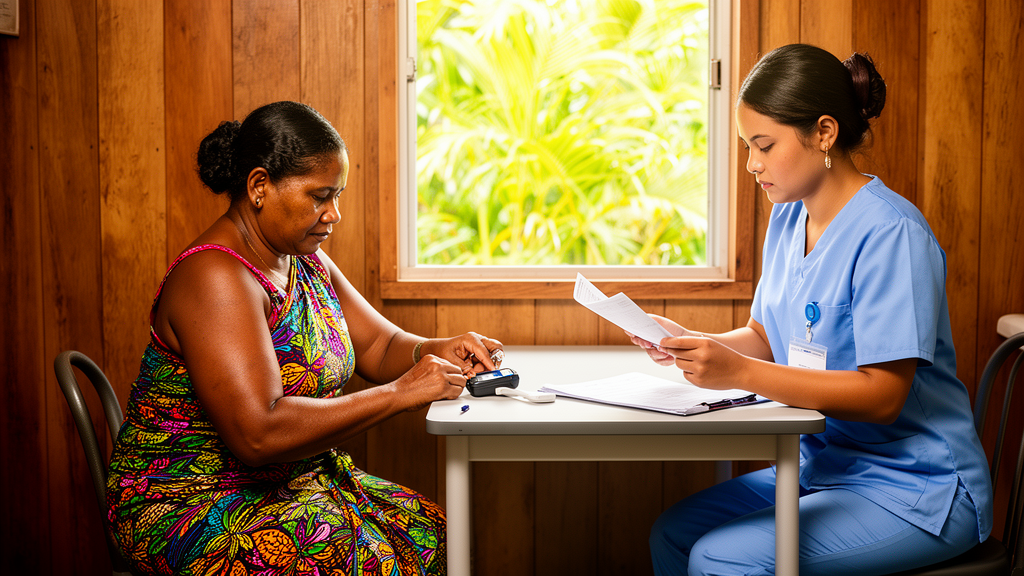
When COVID-19 preventive measures swept across the globe, they did not strike everyone equally. For women in Fiji living with type-2 diabetes mellitus, the pandemic upended the delicate routines of self-management that kept their blood glucose in check. A new qualitative study published in Frontiers in Clinical Diabetes and Healthcare reveals how lockdowns, social distancing, and the redeployment of healthcare workers to COVID-19 wards left diabetic women in the Pacific nation struggling to access medications, maintain diets, and manage complications, prompting calls for context-specific interventions such as virtual clinics and door-to-door supply of diabetes essentials.
The research, led by Eunice Okyere and colleagues at Fiji National University, adopted a descriptive phenomenological approach to capture the lived experiences of 45 women with type-2 diabetes. Purposively selected from Suva and its neighboring suburbs of Lami, Nasinu, Nausori, and Tamavua, participants spanned diverse ethnic groups, ages, religions, and occupations. In-depth interviews lasting an average of 40 minutes were conducted from August to October 2022 using a semi-structured guide, with data saturation reached by the 39th interview. Inductive thematic analysis then distilled the narratives into three overarching themes: the perceived impact of the pandemic on diabetes management, coping strategies, and recommended interventions.
The findings paint a stark picture of disrupted care. Many participants reported limited access to healthcare workers and diabetes supplies, as clinicians were occupied with COVID-19 cases. Scheduled appointments were canceled or postponed, eroding confidence in service delivery and, in some tragic instances, contributing to death. One participant recounted how her sister, also diabetic, died after her initial appointment to see a doctor was postponed. Physical activity patterns changed as fear of infection kept women indoors, while job losses during the pandemic made it difficult to maintain standard diets rich in fruits and vegetables. These disruptions culminated in diabetes complications, including amputations and worsening mental health.
Participants described how the pandemic’s restrictions increased stress and anxiety, conditions already more prevalent among individuals with type-2 diabetes than the general population. The SARS-CoV-2 virus itself induces hyperglycemia, leading to immune dysfunction and heightened vulnerability to infections and long-term diabetes complications. In the early phase of the pandemic, people with type-2 diabetes accounted for approximately one-third of COVID-19 deaths. Fiji’s government classified individuals with diabetes as a high-risk group, a designation that, combined with lockdown measures, could negatively impact self-management. The situation is compounded by the fact that an estimated thirty percent of the Fijian population is diagnosed with diabetes, with diabetic foot amputations occurring approximately once every eight hours.
Coping strategies emerged as a central theme. Emotional eating was widespread, with many women consuming food to suppress negative feelings such as loneliness, sadness, and fear, leading to excessive weight gain and, in some cases, new-onset high blood pressure. Religious practices, including prayer, meditation, and listening to gospel music, provided strength and resilience, with some joining online church services when face-to-face worship was impossible. Family support proved vital, as relatives sent food and money to sustain those who had lost jobs. However, some participants turned to herbal medications, either by preference or because healthcare workers were unavailable, raising safety concerns about unsupervised traditional remedies.
The women recommended several interventions to improve diabetes management during crises. Financial support schemes topped the list, enabling those who lost income to purchase nutritious foods. Participants also called for accessible specialized healthcare services, with specific health workers assigned to diabetic patients during emergencies. Intensifying diabetes self-care education was deemed essential, particularly to correct misconceptions about COVID-19 and diabetes and to address the risks of emotional eating and unauthorized herbal use. Many expressed greater trust in information from healthcare workers than from the media, which they said sometimes spread misleading content causing fear and panic.
Virtual clinics and door-to-door delivery of diabetes supplies were highlighted as promising models. Though most women preferred face-to-face consultations, they acknowledged that telephone or online communication could have addressed delayed access during the pandemic, improved health status, and increased digital literacy. Fiji serves as the digital hub for the Pacific, supported by advanced subsea cables and expanding mobile networks, yet challenges in rural internet connectivity persist. The study underscores that continuity of care during emergencies requires a multifaceted approach integrating preparedness, sustainable and coordinated healthcare services, and decentralized digital care models.
The findings carry implications for policy makers and health managers across the Pacific Islands, where diabetes remains the primary cause of premature death and where nine of the ten nations with the highest prevalence of diabetes and obesity in women are located. The geographical position of Fiji, its vast maritime landscape, climate change, and natural disasters further complicate equitable health service delivery. Strengthening education on diabetes management, providing mental health support, and establishing systems for home delivery of medications and glucometers could mitigate the burden of comorbidities, enhance glycemic control, and reduce the risk of severe complications in future crises.
Ultimately, the study highlights the need for stakeholders to ensure better access to healthcare services, providers, and essential supplies for women with type-2 diabetes. By implementing interventions such as virtual clinics, home deliveries, and intensified self-care education, health systems can safeguard continuity of care during emergencies and prevent the behavioral and safety issues that arise when routine management falters. As the world prepares for future pandemics, the experiences of these Fij{
Subject of Research: COVID-19 pandemic and type-2 diabetes management among women in Fiji
Article Title: COVID-19 pandemic and the management of type-2 diabetes mellitus among women in Fiji: concerns and context specific interventions
Article References: Okyere, E., Marfoh, K., Goundar, R., Makutu, L., & Kabukeinamala, D. (2026). COVID-19 pandemic and the management of type-2 diabetes mellitus among women in Fiji: concerns and context specific interventions. Frontiers in Clinical Diabetes and Healthcare, 7, Article 1846673. https://doi.org/10.3389/fcdhc.2026.1846673
Image Credits: AI Generated
DOI: 10.3389/fcdhc.2026.1846673
Keywords: COVID-19, type-2 diabetes, Fiji, women's health, qualitative research, telemedicine, diabetes self-management, herbal medicine, emotional eating, virtual clinics, Pacific Islands, healthcare access
Cite Scienmag News
Ophelia Keating. (October 17, 2026). COVID-19 Disrupted Diabetes Care for Women in Fiji, Study Finds. Scienmag. https://scienmag.com/covid-19-disrupted-diabetes-care-for-women-in-fiji-study-finds/
Ophelia Keating. "COVID-19 Disrupted Diabetes Care for Women in Fiji, Study Finds." Scienmag, 17 October 2026, https://scienmag.com/covid-19-disrupted-diabetes-care-for-women-in-fiji-study-finds/. Accessed 17 October 2026.
Ophelia Keating. "COVID-19 Disrupted Diabetes Care for Women in Fiji, Study Finds." Scienmag. October 17, 2026. https://scienmag.com/covid-19-disrupted-diabetes-care-for-women-in-fiji-study-finds/


