


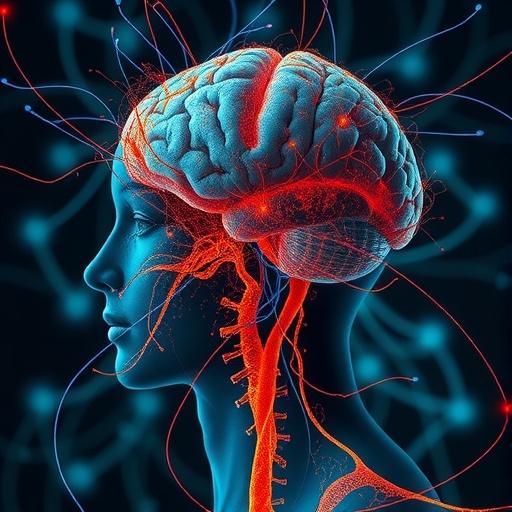
In a groundbreaking study that promises to reshape our understanding of psychosis, researchers have uncovered compelling evidence linking altered patterns in the brain’s cortical gyrification to treatment resistance in patients experiencing their first episode of psychosis. This discovery not only provides critical insights into the neurobiological underpinnings of psychosis but also paves the way for more individualized therapeutic strategies tailored to specific neuroanatomical markers.
Cortical gyrification refers to the intricate folding patterns of the cerebral cortex, the brain’s outermost layer responsible for complex cognitive functions such as perception, decision-making, and emotional regulation. These folds, or gyri, increase the brain’s surface area, enabling a higher density of neurons and synaptic connections. Alterations in gyrification patterns have previously been implicated in a variety of neuropsychiatric disorders, but their precise role in the trajectory and treatment responsiveness of psychosis has remained elusive—until now.
In this study, a multidisciplinary team of neuroscientists and psychiatrists conducted detailed magnetic resonance imaging (MRI) analyses on a cohort of individuals undergoing their first psychotic episode. By employing sophisticated neuroimaging techniques alongside advanced computational models to quantify cortical folding, the researchers were able to characterize aberrations in gyral morphology with remarkable precision. Their findings demonstrated that specific deviations in gyrification patterns were significantly associated with a diminished response to conventional antipsychotic treatments.
This revelation holds profound clinical significance. Psychosis, particularly in its initial manifestations, is notoriously heterogeneous, with a subset of patients exhibiting resistance to standard pharmacological interventions. Identifying reliable biomarkers that predict treatment resistance has been a long-standing challenge in psychiatric medicine. The use of cortical gyrification as a biomarker could transform clinical practice by enabling early stratification of patients, thereby informing more aggressive or alternative treatment approaches before the illness progresses.
Neuroscientifically, the implications are equally immense. The alterations in gyrification observed suggest developmental anomalies in cortical maturation processes, which may be rooted in genetic, epigenetic, or environmental factors affecting neurodevelopment. These findings compel a reevaluation of how psychosis is conceptualized, indicating that structural brain abnormalities from early brain development might underpin the pathophysiology of treatment-resistant forms of the disorder.
The methodology underpinning the research was rigorous. High-resolution structural MRI scans were complemented by the application of cortical surface reconstruction and gyrification index computations. These analytic methods allowed the team to not only map gyral patterns globally but also localize regional disparities correlated with clinical outcomes. The results implicated areas within the prefrontal cortex and temporal lobes—regions intimately involved in cognition and emotion—in harboring the most pronounced gyrification anomalies.
Moreover, the study incorporated longitudinal clinical assessments, linking neuroanatomical data to patient trajectories over time. This integrative approach underscored the predictive validity of gyrification indices, demonstrating that early neuroimaging markers could forecast treatment efficacy better than conventional clinical variables alone. Such prognostic capability is invaluable in psychiatric decision-making, where trial-and-error approaches to medication often result in delayed remission and heightened morbidity.
Importantly, the research team acknowledged the multifaceted nature of psychosis, emphasizing that gyrification abnormalities represent a piece, albeit crucial, of a complex puzzle involving neurotransmitter dysregulation, synaptic pruning abnormalities, and neuroinflammation. Future studies are encouraged to adopt multimodal approaches, combining neuroimaging biomarkers with genetic and biochemical data to unravel the full spectrum of mechanisms driving treatment resistance.
The potential translational impact of these findings cannot be overstated. From an interventional standpoint, neuroimaging protocols focusing on cortical folding could be integrated into early psychiatric assessments, facilitating precision psychiatry paradigms. Personalized treatment plans could emerge, wherein neuroanatomical profiles guide the choice of pharmacological agents, psychosocial interventions, or neuromodulatory therapies such as transcranial magnetic stimulation.
Beyond clinical applications, these findings enrich the conceptual framework of psychosis research, bridging the gap between structural brain abnormalities and functional disruptions that manifest as psychiatric symptoms. They invite broader inquiries into how early brain development trajectories interact with environmental stressors to influence illness onset and progression, opening avenues for preventive strategies that target at-risk populations through neurodevelopmental monitoring.
The study also highlights the necessity for larger-scale, multicenter research endeavors to validate and generalize these results across diverse populations. Given the heterogeneity of psychotic disorders, replication in varied ethnic, genetic, and cultural cohorts will be vital to ascertain the universal applicability of cortical gyrification markers.
In addition, advancements in neuroimaging technology, such as ultra-high-field MRI and machine learning algorithms, offer exciting prospects for refining gyrification assessment. Enhanced imaging resolution and automated pattern recognition hold promise for rapid, cost-effective clinical deployment of gyrification-based diagnostics, potentially revolutionizing psychiatric practice.
Ethical considerations arise as well, particularly concerning the implications of predicting treatment resistance early in illness. While such knowledge can empower clinicians and patients, it may also carry risks of stigma or fatalism. Therefore, careful communication and supportive counseling must accompany the integration of neuroimaging biomarkers into routine care.
In sum, this pioneering research into altered cortical gyrification as a marker of treatment resistance in first-episode psychosis marks a significant leap toward deciphering the biological substrates of complex mental illnesses. By illuminating the structural nuances that influence treatment response, it ushers in a new era of neuroscience-guided, patient-centered psychiatric care—one that holds the promise of better outcomes and improved quality of life for those grappling with the profound challenges of psychosis.
Cite Scienmag News
Glenn Wilkins. (December 10, 2025). Cortical Gyrification Marks Treatment Resistance in Psychosis. Scienmag. https://scienmag.com/cortical-gyrification-marks-treatment-resistance-in-psychosis/
Glenn Wilkins. "Cortical Gyrification Marks Treatment Resistance in Psychosis." Scienmag, 10 December 2025, https://scienmag.com/cortical-gyrification-marks-treatment-resistance-in-psychosis/. Accessed 4 September 2026.
Glenn Wilkins. "Cortical Gyrification Marks Treatment Resistance in Psychosis." Scienmag. December 10, 2025. https://scienmag.com/cortical-gyrification-marks-treatment-resistance-in-psychosis/


