

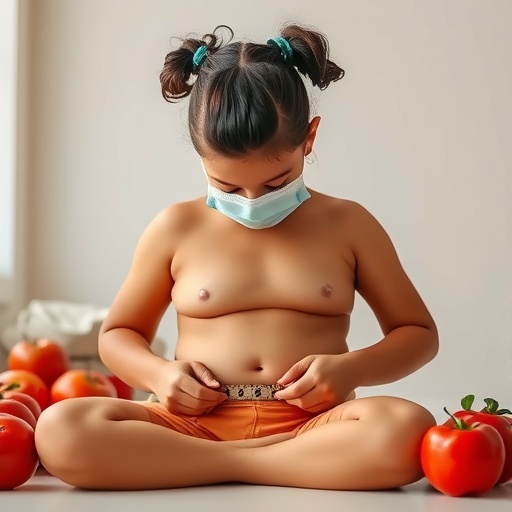
In the unprecedented era marked by the COVID-19 pandemic, an extensive array of psychological and physiological impacts has emerged across populations worldwide. Among the most vulnerable groups are adolescents, who have experienced dramatic shifts not only in their daily routines but also in their mental health and physical well-being. Contemporary research led by Wu, Yan, Zou, and colleagues delves into an intricate and often overlooked aspect of this phenomenon: the complex interplay between adolescents’ coping tendencies and the time they focus on COVID-19-related information, and how these factors correlate with adolescent obesity.
This new study, published in BMC Psychology in 2025, offers a compelling outlook on the multifaceted interactions between mental health behaviors and physical health outcomes during the pandemic. Adolescent obesity, a critical public health issue exacerbated by the pandemic’s disruptions, is examined not just through the lens of diet and exercise but also through behavioral psychology. The authors investigate how adolescents’ methods of coping—whether adaptive or maladaptive—interact with their engagement in consuming COVID-19 information, potentially influencing weight-related outcomes.
The backdrop to this research is the global upheaval caused by COVID-19, which introduced pervasive stressors and an influx of pandemic-related news, often contributing to heightened anxiety and behavioral adjustments among young people. Adolescents, navigating a developmental stage defined by significant neurobiological and psychosocial changes, are particularly susceptible to these stressors. Their methods of coping with stress and uncertainty are crucial determinants of whether the pandemic’s psychological and lifestyle shifts will culminate in adverse health outcomes, particularly increases in obesity.
Researchers have long established a link between chronic stress and weight gain, mediated by various physiological and behavioral mechanisms. Stress stimulates the hypothalamic-pituitary-adrenal (HPA) axis, leading to elevated cortisol levels, which can promote fat accumulation, especially abdominal obesity. Concurrently, stress often triggers emotional eating and sedentary behavior. Yet, the nuances of how specific coping tendencies interact with exposure to pandemic-related media to influence such processes have been insufficiently explored until now.
The study conceptually frames coping tendencies as the habitual ways adolescents respond to stress: problem-focused coping, emotion-focused coping, and avoidance strategies. Problem-focused coping involves active efforts to solve stressors, emotion-focused coping centers on managing emotional responses, and avoidance implies evading the stressor entirely. These differing approaches are hypothesized to modify the psychological impact of engaging with COVID-19 news, which itself varies in quantity and emotional valence.
Focusing intensely on COVID-19 information, especially through social media and news platforms, has been shown in prior research to increase anxiety and exacerbate feelings of helplessness. In adolescents, extended exposure to such information may not only elevate psychological distress but also influence patterns of physical activity and eating, further contributing to weight gain. This study seeks to dissect these intertwined relationships to provide a more comprehensive understanding.
Through an extensive cross-sectional analysis combining self-reported coping styles, quantified COVID-19 information exposure durations, and measured body mass index (BMI) data, the researchers identified significant moderation effects. Notably, adolescents exhibiting predominantly avoidant coping who also spent extensive time consuming COVID-19 information were at markedly higher risk for obesity. This suggests an interactive effect whereby maladaptive coping amplifies the adverse consequences of pandemic information overload.
Conversely, adolescents employing problem-focused coping strategies appeared more resilient. Even when dedicating considerable time to COVID-19 content, these adolescents demonstrated lower associations with increased BMI, implying effective coping mechanisms can buffer against the obesogenic effects linked to pandemic information saturation.
The findings carry important implications for public health interventions targeting adolescent populations. They highlight that managing adolescents’ psychological responses and media engagement during crises could be as crucial as encouraging physical activity and balanced nutrition. Educators, parents, and healthcare professionals are urged to foster healthier coping strategies and guide adolescents in moderating their consumption of distressing news.
Moreover, the study underscores the need for tailored communication strategies in media broadcasting about pandemics or other global crises. Delivering information in ways that minimize sensationalism and emotional distress can potentially reduce maladaptive coping and its downstream health impacts. This is particularly relevant given the ongoing digital immersion of adolescents in pandemic-related content.
From a neurobiological standpoint, the study’s outcomes resonate with emerging evidence linking stress-regulatory neural circuits and reward pathways implicated in both emotional regulation and appetite control. Adolescents with higher anxiety may experience dysregulated dopamine signaling, promoting hedonic eating behaviors, thus contributing to obesity. Coping mechanisms potentially modulate these neuropsychological pathways, representing a promising avenue for further neuroscientific research.
Additionally, the research hints at the broader social determinants influencing adolescent coping and information consumption patterns. Variability in familial support, socioeconomic status, and access to recreational facilities likely interact with these behavioral constructs, suggesting that multidimensional approaches will be essential to comprehensively address adolescent obesity during and beyond the pandemic era.
While this study provides valuable insights, it also acknowledges limitations inherent in cross-sectional designs, including difficulties in establishing causality and potential self-report biases. Longitudinal and experimental studies are advocated to elucidate temporal dynamics and causative mechanisms underlying the observed relationships.
In summary, the innovative study by Wu, Yan, Zou, and colleagues presents a nuanced portrait of how coping tendencies and COVID-19 information engagement intersect to influence adolescent obesity risk. This research not only enriches the understanding of the psychophysiological consequences of the pandemic but also sets a foundation for novel intervention paradigms that integrate psychological resilience-building with physical health promotion.
Understanding these complex interactions is imperative as societies continue to grapple with the ongoing ramifications of the pandemic and prepare for future public health emergencies. Interdisciplinary research bridging psychology, neuroscience, public health, and communication studies will be vital to safeguard adolescent health in an increasingly information-saturated and stress-laden world.
This study ultimately calls for a holistic approach to adolescent well-being—one that recognizes the interplay of mental coping styles, media consumption habits, and physical health outcomes. By fostering adaptive coping and mindful information engagement during times of crisis, there is potential to mitigate the pandemic’s collateral damage on youth health, curbing the rising tide of adolescent obesity and its lifelong consequences.
Subject of Research: The interactive roles of adolescent coping tendencies and engagement with COVID-19 information in relation to adolescent obesity.
Article Title: The interactive roles between coping tendency and focus on COVID-19 information time in Adolescent Obesity.
Article References:
Wu, N., Yan, G., Zou, Y. et al. The interactive roles between coping tendency and focus on COVID-19 information time in Adolescent Obesity. BMC Psychol (2025). https://doi.org/10.1186/s40359-025-03766-x
Image Credits: AI Generated


