


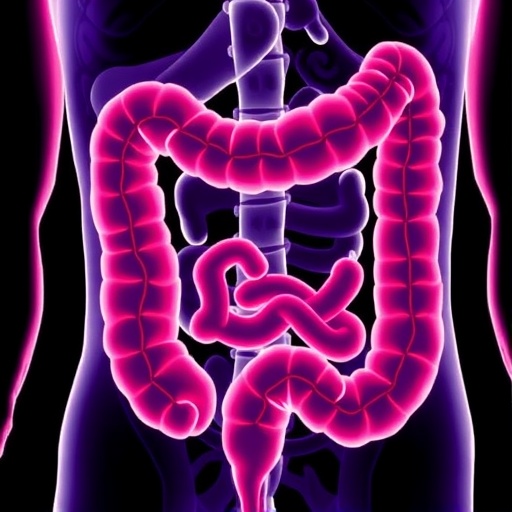
In a recent breakthrough study published in BMC Cancer, researchers have unveiled compelling evidence supporting the prognostic significance of the controlling nutritional status (CONUT) score in patients battling colorectal cancer. This systematic review and meta-analysis sheds new light on how nutritional assessment can intertwine with cancer prognosis, opening pathways for improved patient stratification and individualized therapy.
Colorectal cancer remains one of the most prevalent malignancies worldwide, imposing a significant clinical burden despite advances in detection and treatment. Identifying reliable prognostic indicators is critical for optimizing therapeutic decisions and improving survival outcomes. The CONUT score, which integrates parameters such as serum albumin, total lymphocyte count, and total cholesterol, functions as a robust indicator of nutritional and immune status, both of which are pivotal in cancer progression.
The study conducted a comprehensive search across several key databases, including PubMed, Embase, Web of Science, and Cochrane, extending up to December 2024. By analyzing data from fifteen distinct studies encompassing a sizable cohort of 9,258 colorectal cancer patients, the authors embarked on a rigorous assessment of CONUT’s prognostic relevance. The endpoints evaluated were overall survival (OS), disease-free survival (DFS), and relapse-free survival (RFS), analyzed through hazard ratios (HR) and 95% confidence intervals (CI).
Strikingly, the meta-analysis revealed that higher CONUT scores correlated strongly with poorer outcomes across all survival metrics. Specifically, patients with elevated CONUT had a more than twofold increased risk of mortality (HR: 2.12), alongside significantly worsened DFS (HR: 1.71) and RFS (HR: 1.75). These statistically significant associations underscore CONUT score’s potential as a powerful predictive marker for adverse prognosis in colorectal cancer.
To ensure robustness, the authors performed sensitivity analyses that reaffirmed the stability of these findings, ruling out the undue influence of individual studies. Additionally, subgroup analyses illuminated interesting heterogeneity sources, pinpointing the variation in CONUT cut-off values as a principal contributor to outcome discrepancies in OS data. This insight highlights the importance of standardized threshold definitions in future research and clinical application.
Despite these promising results, the study’s retrospective design and recognized heterogeneity advise caution in interpreting the findings. Publication bias also warrants attention, suggesting that positive results may be overrepresented in the existing literature. The authors advocate for expansive, multicenter prospective cohort studies to validate these preliminary conclusions and definitively establish CONUT’s prognostic utility.
Mechanistically, the link between nutritional status and cancer prognosis is biologically plausible. Malnutrition impairs systemic immunity, fosters inflammation, and diminishes treatment tolerance, all of which accelerate tumor progression. The CONUT score encapsulates this interplay by quantifying parameters that reflect both nutrition and immune competence, thereby offering an integrated marker potentially superior to singular biochemical tests.
This study also resonates with growing recognition that nutritional interventions might enhance oncological outcomes. Future clinical trials could investigate whether modifying CONUT scores through targeted nutritional support translates into tangible survival benefits. If successful, this approach could usher in a paradigm shift where nutritional status monitoring becomes an integral component of colorectal cancer management.
From a statistical methodology perspective, employing both Review Manager 5.4 and STATA 15.1 for data synthesis and analysis mirrors best practices, ensuring rigorous handling of pooled hazard ratios and heterogeneity assessments. Such meticulous analytic frameworks are critical when aggregating evidence across diverse populations and study designs to yield clinically relevant conclusions.
The implications extend beyond colorectal cancer, too. As CONUT has been evaluated in various malignancies, this meta-analysis sets a precedent for incorporating standardized nutritional indices into prognostic models more broadly. An interdisciplinary convergence between oncology, nutrition science, and immunology promises to refine risk stratification and personalize patient care.
In the ever-evolving landscape of cancer prognosis, this thorough examination of the CONUT score reaffirms the indispensable role of host factors that transcend tumor biology alone. By integrating nutritional status assessment into routine oncologic evaluation, clinicians may better identify high-risk patients who need intensified surveillance and tailored interventions.
The trajectory of future research will undoubtedly address existing gaps, such as optimizing CONUT thresholds and elucidating how dynamic changes in nutritional status during treatment influence long-term outcomes. Moreover, harmonizing methodologies across studies will enhance comparability and allow meta-analyses with greater precision.
Ultimately, this study by Gu and Li represents a significant milestone, signaling that easily obtainable laboratory metrics encapsulated in the CONUT score can serve as low-cost, non-invasive prognostic tools in colorectal cancer. As the oncology community embraces precision medicine, such integrative indicators hold promise for refining prognostic accuracy and improving patient-centric treatment pathways.
Through sustained research efforts and clinical validation, the CONUT score could emerge as a routine element in comprehensive colorectal cancer care, bridging gaps between nutritional science and oncologic prognostication. This synthesis of evidence lays the groundwork for a nuanced appreciation of how systemic health influences cancer trajectory, reshaping future paradigms in cancer prognosis and management.
Cite Scienmag News
Nathaniel Bowman. (November 5, 2025). CONUT Score Predicts Colorectal Cancer Outcomes. Scienmag. https://scienmag.com/conut-score-predicts-colorectal-cancer-outcomes/
Nathaniel Bowman. "CONUT Score Predicts Colorectal Cancer Outcomes." Scienmag, 5 November 2025, https://scienmag.com/conut-score-predicts-colorectal-cancer-outcomes/. Accessed 4 September 2026.
Nathaniel Bowman. "CONUT Score Predicts Colorectal Cancer Outcomes." Scienmag. November 5, 2025. https://scienmag.com/conut-score-predicts-colorectal-cancer-outcomes/


