


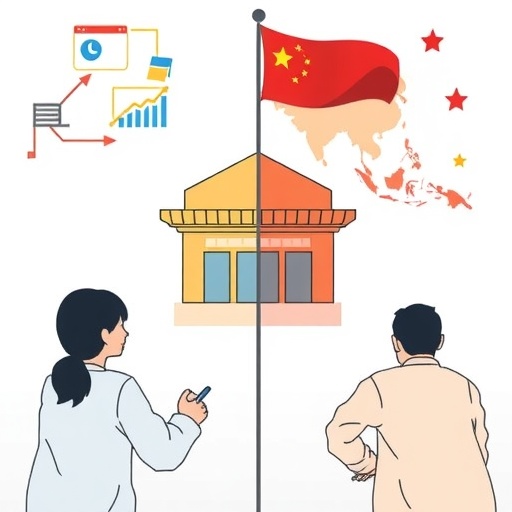
In an era where education systems are increasingly scrutinized for their effectiveness in nurturing competent and well-rounded students, a new dimension of understanding emerges from a recent study by Hu Yong. This study delves into the contrasting educational frameworks of Confucian and Anglo schools, drawing significant insights from the 2015 Programme for International Student Assessment (PISA). This global assessment, which evaluates educational systems worldwide by testing the skills and knowledge of 15-year-old students, serves as a key backdrop for understanding the underlying differences in pedagogical approaches.
Confucian schools, particularly prevalent in East Asian countries such as China, Japan, and South Korea, are rooted in a deep philosophical background that emphasizes respect for authority, collective harmony, and the pursuit of knowledge. This philosophical framework shapes not only the curriculum but also the behaviors expected of students. The hierarchical nature of these educational institutions often results in a classroom where the teacher is seen as a figure of authority and respect, and students engage in a rote-learning process driven by exams and standardized assessments. Here, the goal is not merely to memorize facts but to cultivate an enduring reverence for education and the pursuit of virtue.
On the contrary, Anglo schools, primarily found in Western nations like the United States, the United Kingdom, and Canada, embrace an entirely different ethos. With roots in Enlightenment thought, these educational frameworks prioritize critical thinking, inquiry-based learning, and the importance of individualism. In Anglo classrooms, students are encouraged to question, debate, and explore knowledge, often leading to a more dynamic and less structured educational environment. This difference in approach can significantly impact students’ performance on assessments like PISA, as the methodologies employed to develop cognitive skills and problem-solving abilities vary widely.
Hu’s analysis leverages latent profile analysis to dissect the complexities inherent in these differing educational practices. By identifying distinct profiles of student performance within these cultural frameworks, the study sheds light on the multifaceted nature of educational achievement. For example, it highlights that students from Confucian systems may excel in rote memorization and a thorough understanding of foundational concepts, while those from Anglo environments may demonstrate superior skills in analytical reasoning and innovative problem-solving. Each approach yields its unique set of strengths and weaknesses, underscoring the importance of contextualizing educational effectiveness within cultural paradigms.
This detailed examination of student performance is not merely an academic exercise; it carries profound implications for policymakers and educators worldwide. As global educational trends continue to evolve, understanding the contributions of diverse pedagogical cultures becomes paramount. Hu’s study offers critical insights that can facilitate dialogue between educators from different backgrounds, helping them to learn from one another and potentially adapt practices that could enhance student learning outcomes on a more global scale.
Moreover, the findings provoke essential questions regarding the future of education in a rapidly globalizing world. As educational institutions become increasingly interconnected, the ability to harmonize these differing pedagogical philosophies could lead to a richer and more diverse learning landscape. This interdisciplinary approach could promote a broader understanding of educational effectiveness while respecting the individual nuances present within each culture’s educational practices.
There remains a growing interest in how such contrasting educational philosophies can influence both individual student outcomes and broader societal implications. For instance, the emphasis on communal values in Confucian schools may lead to a stronger sense of belonging and mutual support among students, preparing them for collaborative work environments. Conversely, the focus on individualism in Anglo schools fosters independence but may also contribute to a sense of isolation among students, particularly in high-pressure academic contexts.
As Hu’s research suggests, the interplay between these educational systems can create fertile ground for cross-pollination of ideas, allowing educators to synthesize the strengths of each approach. Engaging in such a dialogue may very well empower future generations to navigate an increasingly complex global landscape, equipped with a balance of analytical skills and collaborative capabilities.
Furthermore, the study emphasizes the importance of fostering a holistic approach to education, one that transcends traditional metrics of success. By recognizing the diverse influences of cultural frameworks on student achievement, educators can design curricula that are not only academically rigorous but also sensitive to the psychological and emotional needs of students. This holistic perspective could lead to more inclusive educational environments, where students are valued not just for their academic performance but also for their unique backgrounds and experiences.
The ramifications of this research extend beyond the classroom. Employers and society at large stand to benefit from a more nuanced understanding of how different educational practices can prepare individuals for various facets of life, work, and community engagement. In an age where adaptability and resilience are prized qualities, blending the strengths of Confucian and Anglo educational cultures could foster a generation of thinkers who are both knowledgeable and skilled in navigating diverse social landscapes.
Overall, Hu’s research serves as a clarion call to educational leaders and policymakers around the world. It encourages a more thoughtful consideration of cultural influences in shaping educational practices. By embracing dialogue and collaboration across educational philosophies, we stand to benefit from a richer tapestry of learning experiences that honor both individual talents and collective aspirations.
In conclusion, the analysis presented by Hu Yong regarding the differences between Confucian and Anglo educational systems invites educators and policymakers to re-evaluate how cultural contexts shape the educational landscape. It paves the way for innovative educational practices that resonate with students’ diverse backgrounds, promoting a more inclusive and strategic approach to learning in the 21st century. As we advance further into a globalized future, the lessons drawn from these distinct educational philosophies could hold the keys to nurturing a generation capable of thriving in a complex world.
Hu, Y. How do Confucian schools and Anglo schools differ? A latent profile analysis based on PISA 2015.
Large-scale Assess Educ 12, 39 (2024). https://doi.org/10.1186/s40536-024-00225-8
Cite Scienmag News
Courtney Benton. (November 26, 2025). Contrasting Confucian and Anglo Education: PISA Insights. Scienmag. https://scienmag.com/contrasting-confucian-and-anglo-education-pisa-insights/
Courtney Benton. "Contrasting Confucian and Anglo Education: PISA Insights." Scienmag, 26 November 2025, https://scienmag.com/contrasting-confucian-and-anglo-education-pisa-insights/. Accessed 3 September 2026.
Courtney Benton. "Contrasting Confucian and Anglo Education: PISA Insights." Scienmag. November 26, 2025. https://scienmag.com/contrasting-confucian-and-anglo-education-pisa-insights/


