


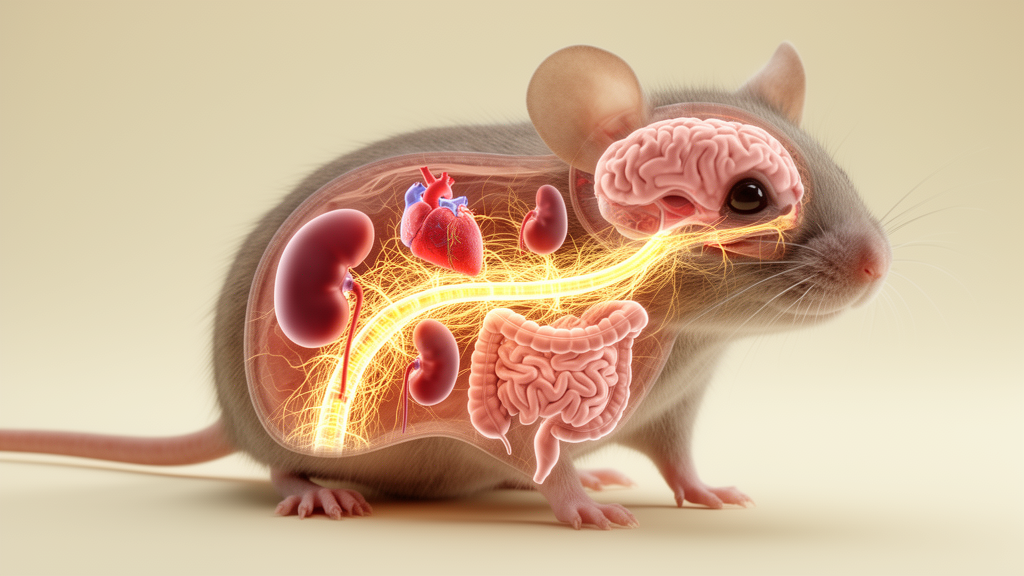
A theoretical paper proposes that the mammalian nervous system may regulate health, behavior and adaptability through an integrated architecture that extends beyond the individual pathways targeted by neuromodulation interventions. The proposed Mammalian Regulatory Architecture, or MRA, distinguishes the biological route through which an intervention initially engages the nervous system from its broader functional significance. The author argues that this distinction could help explain why interventions using substantially different routes sometimes produce improvements across several physiological and behavioral domains, while emphasizing that the framework remains a hypothesis requiring direct empirical testing.
The central motivation is an observational pattern rather than a demonstrated mechanism. Different chronic conditions and challenges can produce overlapping burdens involving physiological regulation, cognition, emotional expression, social engagement, recovery and everyday activity even when their initiating causes and proximate mechanisms differ. Similarly, interventions that enter through different neural, sensory or physiological routes may be followed by improvements in overlapping outcomes. Such convergence does not demonstrate a common pathology or shared mechanism, but it raises a question about whether recurring functional patterns reflect coordinated regulatory relationships that are not apparent when conditions or interventions are examined independently.
The MRA is built around mammalian features associated with traits including lactation, nursing, prolonged developmental dependency, caregiving, proximity, reciprocal communication and co-regulation. The proposed evolutionary claim is not that these functions, or the structures supporting them, first appeared in mammals. Communication, vocal learning, social buffering, sensory integration and physiological coordination also occur in other vertebrates. Instead, the framework asks whether mammalian evolution reorganized the functional relationships among conserved regulatory processes when they became integrated with mammalian specializations and the demands of reproduction, caregiving and sustained social dependence.
That distinction is important because an organizational claim is not equivalent to an anatomical or physiological claim. The evidence needed to show that a nerve pathway exists, carries particular signals or regulates a specified organ cannot, by itself, establish how that pathway is coordinated with respiratory, endocrine, immune, sensory, motor and behavioral processes. Conversely, evidence that several processes are coordinated does not identify a single anatomical structure or mechanism responsible for the coordination. The author therefore presents the MRA as an additional level of analysis that complements, rather than replaces, pathway-specific neuroanatomy, neurophysiology and pharmacology.
A central concept is the “biobehavioral portal,” which describes the functional significance of a route through which information or an intervention gains access to the wider regulatory architecture. A portal is not itself a new structure or mechanism. A pathway explains how an intervention first engages the nervous system; a mechanism explains how a particular effect is generated; and a portal asks how engagement through that route influences relationships among regulatory processes. In this model, the portal constrains the information entering the system, whereas the response profile emerges from how that information is integrated with the recipient’s prevailing physiological state. Two portals can therefore generate similar outcomes without producing identical physiological organization, and the same portal may have different consequences in people with different internal states.
The proposed architecture also treats physiological state as an emergent property of coordinated relationships rather than a single measurement such as heart rate, autonomic balance, stress or arousal. It further introduces “Accessibility,” defined as the state-dependent availability of an existing capacity for recruitment and expression. A person may retain the ability to communicate, think flexibly, learn, recover or mobilize but find that capacity difficult to express under a physiological state organized around defense or other competing demands. Observable performance is not the same thing as Accessibility because it also depends on motivation, learning, experience, context and the demands of a task. Establishing Accessibility therefore requires independent evidence that a capacity exists and that its availability varies systematically with independently measured physiological organization.
The paper identifies vagus nerve stimulation, structured auditory stimulation, breathing practices and sensory engagement such as touch as possible modes of access. Vagus nerve stimulation initially recruits a relatively well-characterized afferent route to the nucleus of the solitary tract, whereas structured acoustic stimulation begins with auditory-sensory pathways. Respiratory practices engage pulmonary afferents, brainstem respiratory networks, thoracic mechanics, gas exchange, baroreflex processes and respiratory-linked cardiac regulation rather than one isolated route. The framework does not claim that these inputs have identical mechanisms or that their effects can be assigned to a single pathway. Instead, it proposes that researchers can compare how distinct routes influence the temporal relationships and coordination among physiological processes.
A randomized four-arm study in adults with persistent Long COVID symptoms provides an illustration of the questions this approach raises. Participants received structured acoustic stimulation, transcutaneous cervical vagus nerve stimulation, both interventions together, or a control condition. Within-group analyses showed multidomain improvement in the active groups and comparatively little change in the control group, with anxiety worsening in controls. Differences among the active interventions were not statistically significant. The study did not collect the multivariable physiological data needed to test physiological convergence, included no sham procedure, and could not exclude expectancy, attention, regression to the mean, spontaneous improvement or other nonspecific effects. The result therefore illustrates outcome convergence, not equivalence, a common mechanism or evidence for the MRA.
The framework leads to four separable predictions. First, interventions with different routes but convergent adaptive outcomes should also show convergence in prespecified features of physiological organization, while retaining pathway-specific signatures. Second, changes in physiological organization should be systematically related to changes in the Accessibility of independently established capacities. Third, a route should qualify as a biological portal only if its engagement produces measurable organizational changes that are related to Accessibility or adaptive function. Fourth, comparative evidence should reveal whether mammalian evolution produced a distinctive integration of conserved processes with mammalian specializations. The paper recommends prospective measurements of respiration, heart period, blood pressure and other signals across baseline, intervention, challenge and recovery, with analyses focused on relationships, temporal coordination and reorganization rather than the number of variables that change individually. The MRA’s scientific value therefore lies not in declaring a new regulatory system, but in generating explicit predictions that competing explanations can constrain, revise or reject.
Subject of Research: A conceptual framework for mammalian physiological regulation, neuromodulation pathways and state-dependent adaptive capacity
Article Title: The mammalian regulatory architecture: biobehavioral portals and the organization of physiological state
Article References: Porges, S. W. (2026). The mammalian regulatory architecture: biobehavioral portals and the organization of physiological state. Frontiers in Neuroscience, 20, Article 1923279. https://doi.org/10.3389/fnins.2026.1923279
Image Credits: AI Generated
DOI: 10.3389/fnins.2026.1923279
Keywords: mammalian regulation, neuromodulation, physiological state, vagus nerve stimulation, autonomic neuroscience, adaptive function, Polyvagal Theory, mammalian evolution, Long COVID, psychophysiology, mammalian, regulatory
Cite Scienmag News
Cassandra Pierce. (October 22, 2026). Conceptual framework links neural pathways to mammalian physiological regulation. Scienmag. https://scienmag.com/conceptual-framework-links-neural-pathways-to-mammalian-physiological-regulation/
Cassandra Pierce. "Conceptual framework links neural pathways to mammalian physiological regulation." Scienmag, 22 October 2026, https://scienmag.com/conceptual-framework-links-neural-pathways-to-mammalian-physiological-regulation/. Accessed 22 October 2026.
Cassandra Pierce. "Conceptual framework links neural pathways to mammalian physiological regulation." Scienmag. October 22, 2026. https://scienmag.com/conceptual-framework-links-neural-pathways-to-mammalian-physiological-regulation/


