


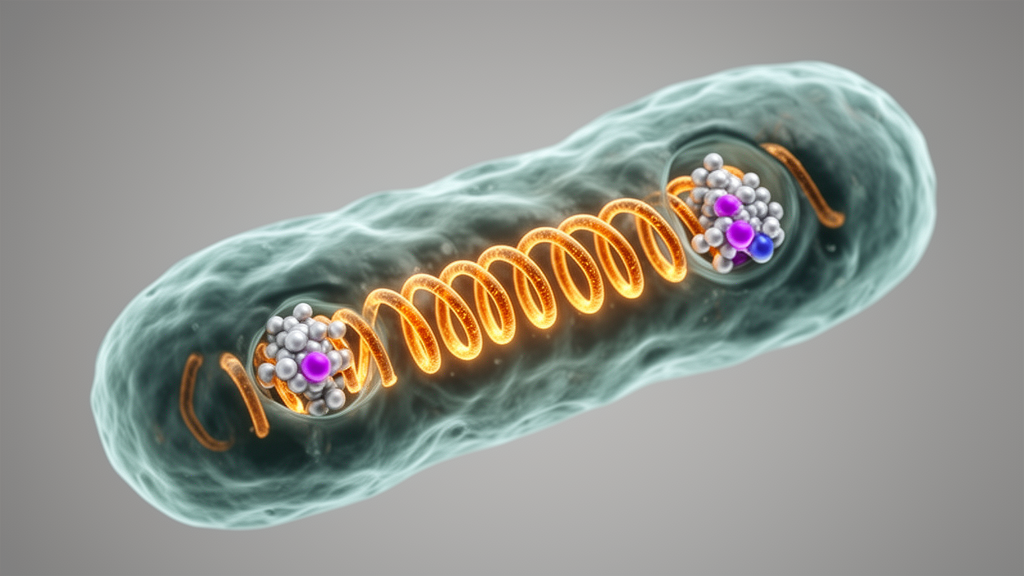
Tuberculosis still kills roughly 1.25 million people every year, and the rise of multidrug-resistant and extensively drug-resistant strains of Mycobacterium tuberculosis has made the disease far harder to treat than it was three decades ago, when the World Health Organization first declared it a global health emergency. The standard first-line regimen of rifampicin, isoniazid, pyrazinamide and ethambutol is increasingly compromised, because resistance arises through chromosomal mutations that either alter the drug targets themselves or block the activation of prodrugs such as pyrazinamide, which must be converted by bacterial pyrazinamidase into the active metabolite pyrazinoic acid. Against this backdrop, a team of Indian researchers has now reported two entirely new computational drug leads that attack the tuberculosis bacterium at a different and, crucially, resistance-proof point: the ATPase engine of its DNA gyrase B subunit.
The study, published in Frontiers in Tuberculosis, was led by Jagritee Yadav and Meenakshi Singh of Banaras Hindu University together with colleagues at North Eastern Hill University and Jawaharlal Nehru University. Rather than relying on a single screening technique, the group assembled an integrated computational pipeline that began with pharmacophore-based virtual screening of approximately one million compounds drawn from the PubChem, ZINC, ChEMBL and MolPort chemical libraries, and then progressively filtered the hits through Lipinski’s rule of five, structural diversity analysis, molecular docking, ADMET and toxicity prediction, 100-nanosecond molecular dynamics simulations and density functional theory calculations. The funnel narrowed roughly 30,000 preliminary hits to 21 candidates and finally to 10 unique molecules, two of which, designated compounds D and I, emerged as the strongest leads.
The choice of target is what gives the work its translational significance. DNA gyrase is a bacterial type II topoisomerase that performs the dual essential functions of negative DNA supercoiling and decatenation, and it exists as an A2B2 heterotetramer in which the GyrA subunit cleaves and rejoins DNA while the GyrB subunit hydrolyses ATP to power the process. Unlike most bacterial species, which carry both DNA gyrase and topoisomerase IV, Mycobacterium tuberculosis relies exclusively on DNA gyrase, meaning the enzyme lacks redundancy and offers no compensatory pathway for the bacterium to fall back on. The enzyme is also absent in humans and differs substantially from human topoisomerases, so inhibitors aimed at the GyrB ATPase domain carry a reduced risk of off-target effects on human DNA processing machinery.
Fluoroquinolones, the classical gyrase-directed antibiotics, bind the cleavage-reunion core of GyrA, but rising clinical resistance driven by mutations in the GyrA quinolone resistance-determining region has shifted attention toward the enzyme’s energetic engine. The N-terminal ATPase domain of GyrB contains a highly conserved GHKL-type ATP-binding pocket, and small molecules that occupy this pocket lock the enzyme in an inactive, non-functional conformation, freezing the catalytic cycle and circumventing GyrA-mediated resistance altogether. Classical aminocoumarin inhibitors such as novobiocin, the proven natural-product GyrB antibiotic, suffer from toxicity, resistance and unfavourable pharmacokinetic properties, which is precisely why the search for structurally distinct ATPase-targeting chemotypes remains an urgent objective in anti-tubercular drug discovery.
Technically, the team built structure-based pharmacophore models from two crystal structures retrieved from the RCSB Protein Data Bank: the M. tuberculosis GyrB ATPase domain complexed with AMPPNP (PDB ID 3ZKB, resolved at 2.90 angstroms) and the Mycobacterium smegmatis GyrB domain complexed with aminopyrazinamide (PDB ID 4B6C, resolved at 2.20 angstroms). Using the Pharmit web server, they mapped hydrogen bond donors, hydrogen bond acceptors, aromatic ring centres and hydrophobic regions within the ATP-binding cavity, and validated the models by confirming that novobiocin satisfied the essential pharmacophoric constraints. The comparative focus on M. smegmatis is deliberate, because this fast-growing, non-pathogenic relative is widely used as a surrogate in mycobacterial drug discovery; the full-length GyrB proteins of the two species are each exactly 675 amino acids long and share 87.3 percent sequence identity and 92.7 percent similarity, while the ATPase domain alone exhibits 82.8 percent identity. Structural superposition of homology models using UCSF ChimeraX yielded a global root-mean-square deviation of just 0.365 angstroms over the aligned C-alpha atoms, confirming that the two enzymes are nearly identical in tertiary structure.
Molecular docking with AutoDock, employing the Lamarckian Genetic Algorithm over 100 runs per ligand, produced striking results. Against the M. tuberculosis GyrB pocket, compounds A, D and I achieved docking scores of −10.07, −10.22 and −10.16 kilocalories per mole respectively, while against M. smegmatis GyrB, several compounds scored between −10.34 and −12.18 kilocalories per mole. The reference drug novobiocin, by comparison, managed only −9.65 kilocalories per mole against the tuberculosis enzyme and a remarkably weak −3.36 kilocalories per mole against the smegmatis protein, despite forming four hydrogen bonds in the latter case. Compound D formed three hydrogen bonds with Asn309 and Arg40 in the tuberculosis pocket and two with Gln102 and Glu48 in the smegmatis pocket, whereas compound I established three hydrogen bonds with Arg40 in the tuberculosis enzyme and two with Asn52 and Ser126 in the smegmatis counterpart.
Drug-likeness and safety filtering proved equally decisive. SwissADME analysis using the BOILED-Egg model, which predicts passive gastrointestinal absorption from lipophilicity and topological polar surface area, placed most compounds in the egg’s white region, indicating favourable oral absorption, while none appeared in the yellow yolk region of blood-brain barrier penetration, a desirable property for non-CNS antibacterial agents. ADMET Lab 3.0 toxicity predictions covering Ames mutagenicity, cytotoxicity and carcinogenicity revealed that compounds D and I were inactive across all evaluated parameters, whereas compounds C and F were predicted Ames positive and compounds A, E and F showed carcinogenic tendencies. Compound A, despite its excellent docking score, was therefore excluded from further consideration on safety grounds, leaving D and I as the definitive leads.
The 100-nanosecond molecular dynamics simulations, run with the Desmond module of the Schrödinger Suite using the OPLS3e force field in solvated orthorhombic boxes with 0.15 molar NaCl, exposed a fascinating species-specific contrast between the two leads. In the M. tuberculosis system, compound I maintained root-mean-square deviation values within approximately 5.0 to 6.0 angstroms, closely tracking the stable apo protein, while compound D underwent pronounced destabilisation between 20 and 40 nanoseconds, spiking to roughly 9.5 angstroms. Local flexibility analysis pinpointed the loop spanning residues 200 to 220, likely the ATP-binding lid, as the principal dynamic element: compound D drove hyper-flexibility exceeding 22 angstroms in this region, whereas compound I dampened it to about 14 angstroms, an 8-angstrom reduction indicating stabilising interactions that tether the segment. Compound I also progressively compacted the protein, with the radius of gyration stabilising at about 24.5 angstroms and solvent-accessible surface area falling below 19,500 square angstroms, and it sustained a hydrogen-bond network of 6 to 12 bonds, achieving a more favourable binding free energy of −45.0285 kilocalories per mole compared with −39.1122 for compound D.
In the M. smegmatis system the picture inverted. Compound D maintained the lowest and flattest root-mean-square deviation values of roughly 2.5 to 2.7 angstroms, functioning as a strong stiffening ligand that locked the protein near its crystal structure, with the lowest radius of gyration and solvent exposure of all systems, and it achieved a superior binding free energy of −55.0526 kilocalories per mole against −44.3320 for compound I. Compound I, meanwhile, sustained 3 to 6 persistent hydrogen bonds while D typically managed only 1 to 2, implying that D’s stabilisation in this species arises more from hydrophobic packing and van der Waals forces than from polar interactions. Density functional theory calculations at the B3LYP/6-31G** level of theory added an electronic dimension to the story: compound D exhibited a larger HOMO-LUMO energy gap of 3.42 electron volts against 3.07 for compound I, together with higher electronegativity of 3.16, greater chemical hardness of 1.71 and a higher global electrophilicity index of 5.83 versus 4.58, all indicating enhanced electronic stability and a stronger capacity for charge-transfer interactions within the ATPase pocket.
The authors conclude that compounds D and I, which contain pyrazine and aminopyrimidine-linked fused heterocyclic scaffolds, share pharmacophoric features with known ATPase-targeting GyrB inhibitors such as novobiocin and aminopyrazinamide derivatives while offering structurally distinct chemotypes that may overcome the limitations of classical aminocoumarins. A single residue variation at position 208, serine in M. tuberculosis and threonine in M. smegmatis, within the inhibitor-binding pocket may partly explain the species-dependent interaction behaviour. The findings remain theoretical, and the team stresses that the next steps must include in vitro enzymatic inhibition assays, antimycobacterial susceptibility testing against drug-sensitive and drug-resistant strains, cytotoxicity evaluation against human homologous targets, systematic structure-activity relationship studies and, eventually, in vivo pharmacokinetic validation. Yet as a demonstration of how pharmacophore modelling, docking, dynamics and quantum chemistry can converge on a conserved, resistance-resistant target, the study offers a compelling blueprint for the next generation of anti-tubercular drug discovery.
Subject of Research: tb-drug-discovery
Article Title: Identification of novel DNA gyrase B inhibitors in Mycobacterium species using integrated computational approaches
Article References: Yadav, J., Lalhmangaihzuali, Shukla, H., Chandra, A., Singh, S. K., & Singh, M. (2026). Identification of novel DNA gyrase B inhibitors in Mycobacterium species using integrated computational approaches. Frontiers in Tuberculosis, 4, Article 1854329. https://doi.org/10.3389/ftubr.2026.1854329
Image Credits: AI Generated
DOI: 10.3389/ftubr.2026.1854329
Keywords: Identification, novel, gyrase, inhibitors, Mycobacterium, species, integrated, computational, approaches, scientific research
Cite Scienmag News
Kristina Jarvis. (October 16, 2026). Computational Hunt Yields Two New Anti-Tuberculosis Drug Leads Targeting the Bacterial DNA Engine. Scienmag. https://scienmag.com/computational-hunt-yields-two-new-anti-tuberculosis-drug-leads-targeting-the-bacterial-dna-engine/
Kristina Jarvis. "Computational Hunt Yields Two New Anti-Tuberculosis Drug Leads Targeting the Bacterial DNA Engine." Scienmag, 16 October 2026, https://scienmag.com/computational-hunt-yields-two-new-anti-tuberculosis-drug-leads-targeting-the-bacterial-dna-engine/. Accessed 16 October 2026.
Kristina Jarvis. "Computational Hunt Yields Two New Anti-Tuberculosis Drug Leads Targeting the Bacterial DNA Engine." Scienmag. October 16, 2026. https://scienmag.com/computational-hunt-yields-two-new-anti-tuberculosis-drug-leads-targeting-the-bacterial-dna-engine/


