

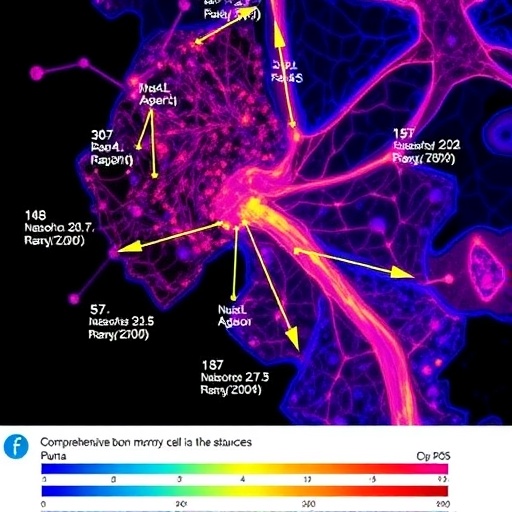
In a groundbreaking advancement in pediatric hematology, researchers at the Princess Máxima Center have successfully constructed an unprecedented single-cell multiomic atlas of healthy pediatric bone marrow. This comprehensive study, published in Nature Immunology, involved meticulous analysis of nearly 91,000 individual bone marrow cells sourced from donors ranging between two and 32 years of age, thereby capturing a wide spectrum of developmental stages. Utilizing cutting-edge single-cell RNA sequencing paired with surface protein profiling, alongside sophisticated spatial transcriptomics techniques, the team unveiled intricate age-dependent distinctions in bone marrow architecture and lineage differentiation that have eluded scientists until now.
Bone marrow, the central hub for hematopoiesis, serves as the cradle for all blood cell lineages including erythrocytes, leukocytes, and thrombocytes. Disturbances in this finely balanced ecosystem are hallmark features of numerous hematological disorders such as leukemia, where malignant cells aberrantly overtake normal progenitors. Despite the pivotal role of bone marrow in pediatric health, the majority of existing reference data stem from adult samples, leaving a critical knowledge gap. This study addresses that void by systematically cataloging the cellular and molecular composition of healthy pediatric bone marrow, offering the research community a vital baseline for future comparative and therapeutic endeavors.
The investigative effort revealed that children’s bone marrow is not merely a miniature replica of adult marrow; it exhibits fundamentally distinct cellular compositions and functional priorities. Specifically, children under ten years actively prioritize the production of B lymphocytes—a critical component of the adaptive immune system—whereas the marrow landscape in adolescents and young adults shifts towards augmented myeloid and T cell output. Such dynamic variation underscores the importance of developmental context when interpreting hematopoietic processes or pathological deviations.
Beyond lineage frequency, the study delved into the microenvironment—or niche—that nurtures hematopoiesis, uncovering age-associated remodeling of stromal cell populations and their signaling networks. These supportive stromal components secrete factors that guide stem cell fate decisions, modulate immune cell interactions, and maintain tissue homeostasis. Age-dependent alterations in these niches suggest that cellular crosstalk is not static but evolves during childhood, potentially influencing susceptibility to blood diseases and response to treatment.
Methodologically, the researchers employed an integrative multiomic approach, combining transcriptomic data with surface protein markers at single-cell resolution. This dual profiling enabled unprecedented granularity in cell type identification and functional state characterization. Furthermore, spatial transcriptomics furnished spatial context by mapping where distinct cell populations reside within the marrow matrix, offering clues about cellular interactions and marrow organizational principles. This holistic viewpoint is pivotal in deciphering complex tissue dynamics that conventional bulk analyses might obscure.
The resulting atlas is a resource of immense strategic value. Investigators worldwide can now leverage this dataset to contextualize disease-associated molecular signatures against a healthy baseline tailored to age, thereby enhancing diagnostic precision and therapeutic targeting. For instance, discerning whether observed molecular alterations in pediatric leukemia stem from oncogenic events or natural developmental transitions becomes feasible, mitigating misinterpretation risks.
Dr. Mirjam Belderbos, the study’s lead pediatric oncologist, emphasized the clinical import of these findings, highlighting that precise knowledge of age-specific marrow biology is critical to distinguish between normal maturation and malignancy. This has profound implications for refining therapeutic regimens and minimizing collateral damage to regenerating pediatric tissues during chemotherapy or stem cell transplantation.
The study also portends advancements in regenerative medicine by elucidating the stromal signaling pathways that govern lineage commitment and niche maintenance. Understanding these pathways could enable the engineering of artificial marrow niches or the enhancement of stem cell engraftment, vital for improving outcomes in bone marrow transplantation and gene therapy approaches for pediatric blood disorders.
Beyond clinical applications, this research advances fundamental biological knowledge about hematopoiesis and tissue development. By charting the ontogeny of marrow composition and function, the atlas provides insights into normal immune system maturation, potentially informing vaccine design and immunological interventions tailored to different pediatric age groups.
Financially backed by prestigious entities such as the Landsteiner Foundation for Blood Transfusion Research, the European Research Council, and the Children Cancer Free Foundation (KiKa), the investigation exemplifies effective collaboration between clinical experts and genomic research facilities. The fusion of expertise ensured rigorous data generation and robust analytical frameworks necessary for such an ambitious project.
In effect, this pioneering atlas stands as a testament to the power of next-generation technologies in unraveling human developmental biology at unprecedented resolution. As the scientific community assimilates these insights, they are poised to revolutionize the understanding and treatment of childhood leukemias and other hematological diseases, heralding a new era of precision pediatric medicine.
Subject of Research: Human tissue samples
Article Title: Single-cell multiomic atlas of healthy pediatric bone marrow reveals age-dependent differences in lineage differentiation driven by stromal signaling
News Publication Date: 17-Feb-2026
Web References: https://doi.org/10.1038/s41590-026-02422-9
Keywords: Bone marrow, Bone marrow cells, Bone marrow transplantation, Leukemia, Oncology, Pediatrics


