

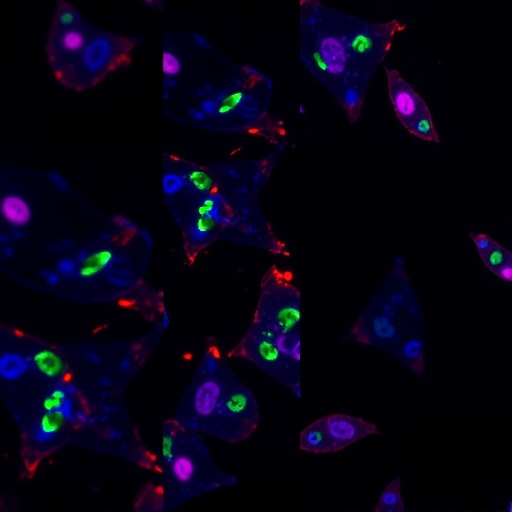
In a groundbreaking discovery, researchers have unveiled the anticancer potential of Compound 7h, a novel therapeutic agent poised to revolutionize treatment strategies for colorectal cancer. Colorectal cancer remains one of the leading causes of cancer-related deaths globally, making the development of effective therapeutic interventions a critical public health priority. The recent study conducted by Yang, Fu, Huang, and colleagues presents compelling evidence that Compound 7h exerts its anti-oncogenic effects through a multifaceted mechanism, highlighting the compound’s potential to alter the landscape of colorectal cancer therapy.
The primary focus of the research demonstrates how Compound 7h induces death-receptor-mediated apoptosis in colorectal cancer cells. Apoptosis, or programmed cell death, is a crucial mechanism through which the body eliminates dysfunctional or harmful cells. In many cancer types, including colorectal cancer, the apoptotic processes are often disrupted, allowing tumor cells to survive and proliferate unchecked. By activating death receptors, Compound 7h effectively reinstates this natural defense, prompting cancer cells to undergo apoptosis and curtailing their growth.
Moreover, the study reveals that Compound 7h promotes DNA damage within colorectal cancer cells. DNA integrity is vital for cell survival, and when cancer cells are subjected to damage beyond repair, they are driven towards apoptosis. The researchers utilized a variety of assays to confirm that Compound 7h directly disrupts the DNA of cancer cells, leading to an accumulation of DNA damage. This aspect of the compound’s action emphasizes a dual mechanism where not only does it prompt cell death but also compromise the survival capabilities of cancer cells through targeted DNA damage.
In addition to apoptosis and DNA damage, the study uncovers that Compound 7h obstructs autophagic flux, an important cellular process that can either promote survival or lead to cell death depending on the context. Autophagy, a regulated process where cells degrade and recycle cellular components, can be manipulated by cancer cells to support their own survival, especially under stress conditions. The inhibitory effect of Compound 7h on autophagic flux signifies a strategic approach to starve cancer cells of their survival mechanisms, further enhancing its potential as an anticancer agent.
The unique mechanisms through which Compound 7h exerts its anti-oncogenic effects position it as a promising candidate in the ongoing battle against colorectal cancer. The compound not only engages various pathways that lead to cancer cell demise but also provides a targeted approach that could minimize damage to surrounding healthy tissue, a significant concern in traditional chemotherapy. As researchers delve deeper into the fine mechanisms of action, the hope is that such targeted therapies can be optimized to form the cornerstone of future colorectal cancer treatments.
The implications of this research extend beyond the laboratory. Patients suffering from colorectal cancer often face limited treatment options, particularly when the disease progresses to advanced stages. Insights from this study could pave the way for clinical trials, evaluating the efficacy and safety of Compound 7h in human subjects. Early-phase clinical trials will be essential to understand optimal dosing, potential side effects, and the overall therapeutic window of this compound in oncology.
Furthermore, understanding the molecular pathways activated by Compound 7h can provide valuable insights into resistance mechanisms observed in colorectal cancer therapies. This work may inspire subsequent studies aimed at enhancing the efficacy of existing treatments by combining them with Compound 7h. By exploring synergistic effects, researchers could potentially enhance treatment responses in patients who are non-responsive to conventional therapies.
As the study highlights, the potency of Compound 7h illustrates the value of research focused on natural compounds and small molecules derived from diverse sources. Many significant discoveries in pharmacology originated from the examination of natural products, and the continuous exploration of such compounds keeps the door open for innovative cancer therapies. The move towards targeted therapy not only addresses efficacy but could also lead to improved quality of life for patients battling this disease.
In light of the promising findings associated with Compound 7h, it is essential for the scientific community to maintain momentum in investigating novel therapeutic agents. Subsequent research should aim to dissect the pharmacokinetics and pharmacodynamics of Compound 7h in vivo. This will ensure that researchers can ascertain how the body metabolizes the compound, potential interactions with other drugs, and the best ways to harness its anticancer properties effectively.
Additionally, it will be critical to examine the long-term effects of Compound 7h both in preclinical models and, eventually, in clinical settings. While short-term efficacy is encouraging, understanding the long-term impact on patient outcomes will be essential in validating the safety and efficacy profile of this compound as a go-to agent for colorectal cancer treatment.
The rise in precision medicine emphasizes the need for therapies tailored to the specific genetic and molecular characteristics of individual tumors. The application of Compound 7h could align with this approach by being assessed in various genetic backgrounds, as colorectal cancer is a heterogeneous disease. By studying its effects across different tumor types and genetic mutations, researchers can better illustrate the potential utility of this compound in broader contexts.
As the scientific community eagerly anticipates the next steps in this line of research, the collaborative efforts of oncologists, molecular biologists, and pharmacologists will be essential to translate laboratory discoveries into clinical outcomes. The path from bench to bedside, while often fraught with challenges, is invigorated by the promise shown by agents like Compound 7h in pulling the fight against cancer forward, providing hope to millions affected by this deadly disease.
Continued investment in cancer research remains paramount as discoveries like the one surrounding Compound 7h make their way through the rigorous processes of scientific validation. Each breakthrough contributes to a larger tapestry of knowledge, gradually filling in the gaps that stand between current therapeutic regimens and the goal of effective, personalized cancer treatment. This study serves as a beacon of progress and a reminder of the relentless pursuit of knowledge geared towards the ultimate aim: the eradication of cancer.
As researchers refine their insights and push for real-world applications, the broader implications of this research could extend beyond colorectal cancer and touch on various cancer types where similar mechanisms may be leveraged to inhibit tumor progression. Thus, the journey of Compound 7h is only just beginning, and its potential will continue to unravel in the months and years ahead.
The excitement of uncovering novel therapeutics like Compound 7h also comes with a call to action for the scientific community. The need for rigorous research, ethical considerations in clinical trials, and collaborative approaches will sustain the momentum generated by such findings. With each step forward, the hope for improved cancer therapies becomes more tangible, transforming the future for patients grappling with the challenges of battling cancer.
Subject of Research: Anti-oncogenic effects of Compound 7h on colorectal cancer cells.
Article Title: Compound 7h exerts its anti-oncogenic effects on colorectal cancer cells by inducing death-receptor-mediated apoptosis, promoting DNA damage, and obstructing autophagic flux.
Article References: Yang, D., Fu, Y., Huang, J. et al. Compound 7 h exerts its anti-oncogenic effects on colorectal cancer cells by inducing death-receptor-mediated apoptosis, promoting DNA damage, and obstructing autophagic flux. BMC Pharmacol Toxicol (2026). https://doi.org/10.1186/s40360-026-01087-2
Image Credits: AI Generated
DOI:
Keywords: Colorectal cancer, Compound 7h, apoptosis, DNA damage, autophagic flux.


