


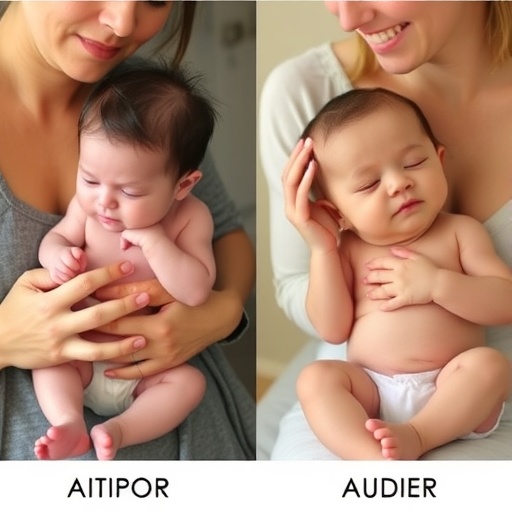
In a groundbreaking study poised to redefine pain management in neonatology, researchers have delved into the comforting realms of sensory stimulation to address a pressing concern: the alleviation of pain experienced by preterm neonates during invasive medical procedures. This compelling investigation, led by a team of experts, including Mohammed E.S., Elmwafie S.M., and Mohamed F.S.A., examines the comparative effectiveness of tactile versus auditory stimulation. The research arrives at a critical juncture where effective pain management remains one of the most influential factors in the healing outcomes for vulnerable infants in Neonatal Intensive Care Units (NICUs).
As preterm neonates undergo a plethora of invasive procedures—including blood draws, catheter placements, and other necessary interventions—managing their pain becomes paramount. Understanding how to mitigate pain effectively in these fragile patients is a matter of ongoing debate in the medical community. Conventional pain relief techniques often involve pharmacological interventions, which can introduce a range of side effects. Therefore, non-pharmacological methods, such as different forms of sensory stimulation, are garnering attention for their potential benefits.
The study makes a compelling argument for the application of tactile and auditory stimuli as alternative methods to limit pain and distress among preterm infants. Tactile stimulation encompasses gentle touch and skin-to-skin contact, also known as kangaroo care, which has shown promise in fostering security and comfort. On the other hand, auditory stimulation focuses primarily on soothing sounds, including lullabies or recordings of maternal heartbeats. Each approach not only seeks to distract the infant but also aims to activate natural comfort mechanisms.
In order to assess the effectiveness of these interventions, the researchers carried out a meticulously designed clinical trial within the confines of various NICUs. Preterm neonates were recruited and divided into groups receiving either tactile stimulation or auditory stimulation prior to the invasive procedures. Various physiological measures were observed, including heart rate, oxygen saturation levels, and behavioral responses indicative of pain, such as crying and facial expressions indicating discomfort.
The findings of the study offer new insights and provoke thought for practitioners in the field. Preliminary results indicate that both forms of stimulation produce significant benefits when compared to a control group receiving no sensory intervention at all. However, a key outcome suggests that certain infants may respond better to tactile stimulation, experiencing lower pain scores and more stable physiological parameters than those subjected to auditory cues.
The implications of these findings extend far beyond the confines of the hospital. If tactile and auditory stimulations can facilitate better pain management for preterm neonates, they may also serve as vital tools in educating parents and caregivers on how to best comfort their infants during times of distress. By empowering families with knowledge and practical strategies, the healthcare community can help foster improved bonding experiences during such critical moments.
This study also sheds light on the need for further research in non-pharmacological pain management strategies not only in neonatology but across various medical fields, where patients may be unable or unwilling to articulate their pain levels. As attention turns increasingly towards holistic approaches in healthcare, it becomes imperative for future inquiries to explore the nuances between different types of stimulation and their contexts, durations, and environments.
Moreover, the research strongly suggests that multidisciplinary approaches involving nurses, physicians, and family members will be crucial in implementing these findings into everyday practice. Each stakeholder has a role in fostering a nurturing environment for neonates, thereby ensuring that approaches to pain management are not just clinical but also compassionate and individualized.
The results presented in this study, while initially sounding optimistic, come with a caveat of caution that should be heeded by practitioners. Each infant is unique; therefore, what works wonders for one may not universally apply to another. Thus, a careful assessment of individual responses will be imperative in clinical settings to tailor sensory interventions that meet the specific needs of each neonate undergoing procedures.
As we look to the future of neonatal care, this research opens the floodgates for additional inquiries exploring intersecting fields such as psychology, behavioral science, and even music therapy. By synthesizing knowledge from various disciplines, clinicians can craft enhanced protocols that integrate sensory stimulation as valuable components of overall neonatal pain management.
As the healthcare community grapples with pressing concerns around pain management in neonates, the significance of such studies cannot be understated. Groundbreaking findings like those in this research serve as a beacon of hope, guiding clinicians towards innovative and effective treatments that promise to transform the neonatal care landscape.
With the advancement of studies like this, there is a growing responsibility for practitioners to stay informed about emerging strategies that prioritize the well-being of vulnerable patients. Collectively, these efforts will lead to gradual yet impactful changes in clinical practices, ultimately aiming for a future where invasive procedures are complemented by strategies that uplift, comfort, and heal.
The pursuit of knowledge and the commitment to improving clinical practice for preterm neonates reflect the essence of modern medicine. As researchers bridge the gap between studies and real-world applications, we can only foresee a future where the struggles of a neonatal patient might find some solace in the simple act of touch or sound.
In conclusion, the exploration of non-pharmacological pain mitigation strategies like tactile and auditory stimulation for preterm neonates marks an important evolution in pediatric medicine. As findings from studies continue to shape and refine our understanding, it becomes crucial for health systems to prioritize such research, ultimately enhancing the patient experience and enriching the healing journey for the littlest lives.
Mohammed, E.S., Elmwafie, S.M., Mohamed, F.S.A. et al. The effect of tactile versus auditory stimulation on reducing pain associated with invasive procedures among preterm neonates at NICUs.
BMC Pediatr 25, 623 (2025). https://doi.org/10.1186/s12887-025-05979-w
Cite Scienmag News
Harold Sullivan. (August 27, 2025). Comparing Tactile and Auditory Relief for Preterm Pain. Scienmag. https://scienmag.com/comparing-tactile-and-auditory-relief-for-preterm-pain/
Harold Sullivan. "Comparing Tactile and Auditory Relief for Preterm Pain." Scienmag, 27 August 2025, https://scienmag.com/comparing-tactile-and-auditory-relief-for-preterm-pain/. Accessed 4 September 2026.
Harold Sullivan. "Comparing Tactile and Auditory Relief for Preterm Pain." Scienmag. August 27, 2025. https://scienmag.com/comparing-tactile-and-auditory-relief-for-preterm-pain/


