


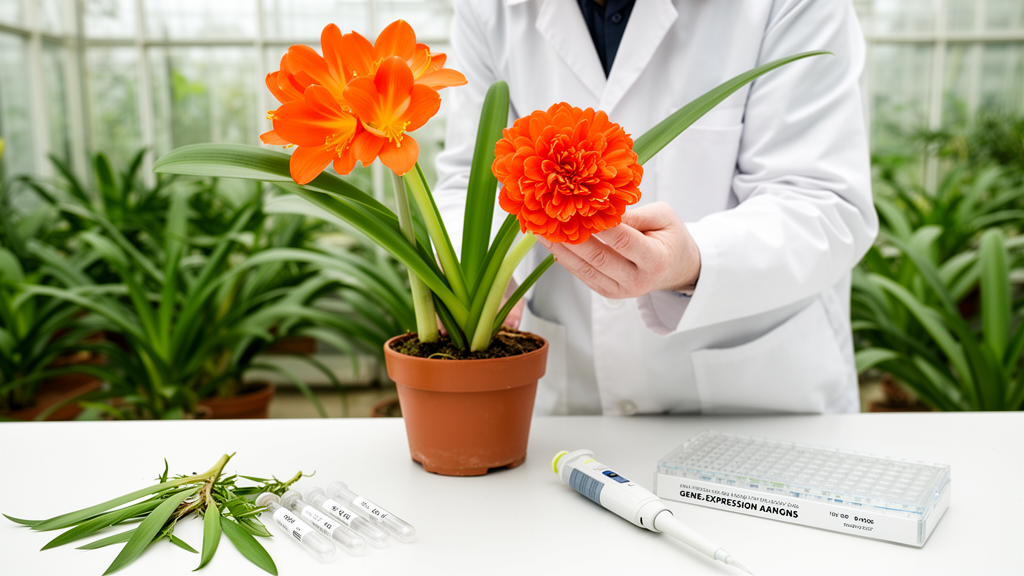
A comparative transcriptome study of the ornamental plant Clivia miniata has identified candidate genes and regulatory pathways associated with stamen petaloidy and double-flower formation. Researchers sequenced flower buds and tepals from single-, semi-double- and double-flowered plants, assembling 127,524 unigenes for analysis. The study, published in BMC Plant Biology, links changes in gene expression to metabolism, phytohormone signaling and floral identity, while providing a candidate framework for further investigation rather than establishing a causal mechanism.
The researchers compared gene expression across the three floral phenotypes and identified 44,140 differentially expressed genes in flower-bud comparisons and 40,278 in tepal comparisons. These genes were enriched primarily in metabolic processes and phytohormone-signaling pathways. The analysis also identified 209 hormone-related transcripts spanning pathways involving auxin, gibberellin, jasmonic acid and other hormones, indicating that several signaling systems varied among the sampled flower forms.
The results show coordinated expression changes in these systems, but they do not demonstrate that any individual hormone directly causes stamen petaloidy or drives the transition from single- to semi-double- and double-flowered phenotypes. Expression shifts occurred among several transcription-factor groups, including MYB, WRKY, NAC, bHLH and bZIP genes, as well as MIKC-type MADS-box genes. The researchers highlighted the class B floral identity gene CmPI_1 because of its pronounced expression differences across floral phenotypes.
Weighted gene co-expression network analysis identified a module termed the blue module that was tightly associated with stamen petaloidy. This module included hub transcription factors, the jasmonate-signaling gene CmJAR1L and CmPI_1. The network analysis therefore places these candidates within an association-based regulatory framework connecting hormone signaling, transcriptional regulation and floral identity, but it does not by itself prove that the relationships are causal.
Quantitative real-time PCR was then used to validate the expression patterns of 13 core candidates. Their measured expression tracked the severity of stamen petaloidy, and CmPI_1 was markedly upregulated in double-flowered flower buds. Across the sequencing, co-expression and expression-validation results, the study identifies a set of genes and pathways for further testing in the molecular control of double-flower formation in C. miniata.
Subject of Research: Comparative transcriptomics of stamen petaloidy and double-flower formation in Clivia miniata
Article Title: Comparative transcriptome analysis reveals candidate genes and regulatory pathways underlying stamen petaloidy in Clivia miniata
Article References: Zhao, X., Yue, L., Li, D., Feng, X., Ren, X., Yue, J., & Lei, J. (2026). Comparative transcriptome analysis reveals candidate genes and regulatory pathways underlying stamen petaloidy in Clivia miniata. BMC Plant Biology. https://doi.org/10.1186/s12870-026-09917-5
Image Credits: AI Generated
DOI: 10.1186/s12870-026-09917-5
Keywords: Clivia miniata, stamen petaloidy, double flowers, comparative transcriptomics, floral identity, phytohormone signaling, MADS-box genes, transcription factors, co-expression network, CmPI_1, CmJAR1L, Comparative
Cite Scienmag News
Juliet Wilcox. (October 25, 2026). Comparative transcriptomics link candidate genes to double flowers in Clivia miniata. Scienmag. https://scienmag.com/comparative-transcriptomics-link-candidate-genes-to-double-flowers-in-clivia-miniata/
Juliet Wilcox. "Comparative transcriptomics link candidate genes to double flowers in Clivia miniata." Scienmag, 25 October 2026, https://scienmag.com/comparative-transcriptomics-link-candidate-genes-to-double-flowers-in-clivia-miniata/. Accessed 25 October 2026.
Juliet Wilcox. "Comparative transcriptomics link candidate genes to double flowers in Clivia miniata." Scienmag. October 25, 2026. https://scienmag.com/comparative-transcriptomics-link-candidate-genes-to-double-flowers-in-clivia-miniata/


