

Thursday, September 3, 2026
Science
No Result
View All Result
  • Login
  • HOME
  • SCIENCE NEWS
  • CONTACT US
  • HOME
  • SCIENCE NEWS
  • CONTACT US
No Result
View All Result
Scienmag
No Result
View All Result
Home Science News Social Science

Colorful traits in primates ease tensions between groups

August 22, 2024
in Social Science
Courtney Benton
By Courtney Benton Scienmag Editorial Profile - Science and Technology Policy
Reading Time: 3 mins read
0
Colorful traits in primates ease tensions between groups
69
SHARES
623
VIEWS
Share on FacebookShare on Twitter
ADVERTISEMENT

Primate ornamentation plays a crucial role in communication not only within social groups but also between them, according to a new study. The research reveals that the males of species with overlapping home ranges often display vibrant colors or elaborate features, traits that may help reduce intergroup aggression by enabling quick assessments of potential rivals.

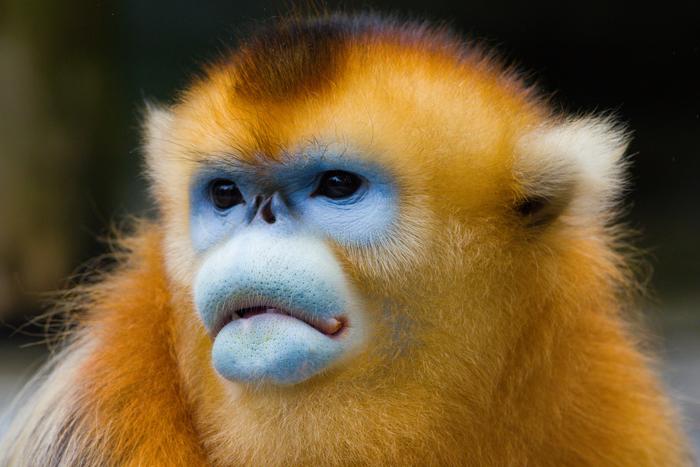
Male golden snub-nosed monkey

Credit: Cyril C. Grueter

Primate ornamentation plays a crucial role in communication not only within social groups but also between them, according to a new study. The research reveals that the males of species with overlapping home ranges often display vibrant colors or elaborate features, traits that may help reduce intergroup aggression by enabling quick assessments of potential rivals.

Ornaments are sexually selected traits that serve as powerful signals, often indicating an individual’s genetic quality, health or physical strength. These differences in appearance between males and females, known as dimorphic traits, are expressed in features like colorful fur or elaborate body structures. Examples include the golden snub-nosed monkey’s lip wart and blueish face, the mandrill’s vivid facial features with its red nose and blue skin, the gelada baboon’s impressive mane and red chest patch, or the proboscis monkey’s remarkably large nose.

A new study from the University of Zurich (UZH) has uncovered an intriguing link between these dimorphic traits and how primates interact with other groups. The research, conducted by Stefan Lüpold from the Department of Evolutionary Biology and Environmental Studies at UZH in collaboration with Cyril Grueter from the University of Western Australia, shows that the vibrant colors and elaborate body ornaments seen in many primate species may do more than attract mates or establish social hierarchies. These features also play an important role in communication between different social groups.

Proximity encourages richer ornamentation

The researchers analyzed data from 144 primate species, including both monkeys and apes (prosimians and anthropoids). They focused on how ornamentation relates to the overlap of home ranges, which measures how much living space groups share with their neighbors. According to Stefan Lüpold, the findings showed a clear pattern: “Species that shared more space with their neighbors had significantly greater differences in ornamentation between the sexes. In species where groups frequently interact, males are more likely to sport flashy traits that set them apart from females.”

The study also found that intergroup encounters were less likely to be aggressive in species with greater home range overlap. Encounters deemed conflict-related included behaviors such as physical confrontation, displays of strength, avoidance, displacement, vigilance and vocal warnings. This suggests that vivid physical traits might help to reduce conflict between groups, possibly by allowing them to quickly assess potential rivals from a distance.

Complex world of animal communication

“These findings challenge the common belief that primate ornamentation is only about competing for mates within groups,” says Lüpold. “Instead, they highlight the importance of considering the wider social environment in which gregarious animals exist, recognizing the significance of social interactions both within and between groups.” The study sheds new light on the evolution of primate ornamentation and provides valuable insights into the complex world of animal communication.


Journal

Evolution Letters

DOI

10.1093/evlett/qrae045

Method of Research

Data/statistical analysis

Subject of Research

Animals

Article Title

The role of between-group signalling in the evolution of primate ornamentation

Article Publication Date

17-Aug-2024

Subject of Research: Social Science

Article Title: Colorful traits in primates ease tensions between groups

Article References: Original research article

Image Credits: AI Generated

DOI: Not provided

Keywords: Not provided

Cite Scienmag News

Courtney Benton. (August 22, 2024). Colorful traits in primates ease tensions between groups. Scienmag. https://scienmag.com/colorful-traits-in-primates-ease-tensions-between-groups/

Courtney Benton. "Colorful traits in primates ease tensions between groups." Scienmag, 22 August 2024, https://scienmag.com/colorful-traits-in-primates-ease-tensions-between-groups/. Accessed 3 September 2026.

Courtney Benton. "Colorful traits in primates ease tensions between groups." Scienmag. August 22, 2024. https://scienmag.com/colorful-traits-in-primates-ease-tensions-between-groups/

Share28Tweet17
Previous Post

Declining senses can impact mental health and loneliness in aging adults

Next Post

Scientists call for an update in environmental decision making that takes human rights into account

Related Posts

AI Is Rewriting How Knowledge Is Transferred, Major Education Analysis Finds
Social Science

AI Is Rewriting How Knowledge Is Transferred, Major Education Analysis Finds

September 3, 2026
New Value-Chain Framework Reveals Where AI Creates and Destroys Public Value
Social Science

New Value-Chain Framework Reveals Where AI Creates and Destroys Public Value

September 3, 2026
Depression and Fatigue Emerge as Strongest Drivers of Quality of Life in Aging Europeans
Social Science

Depression and Fatigue Emerge as Strongest Drivers of Quality of Life in Aging Europeans

September 3, 2026
Most Australian women wearing shoes that don’t match their feet, study finds
Social Science

Most Australian women wearing shoes that don’t match their feet, study finds

August 31, 2026
Disseminating the movement behaviour guidelines for young children in Hong Kong: process and outcome evaluations
Social Science

Disseminating the movement behaviour guidelines for young children in Hong Kong: process and outcome evaluations

September 3, 2026
Multiple dimensions of uncertainty in fertility goals: recent trends and patterns in the United States
Social Science

Multiple dimensions of uncertainty in fertility goals: recent trends and patterns in the United States

September 3, 2026
Next Post
Scientists call for an update in environmental decision making that

Scientists call for an update in environmental decision making that takes human rights into account

  • Mothers who receive childcare support from maternal grandparents show more optimized

    Mothers who receive childcare support from maternal grandparents show more parental warmth, finds NTU Singapore study

    27656 shares
    Share 11059 Tweet 6912
  • University of Seville Breaks 120-Year-Old Mystery, Revises a Key Einstein Concept

    1061 shares
    Share 424 Tweet 265
  • Bee body mass, pathogens and local climate influence heat tolerance

    682 shares
    Share 273 Tweet 171
  • Researchers record first-ever images and data of a shark experiencing a boat strike

    546 shares
    Share 218 Tweet 137
  • Groundbreaking Clinical Trial Reveals Lubiprostone Enhances Kidney Function

    531 shares
    Share 212 Tweet 133
Science

Embark on a thrilling journey of discovery with Scienmag.com—your ultimate source for cutting-edge breakthroughs. Immerse yourself in a world where curiosity knows no limits and tomorrow’s possibilities become today’s reality!

RECENT NEWS

  • Territory-specific CT perfusion tracks blood flow changes after chronic MCA revascularization
  • Cellulase production by Aspergillus niger using palm kernel cake in solid state fermentation
  • γδ T cells play dual roles in non-small cell lung cancer therapy
  • PD-L1 Emerges as Key Survival Marker in Aggressive Canine Gastric Cancer

Categories

  • Agriculture
  • Anthropology
  • Archaeology
  • Athmospheric
  • Biology
  • Biotechnology
  • Blog
  • Bussines
  • Cancer
  • Chemistry
  • Climate
  • Earth Science
  • Editorial Policy
  • Marine
  • Mathematics
  • Medicine
  • Pediatry
  • Policy
  • Psychology & Psychiatry
  • Science Education
  • Social Science
  • Space
  • Technology and Engineering

Subscribe to Blog via Email

Enter your email address to subscribe to this blog and receive notifications of new posts by email.

Join 5,151 other subscribers

© 2025 Scienmag - Science Magazine

Welcome Back!

Login to your account below

Forgotten Password?

Retrieve your password

Please enter your username or email address to reset your password.

Log In
No Result
View All Result
  • HOME
  • SCIENCE NEWS
  • CONTACT US

© 2025 Scienmag - Science Magazine

Discover more from Science

Subscribe now to keep reading and get access to the full archive.

Continue reading