Thursday, October 29, 2026
Science
No Result
View All Result
  • Login
  • HOME
  • SCIENCE NEWS
  • CONTACT US
  • HOME
  • SCIENCE NEWS
  • CONTACT US
No Result
View All Result
Scienmag
No Result
View All Result
Home Science News Biotechnology

Cold atmospheric plasma kills drug-resistant Candida strains in lab study

October 29, 2026
in Biology, Biotechnology
Russell Cooper
By Russell Cooper Scienmag Editorial Profile - Environmental Pollution
Reading Time: 3 mins read
0
Cold atmospheric plasma kills drug-resistant Candida strains in lab study

Cold atmospheric plasma kills drug-resistant Candida strains in lab study

65
SHARES
587
VIEWS
Share on FacebookShare on Twitter
ADVERTISEMENT

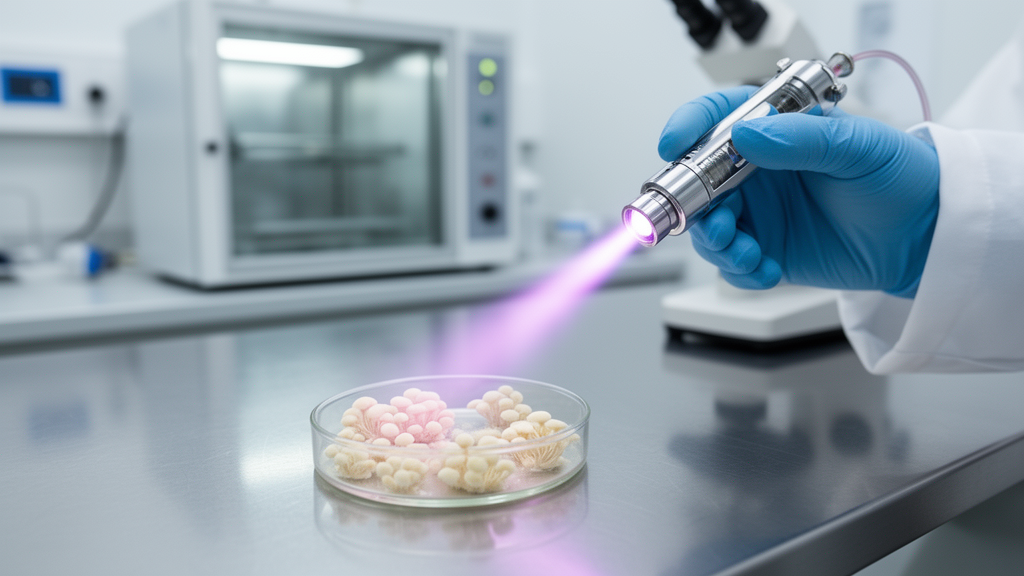
Cold atmospheric plasma has shown potent antifungal activity against fluconazole-resistant Candida strains isolated from patients with oropharyngeal candidiasis, according to a peer-reviewed study published in AMB Express on 28 October 2026. The research, led by Melika Kashi, Sima-Sadat Seyedjavadi and Zahra Jahanshiri, examined fifteen clinical Candida strains recovered from oropharyngeal candidiasis in patients with head and neck cancer, a population in which this opportunistic fungal infection is especially common.

The strains included fluconazole-resistant isolates of Candida albicans and Candida tropicalis, together with Candida glabrata isolates classified as susceptible dose-dependent. Oropharyngeal candidiasis remains the most common opportunistic fungal infection affecting patients with head and neck cancer, and the growing challenge of antifungal resistance has become a critical concern in recent years, the authors note in their abstract.

The experimental setup used a cold atmospheric plasma jet system operating with a helium–oxygen gas mixture in a ratio of 98:2 by volume. The researchers evaluated fungal growth, biofilm formation and ergosterol content after treatment with the plasma, both alone and in combination with fluconazole, across all three Candida species.

Plasma treatment induced time-dependent reductions in fungal viability across all species, with a reported statistical significance of P < 0.0001. Susceptibility varied by species: Candida glabrata showed the highest susceptibility to the plasma, while Candida tropicalis proved the least susceptible. The abstract reports species-specific susceptibility patterns in the response to plasma treatment.

Ergosterol content fell most sharply at the 120-second exposure time, with inhibition rates of 72.13 percent for Candida albicans, 59.94 percent for Candida tropicalis and 68.07 percent for Candida glabrata. The abstract reports that a partial recovery followed at 150 seconds, an observation the researchers document without offering a definitive mechanistic explanation in the summarized findings.

Cold atmospheric plasma monotherapy significantly reduced planktonic growth and biofilm formation.

A key negative result emerged from the combination experiments. When plasma was paired with fluconazole, the combination yielded no synergistic or additive effects, with all comparisons reported as not statistically significant.

The authors conclude that cold atmospheric plasma exerts potent antifungal activity against fluconazole-resistant Candida clinical isolates and downregulates virulence and resistance genes, with species-specific susceptibility patterns. They emphasize that further in vivo research is required before the approach could be harnessed as a therapeutic strategy, and the published findings come from laboratory experiments on clinical isolates rather than from treatment of patients.

For patients with head and neck cancer, in whom oropharyngeal candidiasis is a frequent and increasingly drug-resistant complication, the study adds to the evidence base on non-thermal plasma as a candidate antifungal modality. The work is published as open access in AMB Express, with the article carrying a permanent DOI and the version shared ahead of the final Version of Record, subject to further edits.

Subject of Research: Antifungal activity of cold atmospheric plasma against resistant Candida species from oropharyngeal candidiasis patients

Article Title: Efficacy of cold atmospheric plasma and fluconazole against resistant Candida species in oropharyngeal candidiasis patients

Article References: Kashi, M., Seyedjavadi, S.-S., & Jahanshiri, Z. (2026). Efficacy of cold atmospheric plasma and fluconazole against resistant Candida species in oropharyngeal candidiasis patients. AMB Express. https://doi.org/10.1186/s13568-026-02134-1

Image Credits: AI Generated

DOI: 10.1186/s13568-026-02134-1

Keywords: cold atmospheric plasma, Candida albicans, Candida tropicalis, Candida glabrata, fluconazole resistance, oropharyngeal candidiasis, biofilm, ergosterol, gene expression, head and neck cancer, antifungal therapy, AMB Express

Cite Scienmag News

Russell Cooper. (October 29, 2026). Cold atmospheric plasma kills drug-resistant Candida strains in lab study. Scienmag. https://scienmag.com/cold-atmospheric-plasma-kills-drug-resistant-candida-strains-in-lab-study/

Russell Cooper. "Cold atmospheric plasma kills drug-resistant Candida strains in lab study." Scienmag, 29 October 2026, https://scienmag.com/cold-atmospheric-plasma-kills-drug-resistant-candida-strains-in-lab-study/. Accessed 29 October 2026.

Russell Cooper. "Cold atmospheric plasma kills drug-resistant Candida strains in lab study." Scienmag. October 29, 2026. https://scienmag.com/cold-atmospheric-plasma-kills-drug-resistant-candida-strains-in-lab-study/
Tags: AMB Expressantifungal resistance in head and neck cancer patientsantifungal therapybiofilmbiofilm disruption by plasmaCandida albicansCandida glabrataCandida tropicaliscold atmospheric plasmaCold atmospheric plasma antifungal activitycombination therapy with plasma and fluconazoledrug-resistant Candida strainsergosterolergosterol content reductionfluconazole resistancefluconazole-resistant Candidagene expressionhead and neck cancerhelium-oxygen plasma effects on fungilaboratory study on Candida biofilmsoropharyngeal candidiasisoropharyngeal candidiasis treatmentplasma jet system for fungal inhibitionplasma-based antimicrobial therapies
Share26Tweet16
Previous Post

Low-Dose Aspirin Linked to Lower Early Mortality in Sepsis Patients, but Causality Remains Uncertain

Next Post

Only Three Studies Directly Examine Gen Z in Indian Start-Ups, Systematic Review Finds

Related Posts

New Protocol Tracks Natural Killer Cells Attacking Tumors in 3D, One Cell at a Time
Biotechnology

New Protocol Tracks Natural Killer Cells Attacking Tumors in 3D, One Cell at a Time

October 29, 2026
Electronic sensors and GC–MS reveal optimal roasting conditions for white and black sesame seeds
Biotechnology

Electronic sensors and GC–MS reveal optimal roasting conditions for white and black sesame seeds

October 29, 2026
Simplified Ancestral Enzyme Built From Fewer Amino Acids Unexpectedly Produces ATP From ADP
Biology

Simplified Ancestral Enzyme Built From Fewer Amino Acids Unexpectedly Produces ATP From ADP

October 29, 2026
New complexity map charts pattern matching across pangenome string structures
Biotechnology

New complexity map charts pattern matching across pangenome string structures

October 29, 2026
Bacteria’s Antioxidant Defenses Mapped in Systematic Review of 27 Studies
Biology

Bacteria’s Antioxidant Defenses Mapped in Systematic Review of 27 Studies

October 29, 2026
Heart rate biologging in jaguars establishes first cardiac baseline for the species
Biology

Heart rate biologging in jaguars establishes first cardiac baseline for the species

October 29, 2026
Next Post
Only Three Studies Directly Examine Gen Z in Indian Start-Ups, Systematic Review Finds

Only Three Studies Directly Examine Gen Z in Indian Start-Ups, Systematic Review Finds

  • Mothers who receive childcare support from maternal grandparents show more optimized

    Mothers who receive childcare support from maternal grandparents show more parental warmth, finds NTU Singapore study

    27656 shares
    Share 11059 Tweet 6912
  • University of Seville Breaks 120-Year-Old Mystery, Revises a Key Einstein Concept

    1061 shares
    Share 424 Tweet 265
  • Bee body mass, pathogens and local climate influence heat tolerance

    682 shares
    Share 273 Tweet 171
  • Researchers record first-ever images and data of a shark experiencing a boat strike

    546 shares
    Share 218 Tweet 137
  • Groundbreaking Clinical Trial Reveals Lubiprostone Enhances Kidney Function

    531 shares
    Share 212 Tweet 133
Science

Embark on a thrilling journey of discovery with Scienmag.com—your ultimate source for cutting-edge breakthroughs. Immerse yourself in a world where curiosity knows no limits and tomorrow’s possibilities become today’s reality!

RECENT NEWS

  • Research report: CLeaR: An adaptive continual learning framework for regression tasks
  • Most Tanzanian Clinicians Know a Little About AI but Few Actually Use It
  • China’s Water Resilience and Green Development Are Rising Together, Study Finds
  • Who Falls for Fake News? Large Italian Survey Points to Worldview and Topic

Categories

  • Agriculture
  • Anthropology
  • Archaeology
  • Athmospheric
  • Biology
  • Biotechnology
  • Blog
  • Bussines
  • Cancer
  • Chemistry
  • Climate
  • Earth Science
  • Editorial Policy
  • Marine
  • Mathematics
  • Medicine
  • Pediatry
  • Policy
  • Psychology & Psychiatry
  • Science Education
  • Science News
  • Social Science
  • Space
  • Technology and Engineering

Subscribe to Blog via Email

Enter your email address to subscribe to this blog and receive notifications of new posts by email.

Join 5,151 other subscribers

© 2025 Scienmag - Science Magazine

Welcome Back!

Login to your account below

Forgotten Password?

Retrieve your password

Please enter your username or email address to reset your password.

Log In
No Result
View All Result
  • HOME
  • SCIENCE NEWS
  • CONTACT US

© 2025 Scienmag - Science Magazine

Discover more from Science

Subscribe now to keep reading and get access to the full archive.

Continue reading