

Thursday, July 9, 2026
Science
No Result
View All Result
  • Login
  • HOME
  • SCIENCE NEWS
  • CONTACT US
  • HOME
  • SCIENCE NEWS
  • CONTACT US
No Result
View All Result
Scienmag
No Result
View All Result
Home Science News Medicine

Cognitive-Motor Interference and Brain Links in Parkinson’s Disease Explored

July 9, 2026
in Medicine
Reading Time: 2 mins read
0
Cognitive-Motor Interference and Brain Links in Parkinson’s Disease Explored

Cognitive-Motor Interference and Brain Links in Parkinson’s Disease Explored

65
SHARES
587
VIEWS
Share on FacebookShare on Twitter
ADVERTISEMENT

A groundbreaking study published in npj Parkinson’s Disease has unveiled new insights into the intricate interaction between cognitive and motor symptoms in Parkinson’s disease (PD), shedding light on the underlying neural mechanisms that drive cognitive-motor interference (CMI). This research provides a critical perspective into how cognitive overload exacerbates motor dysfunction, impacting daily life activities for patients.

Parkinson’s disease is traditionally characterized by its motor symptoms, such as tremors, rigidity, and slowed movements. However, recent clinical observations increasingly highlight the significance of cognitive deficits that occur concomitantly, often complicating motor performance. The phenomenon of cognitive-motor interference refers to the scenario where performing cognitive tasks simultaneously with motor tasks leads to an overall decline in effectiveness of one or both actions.

Using advanced neuroimaging techniques, the researchers analyzed brain activity in PD patients as they engaged in dual-task scenarios—combining walking or hand movements with memory or problem-solving exercises. Functional MRI and electroencephalography (EEG) metrics revealed dysregulated connectivity between prefrontal cortical regions responsible for executive function and motor planning areas, such as the basal ganglia and supplementary motor cortex.

The data suggest that during dual-tasking, PD patients exhibit reduced neural efficiency and compensatory recruitment of additional brain regions compared to healthy controls. This maladaptive plasticity is thought to underlie the increased error rates and slower response times observed clinically. Notably, the study identified alterations in the frontostriatal circuits that modulate attention and action selection, implicating dopamine depletion as a key pathological driver.

Clinically, these findings underscore the importance of integrating cognitive training with traditional physical therapy in managing Parkinson’s disease. The disruption of cognitive-motor integration not only impairs task execution but also elevates the risk of falls and injuries, signaling a need for interventions targeting the neural substrates of CMI.

The study also suggests potential biomarkers for early detection of cognitive-motor decline, which could facilitate timely therapeutic strategies before severe functional impairments emerge. Researchers are optimistic that this mechanistic understanding will inspire novel drug targets or neuromodulation approaches designed to enhance neural network resilience.

In sum, this work marks a pivotal advancement in Parkinson’s research, highlighting that motor symptoms cannot be fully addressed without considering cognitive contributions. As PD management moves toward precision medicine, addressing the complex brain dynamics of dual-task interference represents a promising frontier.

Future research directions include longitudinal studies to track progression of CMI and clinical trials evaluating combined cognitive and motor rehabilitation programs. The intersection of cognitive neuroscience and movement disorder studies paves the way for more holistic patient care and enhanced quality of life for millions affected worldwide.


Subject of Research: Cognitive-motor interference in Parkinson’s disease and its neural correlates.

Article Title: The clinical manifestation and neural correlates of cognitive-motor interference in Parkinson’s disease.

Article References:
Wu, J., Chen, J., Zhou, C. et al. The clinical manifestation and neural correlates of cognitive-motor interference in Parkinson’s disease. npj Parkinsons Dis. (2026). https://doi.org/10.1038/s41531-026-01464-y

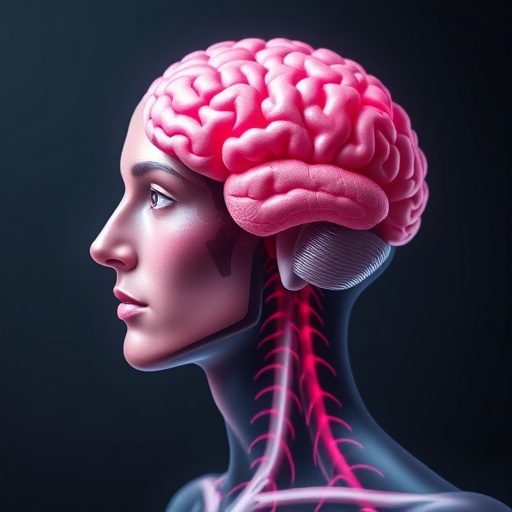
Image Credits: AI Generated

Tags: basal ganglia and motor planningbrain connectivity in Parkinson'scognitive overload effects in PDdual-task performance in Parkinson'sexecutive function and motor controlfunctional MRI and EEG in PDimpact of cognitive load on motor performancemotor and cognitive symptom interactionneural mechanisms in Parkinson'sneuroimaging in Parkinson’s diseaseneuroplasticity in Parkinson's diseaseParkinson's disease cognitive-motor interference
Share26Tweet16
Previous Post

Workshop Advances Pediatric Medulloblastoma Treatment Development

Next Post

Portable Cd-109/CZT KXRF System Measures Bone Lead Exposure in Field

Related Posts

Global Change Threatens the World’s Forests and Their Knowledge
Medicine

Global Change Threatens the World’s Forests and Their Knowledge

July 9, 2026
Unified Vision-Language Model Advances Neuroblastoma Precision Oncology and Biomarker Prediction
Medicine

Unified Vision-Language Model Advances Neuroblastoma Precision Oncology and Biomarker Prediction

July 9, 2026
Portable Cd-109/CZT KXRF System Measures Bone Lead Exposure in Field
Medicine

Portable Cd-109/CZT KXRF System Measures Bone Lead Exposure in Field

July 9, 2026
Medicare Wegovy prescriptions soar following heart disease approval
Medicine

Medicare Wegovy prescriptions soar following heart disease approval

July 9, 2026
Scientists Observe Floquet-Driven Rotational Super-Radiance Phenomenon
Medicine

Scientists Observe Floquet-Driven Rotational Super-Radiance Phenomenon

July 9, 2026
GBA1 Status and Sex Influence Depression Severity in Parkinson’s Disease
Medicine

GBA1 Status and Sex Influence Depression Severity in Parkinson’s Disease

July 9, 2026
Next Post
Portable Cd-109/CZT KXRF System Measures Bone Lead Exposure in Field

Portable Cd-109/CZT KXRF System Measures Bone Lead Exposure in Field

  • Mothers who receive childcare support from maternal grandparents show more

    Mothers who receive childcare support from maternal grandparents show more parental warmth, finds NTU Singapore study

    27656 shares
    Share 11059 Tweet 6912
  • University of Seville Breaks 120-Year-Old Mystery, Revises a Key Einstein Concept

    1061 shares
    Share 424 Tweet 265
  • Bee body mass, pathogens and local climate influence heat tolerance

    682 shares
    Share 273 Tweet 171
  • Researchers record first-ever images and data of a shark experiencing a boat strike

    546 shares
    Share 218 Tweet 137
  • Groundbreaking Clinical Trial Reveals Lubiprostone Enhances Kidney Function

    531 shares
    Share 212 Tweet 133
Science

Embark on a thrilling journey of discovery with Scienmag.com—your ultimate source for cutting-edge breakthroughs. Immerse yourself in a world where curiosity knows no limits and tomorrow’s possibilities become today’s reality!

RECENT NEWS

  • Stirling Review Reveals How Modern Design Strains the Brain
  • Paderborn University Wins European Grant for Quantum Technology Ecosystem
  • Scientists Discover Key Mechanism Driving Nerve Cell Growth
  • Climate Change Causes Marine Animals to Shrink in Size

Categories

  • Agriculture
  • Anthropology
  • Archaeology
  • Athmospheric
  • Biology
  • Biotechnology
  • Blog
  • Bussines
  • Cancer
  • Chemistry
  • Climate
  • Earth Science
  • Editorial Policy
  • Marine
  • Mathematics
  • Medicine
  • Pediatry
  • Policy
  • Psychology & Psychiatry
  • Science Education
  • Social Science
  • Space
  • Technology and Engineering

Subscribe to Blog via Email

Enter your email address to subscribe to this blog and receive notifications of new posts by email.

Join 5,146 other subscribers

© 2025 Scienmag - Science Magazine

Welcome Back!

Login to your account below

Forgotten Password?

Retrieve your password

Please enter your username or email address to reset your password.

Log In
No Result
View All Result
  • HOME
  • SCIENCE NEWS
  • CONTACT US

© 2025 Scienmag - Science Magazine

Discover more from Science

Subscribe now to keep reading and get access to the full archive.

Continue reading
