

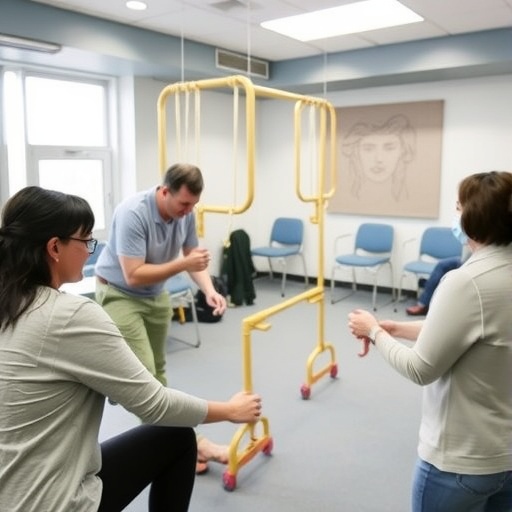
In the continuously evolving landscape of healthcare education, the integration of innovative educational philosophies is paramount. Researchers from a pioneering study have shed light on the importance of a co-designed educational philosophy, particularly in the realm of physiotherapy curriculum renewal. This transformative approach aims not just to enhance the knowledge and skills of future physiotherapists, but to align educational systems with the needs of an ever-changing healthcare environment. The study, led by Waller, Ferns, and de Oliveira, among others, presents groundbreaking insights into how collaborative pedagogical efforts can profoundly impact curriculum development.
The advent of co-design methodologies marks a significant shift in educational practices, especially within the context of physiotherapy. By engaging various stakeholders—including educators, students, and healthcare practitioners—this approach seeks to foster a more inclusive and responsive educational framework. The researchers advocate for a model where the voices of all participants are valued and contribute to the creation of relevant and effective curricula. This not only enhances educational outcomes but also empowers the next generation of healthcare providers to better meet the demands of their profession.
A crucial aspect of the study is the recognition of the dynamic interplay between theory and practice in physiotherapy education. Traditional educational methodologies often risk becoming outmoded in the face of rapid advancements in medical science and patient care practices. By employing a co-designed philosophy, educators are better equipped to cultivate curricula that are both reflective of current clinical practices and anticipatory of future trends and challenges. This adaptability is essential for preparing students to thrive in diverse and multidisciplinary healthcare settings.
Furthermore, the research highlights the necessity of integrating feedback mechanisms into the curriculum development process. The collaborative nature of a co-designed educational philosophy allows for continuous evaluation and iteration based on participant input. This not only ensures that the curriculum remains relevant, but also fosters a culture of lifelong learning among educators and students alike. Continuous feedback loops can create a dynamic learning environment where all voices are heard, and adaptations are made in real-time, enhancing the educational experience.
The implications of a renewed physiotherapy curriculum extend beyond academic institutions to encompass the wider healthcare community. As physiotherapy practitioners play a critical role in patient rehabilitation and health promotion, aligning educational frameworks with clinical realities becomes increasingly vital. This alignment not only enriches the professional preparation of students but also elevates the standard of patient care. When future physiotherapists are equipped with an education that reflects actual clinical demands, they can provide more effective, empathetic, and informed care to their patients.
Moreover, the study emphasizes the role of technology in shaping modern physiotherapy education. Incorporating digital tools and resources into curricular design is essential for developing competencies that are relevant in today’s technologically-driven healthcare landscape. The collaborative efforts in curriculum renewal should, therefore, consider how technology can enhance learning experiences, facilitate access to information, and foster greater engagement among students and educators.
As the study unfolds, it becomes clear that the journey towards curriculum renewal is a multifaceted one. Engaging a diverse group of stakeholders from different backgrounds and experiences can significantly enrich the educational content and methodologies employed within physiotherapy programs. These interactions foster collaboration that not only shares knowledge but also builds relationships that can support future learning and innovation in the field.
Addressing the challenges faced in implementing a co-designed educational philosophy is also a pivotal aspect of this research. While the potential benefits are substantial, the process involves navigating various obstacles, including institutional resistance and varying degrees of commitment among stakeholders. This necessitates a clear strategy for communication and engagement, ensuring that all parties understand the value of collaborative efforts in shaping an effective curriculum.
Furthermore, the interplay between research, education, and clinical practice is increasingly recognized as a cornerstone of effective physiotherapy training. Integrating evidence-based practices into educational frameworks prepares students not only to apply theoretical knowledge but also to engage in critical thinking and adaptability in clinical situations. This fusion of education and practice underscores the importance of co-design as a method that bridges the gap between theory and real-world application, ultimately empowering future physiotherapy practitioners.
The outcomes of this study extend beyond mere academic achievements; they pave the way for a holistic approach to education that prioritizes patient-centered care, emphasizes values such as empathy and ethics, and cultivates a spirit of collaboration among healthcare professionals. Such an enriched educational environment not only develops competent physiotherapists but also cultivates leaders who are prepared to advocate for innovative practices and patient advocacy within their field.
In essence, Waller and colleagues’ investigation into co-designed educational philosophies represents a significant step forward in redefining how physiotherapy curricula can be structured. They argue compellingly that through collaboration, inclusivity, and the integration of stakeholder perspectives, curricula can be tailored to produce graduates who are not only knowledgeable but also deeply attuned to the complex realities of patient care. This paradigm shift calls for an educational renaissance—one that is responsive to the needs of the present and anticipates the demands of the future.
In conclusion, the study serves as a powerful reminder of the importance of innovation in education, particularly in fields as critical as healthcare. As physiotherapy education continues to evolve, the co-designed educational philosophy offers a model for creating curricula that reflect the values, needs, and aspirations of the entire healthcare community. Embracing this approach may very well be the key to unlocking a new era of educational excellence and transformative patient care.
Subject of Research: Implementation of a co-designed educational philosophy in physiotherapy curriculum renewal.
Article Title: Using a co-designed educational philosophy to underpin physiotherapy curriculum renewal.
Article References:
Waller, R., Ferns, S., de Oliveira, B.I. et al. Using a co-designed educational philosophy to underpin physiotherapy curriculum renewal. Discov Educ (2025). https://doi.org/10.1007/s44217-025-01043-y
Image Credits: AI Generated
DOI: 10.1007/s44217-025-01043-y
Keywords: Co-design, Physiotherapy education, Curriculum renewal, Stakeholder engagement, Lifelong learning, Evidence-based practice.


