


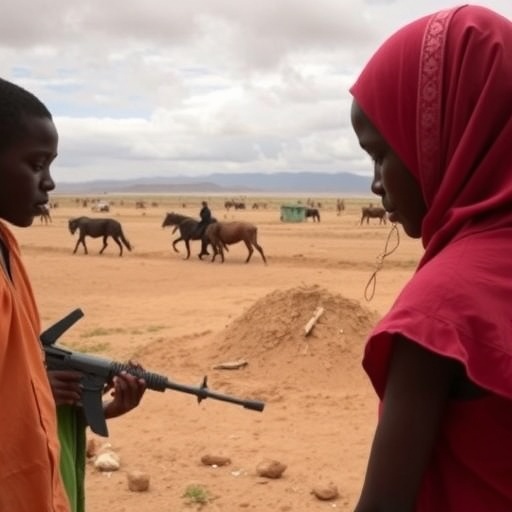
In the turbulent landscapes of conflict-affected regions, the fragility of health systems is not merely a consequence of violence and instability but also a profound reflection of systemic inequities deeply entrenched within research frameworks. The recent publication by N.D. Muna, titled “Bridging the evidence gap: research equity in conflict-affected health systems,” in the International Journal of Equity in Health (2025), casts a spotlight on the critical voids in health research conducted amid warzones and strife-ridden areas. This work exposes how the lack of equitable research not only hampers effective health interventions but also perpetuates disparities that disproportionately affect vulnerable populations caught in conflict. With meticulous analysis and data-driven insights, Muna’s study urges the global research community to reevaluate priorities and methodologies to foster a more inclusive and contextualized approach to health equity.
The core challenge unmasked by Muna lies in the inherently skewed nature of research agendas within conflict settings. Health systems operating in these environments are often understudied due to constraints such as insecurity, logistical barriers, and political interference. Consequently, research tends to be externally driven and short-term, with limited engagement of local stakeholders or affected communities. This disconnect leads to a paucity of reliable data, resulting in interventions ill-suited to the nuanced realities on the ground. Muna argues that such an evidence gap not only impedes effective policy formulation but also marginalizes local knowledge systems and exacerbates existing health inequalities.
Muna’s work dissects the structural impediments to research equity by delving into funding dynamics and institutional biases. Funding bodies and international agencies frequently prioritize epidemiological studies and emergency response data collection, often neglecting longitudinal and systemic health system research. This narrow focus compromises the ability to understand chronic health issues intensified by conflict, such as mental health disorders, maternal and child health deterioration, and the breakdown of health infrastructure. Furthermore, inequitable partnerships skew control and authorship away from local researchers, undermining capacity building and sustainable knowledge production in the affected regions.
A critical technical aspect highlighted in the article is the challenge of data reliability and validity in conflict zones. The volatility of these environments complicates traditional data collection methods, necessitating innovative, adaptive approaches. Muna introduces methodologies such as remote sensing for health facility monitoring, participatory action research involving displaced communities, and the use of mobile health technologies that bypass infrastructural limitations. These tools, when deployed equitably and ethically, can generate robust datasets that capture the multidimensional health impacts of conflict while empowering local agents of knowledge production.
The issue of ethical considerations in conflict-related health research receives thorough examination in this study. Muna emphasizes the delicate balance between the urgent need for data and the potential harm of research activities in fragile settings. Safeguarding participant confidentiality, obtaining informed consent under duress, and ensuring that research outcomes directly benefit the populations studied are paramount. The framework proposed advocates for ethical reciprocity, wherein research agendas are co-created with community input, fostering trust and mitigating exploitation risks.
Beyond methodological innovation, the article delves into the political economy of health research in conflicts. The author unpacks how geopolitical interests, donor priorities, and international diplomacy shape what health issues receive attention or funding. This politicization often sidelines endemic diseases and systemic health failures in favor of high-visibility epidemics or emergency-focused indicators. Muna calls for a depoliticized approach to research equity that centers local health needs irrespective of global political agendas, emphasizing health justice as a cornerstone for durable peace.
An enlightening segment of the paper explores case studies where equitable research practices have led to measurable improvements in conflict-affected health systems. From community-led participatory research in Syrian refugee camps to decentralized data collection networks in South Sudan, these examples demonstrate the tangible benefits of inclusive research models. They show how integrating local expertise with international support can foster resilience, improve health delivery, and generate contextually relevant evidence for policy interventions.
Technical discussions in the article also cover the integration of health systems research with humanitarian response mechanisms. Muna elucidates how embedding research teams within emergency medical operations can create feedback loops that refine strategies in near real-time. Such integrative models allow for continual learning and adaptation, addressing the fluid challenges of health management amid ongoing conflict. Importantly, this approach stresses sustainability beyond crises, aiming to rebuild health systems that are responsive and equitable in the long term.
The article does not shy away from addressing the digital divide that complicates research equity. Access to digital infrastructure, data analytics capacity, and secure communication technologies is disproportionately limited in conflict zones. Muna advocates for targeted investments in local digital literacy and infrastructure as prerequisites for achieving equitable research. These resources enable local researchers to participate fully in global scientific discourse, contribute to global data repositories, and influence international health narratives.
Muna also discusses the role of education and training in bridging research gaps. Capacity-building programs tailored to conflict-affected settings can equip local health workers and researchers with the skills needed to collect, analyze, and disseminate health data effectively. Such initiatives contribute to decentralizing research authority and fostering ownership. They also create cadres of professionals committed to sustained health improvement within their communities, rather than transient engagement by external actors.
Moreover, the article underscores the importance of interdisciplinarity in addressing the multifaceted impacts of conflict on health systems. Muna encourages integrating social sciences, epidemiology, health economics, and political science to unravel the complex causative pathways of health inequities. This holistic research approach can inform interventions that address not only clinical care but also the social determinants of health that are often exacerbated in conflict scenarios, such as poverty, displacement, and gender-based violence.
In its concluding sections, Muna’s study issues a compelling call to action for global health stakeholders. It emphasizes that without intentionally fostering research equity, health interventions will continue to fall short of their potential in conflict-affected areas. The author insists that equitable research practices must be institutionalized through policy reforms, inclusive funding mechanisms, and sustained international cooperation. This transformative shift is essential to build resilient health systems capable of withstanding current and future challenges posed by conflict and instability.
The analysis provided by Muna is revolutionary in its insistence that research equity is not just a moral imperative but a pragmatic necessity for effective health system strengthening in conflict zones. By illuminating the interconnected challenges and offering actionable pathways, this article is poised to catalyze a paradigm shift in global health research agendas. Such changes will be vital to ensuring that no population is left behind in the quest for health equity, even amid the most harrowing conditions.
Overall, this study significantly advances the discourse on health equity by spotlighting the often-overlooked dimension of research equity in conflict-affected health systems. Its blend of rigorous technical analysis, ethical reflection, and pragmatic recommendations presents a roadmap for stakeholders to bridge the evidence gap and foster sustainable health improvements. By anchoring research within the lived realities of conflict-affected populations, Muna’s insights elevate the potential of science to contribute meaningfully to peace-building and human well-being.
As this research garners attention from policymakers, funders, and academic institutions, it is anticipated that the principles articulated therein will inform forthcoming global health strategies and research collaborations. By prioritizing equity at every stage—from agenda setting to data dissemination—the health research community can better support the resilience and recovery of populations enduring the devastating impacts of conflict.
Cite Scienmag News
Courtney Benton. (October 27, 2025). Closing Evidence Gaps in Conflict-Affected Health Systems. Scienmag. https://scienmag.com/closing-evidence-gaps-in-conflict-affected-health-systems/
Courtney Benton. "Closing Evidence Gaps in Conflict-Affected Health Systems." Scienmag, 27 October 2025, https://scienmag.com/closing-evidence-gaps-in-conflict-affected-health-systems/. Accessed 4 September 2026.
Courtney Benton. "Closing Evidence Gaps in Conflict-Affected Health Systems." Scienmag. October 27, 2025. https://scienmag.com/closing-evidence-gaps-in-conflict-affected-health-systems/


