


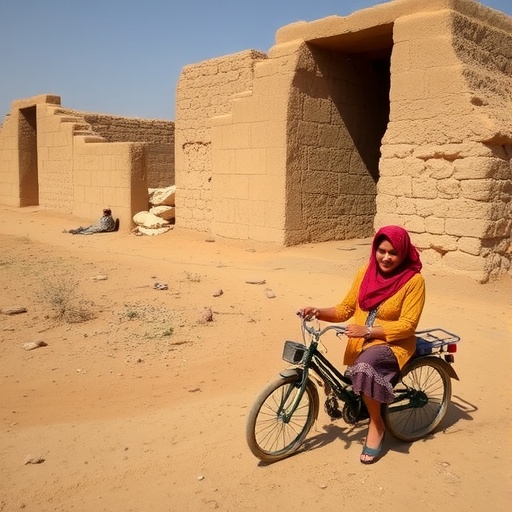
In the remote, underserved regions of rural Egypt, a new wave of transformative healthcare initiatives is revolutionizing early childhood development. Recent research by Metwally et al., published in the International Journal for Equity in Health, uncovers a groundbreaking community-based strategy designed to close critical developmental gaps faced by children in these marginalized areas. Their work presents an urgent yet hopeful vision, harnessing local resources, cultural insights, and participatory methods to create equitable access to childhood care—a vital step toward leveling the health playing field for Egypt’s future generations.
Rural Egypt, characterized by dispersed populations, limited healthcare infrastructure, and socioeconomic constraints, has long struggled with disparities in childhood health outcomes. Nutritional deficiencies, inadequate cognitive stimulation, and restricted healthcare access contribute to pervasive developmental delays, the effects of which cascade through children’s education, social integration, and lifelong well-being. This study targets those entrenched inequities by repositioning the community itself as an active agent of change, rather than a passive recipient of aid.
The research employed a multifaceted approach centered on community health workers trained extensively to deliver both developmental screenings and culturally appropriate guidance. These workers operate within the villages, building trust and enabling early identification of growth and developmental concerns. By embedding professional expertise at the grassroots level, the initiative circumvents common barriers such as transportation difficulties and social stigmas associated with seeking external medical care.
One of the study’s most critical technical aspects involves the implementation of standardized, evidence-based developmental assessment tools adapted to the Egyptian rural context. These assessments measure cognitive, motor, language, and social-emotional milestones aligned with global standards but tailored linguistically and culturally. The adaptation process required rigorous validation to ensure sensitivity and specificity, enabling reliable data collection and tailored intervention strategies.
Furthermore, a core innovation lies in integrating parental education with the health screenings. Caregivers receive hands-on training on nutrition, hygiene, stimulation techniques, and monitoring child progress, empowering them to become informed advocates for their children’s development. This empowerment approach transforms the caregiver’s role from passive observer to active participant, essential for sustaining long-term benefits.
The program also leverages mobile technology to streamline data recording and facilitate remote supervision by pediatric specialists based in urban centers. Through custom-designed mobile applications, community health workers input real-time data and receive instant feedback, reducing delays in diagnosis and enabling timely referrals. This technological bridge addresses Egypt’s healthcare system bottlenecks, particularly the scarcity of specialist access in rural domains.
In addition to direct child development metrics, the study meticulously documents environmental factors influencing outcomes, including water sanitation, household income, parental education levels, and local food security. These variables contextualize individual assessments and inform broader community interventions, such as sanitation infrastructure upgrades and agricultural education programs. The holistic analysis acknowledges the multifactorial nature of early childhood development and the necessity of a systems approach.
Crucially, this community-based model fosters local ownership by involving village leaders and stakeholders in planning and evaluation phases. Their engagement ensures cultural resonance and operational sustainability beyond initial funding cycles. By embedding the initiative within existing social fabrics, the strategy minimizes resistance and enhances the likelihood of long-term integration into public health policy.
Ethical considerations underpinning the study were rigorously addressed, balancing research rigor with respect for participant autonomy, privacy, and community norms. The research team engaged in continuous dialogue with local ethics committees and residents to ensure transparency and mutual understanding. This equitable research framework epitomizes the paradigm shift toward participatory, respectful global health research.
The longitudinal design of the study, tracking children’s progress over multiple years, yields compelling evidence on the sustained impact of early interventions within these rural contexts. Preliminary findings indicate measurable improvements in cognitive and physical development benchmarks, reductions in malnutrition rates, and increased caregiver confidence in child-rearing practices. Such outcomes underscore the immense potential of scalable community-centric models.
Moreover, socioeconomic ripple effects emerged as improved childhood health translated into enhanced school readiness and eventual academic performance. Families reported decreased stress and fewer healthcare expenditures, indicating economic resilience fostered by better early childhood health foundations. These multidimensional benefits advocate for policy investment in similar rural program implementations.
The study also provides a replicable blueprint for other low-resource settings grappling with analogous challenges worldwide. Its methodological rigor, contextual adaptability, and emphasis on community participation position it as a landmark reference for global health practitioners and policymakers aiming to achieve Sustainable Development Goals related to child health and equity.
In summary, Metwally and colleagues’ pioneering work encapsulates the vital convergence of science, technology, and social empowerment to bridge entrenched developmental inequalities. By prioritizing early identification, family involvement, localized expertise, and technological innovation, the approach transforms the landscape of childhood care in rural Egypt. This research exemplifies how equitable healthcare access can serve as a catalyst for broader societal advancement, inspiring a global reevaluation of strategies to nurture the potential of every child.
As the world grapples with complex health disparities exacerbated by pandemics, climate change, and economic upheaval, this study’s insights reinforce that sustainable solutions germinate from within communities themselves. The empowerment of local actors, coupled with scientific rigor and adaptability, offers a potent formula for health equity. Egypt’s rural children now stand as a testament to the power of collaborative innovation in reshaping futures and unlocking human potential through childhood development.
With further dissemination and scaling of these community-based initiatives, rural Egypt could emerge as a model of inclusive health innovation. The intersectional framework of this approach—melding health, technology, education, and social empowerment—has the capacity to catalyze systemic change, transforming not just individual lives, but entire communities and nations. The ongoing challenge will be to secure political will and sustained funding to entrench these gains into the public health architecture.
Ultimately, the study is not merely an academic exercise but an urgent call to action. It compels global health stakeholders to rethink entrenched paradigms that perpetuate inequities and to embrace community-centered, evidence-based, and culturally attuned frameworks. The future of equitable childhood care in rural Egypt—and indeed many regions like it—depends on harnessing such visionary strategies with resolve and commitment.
Metwally, A.M., El-Din, E.M.S., Abouelnaga, M.W. et al. Bridging early development gaps in rural Egypt: a community-based approach to equitable childhood care.
Int J Equity Health (2025). https://doi.org/10.1186/s12939-025-02728-4
Cite Scienmag News
Courtney Benton. (December 18, 2025). Closing Early Development Gaps in Rural Egypt. Scienmag. https://scienmag.com/closing-early-development-gaps-in-rural-egypt/
Courtney Benton. "Closing Early Development Gaps in Rural Egypt." Scienmag, 18 December 2025, https://scienmag.com/closing-early-development-gaps-in-rural-egypt/. Accessed 4 September 2026.
Courtney Benton. "Closing Early Development Gaps in Rural Egypt." Scienmag. December 18, 2025. https://scienmag.com/closing-early-development-gaps-in-rural-egypt/


