


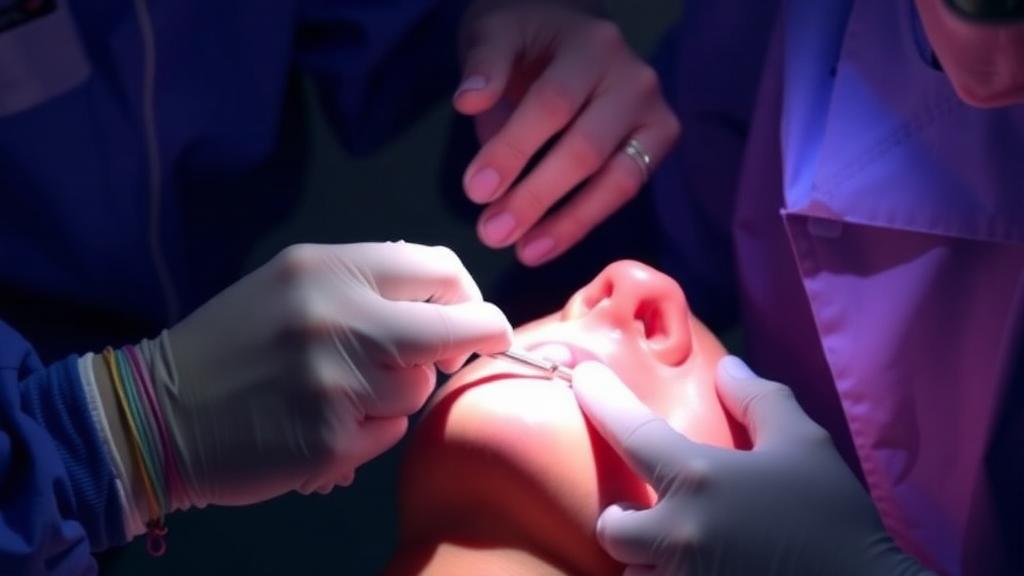
For four decades, reconstructive surgeons have been able to rebuild a penis lost to cancer, trauma, or congenital conditions. The first penile reconstruction after cancer surgery dates back to 1987, and the techniques have been refined steadily ever since. Yet the female counterpart to that operation simply did not exist. Women who underwent surgery for vulvar cancer, a disease that in a substantial share of cases requires removal of part or all of the clitoris, had no reconstructive option at all. The wound was closed, the clitoris disappeared beneath a layer of skin, and the loss of sexual sensation was treated as an unavoidable consequence of cancer treatment. That gap in surgical medicine has now been closed. Surgeons at Radboud University Medical Center in the Netherlands have developed and performed the world’s first clitoral reconstruction procedure for women with vulvar cancer, and the results in the initial group of patients are striking.
Vulvar cancer is not among the most common malignancies, but its impact on those diagnosed is profound. In the Netherlands, approximately 450 women receive the diagnosis each year, and in roughly one quarter of those cases the tumor involves the clitoris or the tissue immediately surrounding it. Because the disease is located in an area of dense nerve supply and intimate significance, surgery that saves a life can simultaneously alter a patient’s sexual function, body image, and overall quality of life in ways that standard oncological follow-up has historically done little to address. Gynecologic oncologist Mieke ten Eikelder of Radboudumc, who co-developed the new technique, describes the previous standard bluntly: when the tumor sits in or around the clitoris, surgeons sometimes have to remove part of it, and until now the wound was simply closed afterward, with little attention paid to whether orgasm would still be possible.
The new operation, described in the journal Gynecologic Oncology in a paper titled Clitoral reconstructive surgery for patients with vulvar carcinoma, was developed jointly by ten Eikelder and plastic surgeon Tim Nijhuis. Its central insight is that even after a tumor has been removed from the clitoral region, the underlying nerve bundles that carry sensory information can often be preserved and redirected. Rather than accepting the loss of the visible clitoral tip and the sensation that depends on it, the surgical team releases those nerve bundles and repositions them so that they converge to create a new clitoral tip. In effect, the sensory apparatus of the clitoris is gathered and rebuilt rather than discarded, giving the nerve fibers a physical structure through which they can once again generate sensation.
The second key element of the technique is the material used to cover and shape the reconstructed tip. The surgeons use a small graft of buccal mucosa, the moist tissue lining the inside of the cheek. This choice is deliberate and technically elegant. Buccal mucosa closely resembles the tissue found naturally around the vulva in both texture and behavior, making it far better suited to the genital environment than skin taken from elsewhere on the body. Grafts of this type integrate well, remain supple and moist, and provide a covering that mimics the original anatomy closely enough to support rather than blunt sensation. The combination of repositioned nerve bundles and a mucosal graft is what allows the reconstruction to preserve clitoral feeling rather than merely restoring a cosmetic contour.
From the patient’s perspective, one of the most remarkable aspects of the procedure is how little it adds to the existing cancer operation. The reconstruction extends the surgery by only about fifteen minutes. That is a strikingly small increment given what the procedure returns: for women whose tumors would otherwise have cost them clitoral sensation permanently, a quarter of an hour of additional operating time now stands between losing sexual function and keeping a realistic chance of regaining it. Because the reconstruction is performed in the same anesthetic episode as the tumor removal, patients do not face a second major operation, a second hospital stay, or a second period of recovery from surgery.
The early clinical results justify the enthusiasm. Among the first 23 women with vulvar cancer who underwent the reconstruction, ninety percent were able to achieve a clitoral orgasm again after surgery. Sensation typically returned between three and six months after the operation, a timeline that reflects the slow but reliable process of nerve recovery and tissue healing. The surgeons note that the recovery curve is not linear in its early phase. Initially, the reconstructed clitoris may be overly sensitive, or conversely less sensitive than before, but recovery is generally optimal after one year. In most women, sensation ultimately returns to a level comparable to what it was before the cancer surgery, an outcome that would have been considered unattainable only a few years ago.
The forty-year lag between penile and clitoral reconstruction is itself a point the Dutch team makes explicitly, and it speaks to a broader pattern in surgical history. Procedures that restore urinary and sexual function in men were developed, standardized, and taught in training programs long before equivalent attention was paid to female genital reconstruction beyond purely cosmetic or urinary aims. Part of the explanation lies in surgical anatomy: the penis offers a longer structure with accessible nerve and vessel pedicles that lend themselves to tubed flaps, while the clitoris is small, densely innervated, and technically demanding to rebuild in miniature. Part of the explanation, however, lies in how seriously medicine has historically taken female sexual function as an outcome worth measuring and treating. The Radboudumc work signals a shift in that regard, treating orgasm and genital sensation as legitimate reconstructive goals on par with continence or limb function.
The implications extend beyond cancer care. The researchers point out that the same reconstructive principle, repositioning preserved nerve bundles to create a functional clitoral tip and covering it with buccal mucosa, may also help women who have suffered genital mutilation. In those cases, as in cancer surgery, the sensory nerves often remain even when the external anatomy has been removed or altered, and a technique designed to gather those nerves into a new structure could offer a path to restored sensation for a population that has almost never been offered surgical options. While the published experience so far concerns women treated for vulvar carcinoma, the potential application to female genital mutilation gives the technique a reach that could eventually touch millions of women worldwide.
The procedure is now being introduced across the Netherlands as part of a structured scientific research program rather than as an uncontrolled spread of a new operation. Alongside Radboudumc, eight other Dutch hospitals treat vulvar cancer, and all of them are participating in a follow-up project in which gynecologic oncologists and plastic surgeons will be trained in the new technique. Nijhuis and ten Eikelder are also currently training specialists from other countries, an early sign that the developers intend the method to become an international standard rather than the specialty of a single center. This training-first approach reflects a growing consensus in surgical innovation that a new operation is only as good as its dissemination, and that early standardization protects patients from poorly executed imitations.
For all the promise, the researchers themselves are careful about the limits of the current evidence. The initial series of 23 patients is small, and the ninety percent figure, while remarkable, comes from early follow-up rather than long-term study. With financial support from the Dutch Cancer Society, the team will work together with other Dutch hospitals to determine whether the reconstruction truly improves sexual function and quality of life in a rigorous, multicenter evaluation, and how the technique can be safely integrated into everyday clinical care. Those studies will need to confirm that the sensory gains persist over years, that the reconstructed tissue remains healthy over the long term, and that the procedure can be reproduced reliably by surgeons trained outside the originating center. Even with those caveats, the direction of travel is clear. An operation that did not exist a few years ago has given the first group of patients back a dimension of their lives that cancer surgery had taken away, and it has done so with a fifteen-minute addition to the procedure they needed anyway. Forty years after the first penile reconstruction, the surgical playbook has finally caught up, and the women who come after these first 23 patients will enter vulvar cancer treatment knowing that survival and sexual function no longer have to be an either-or choice.
Subject of Research: Clitoral reconstructive surgery for patients with vulvar carcinoma
Article Title: New surgical technique restores the clitoris after treatment for vulvar cancer
Article References: New surgical technique restores the clitoris after treatment for vulvar cancer. (n.d.). Original publication
Image Credits: AI Generated
DOI: Not provided
Keywords: vulvar cancer, clitoral reconstruction, gynecologic oncology, plastic surgery, sexual function, nerve repositioning, buccal mucosa graft, Radboudumc, organ preservation, reconstructive surgery, quality of life, surgical
Cite Scienmag News
Nathaniel Bowman. (October 1, 2026). Clitoral Reconstruction: New Surgery Restores Sensation After Vulvar Cancer. Scienmag. https://scienmag.com/clitoral-reconstruction-new-surgery-restores-sensation-after-vulvar-cancer/
Nathaniel Bowman. "Clitoral Reconstruction: New Surgery Restores Sensation After Vulvar Cancer." Scienmag, 1 October 2026, https://scienmag.com/clitoral-reconstruction-new-surgery-restores-sensation-after-vulvar-cancer/. Accessed 4 October 2026.
Nathaniel Bowman. "Clitoral Reconstruction: New Surgery Restores Sensation After Vulvar Cancer." Scienmag. October 1, 2026. https://scienmag.com/clitoral-reconstruction-new-surgery-restores-sensation-after-vulvar-cancer/


