


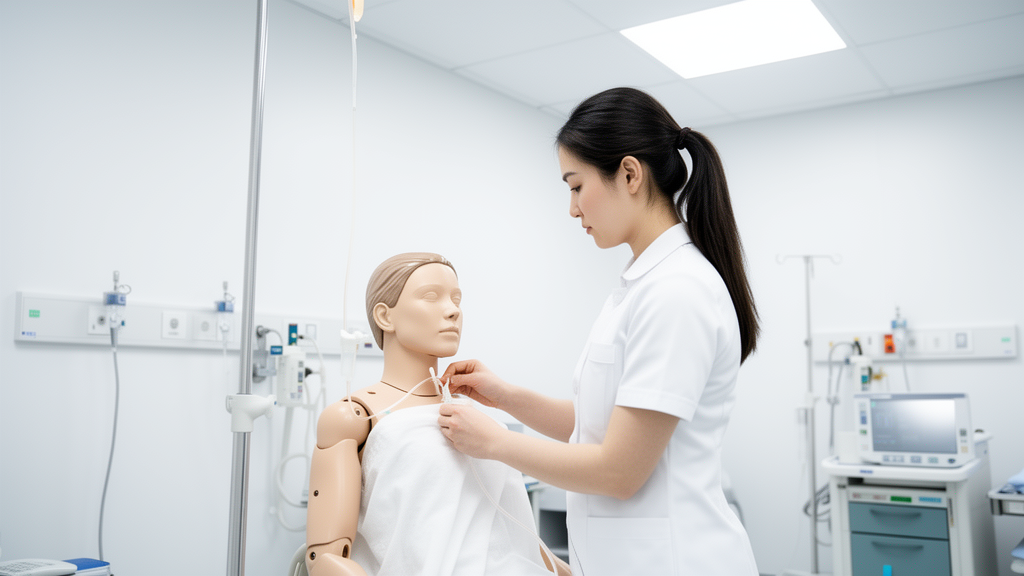
A qualitative investigation into nursing education has revealed a stark curricular paradox in clinical training, showing that healthcare environments can systematically erode formal teaching on compassionate patient care. Researchers examining the lived experiences of nursing students in Ecuador discovered that while academic coursework champions humanized care as a foundational professional competency, the clinical setting often acts as an opposing force. The study documented a clear cross-level progression in which students at early academic stages experience acute moral distress when encountering dehumanizing behaviors, whereas senior students tend to recount these same practices with apparent naturalness, pointing to a process of progressive normalization over the course of their clinical education.
The study highlights a persistent structural contradiction within health professional training in Latin America. Nursing curricula across the region formally identify humanized care as a primary pillar of professional practice and educational standards. Nonetheless, hospital and clinical environments frequently challenge this instruction through implicit mechanisms that subtly validate detached or depersonalized routines.
To investigate how students navigate this institutional divide, investigators aimed to understand the everyday lived experiences of nursing trainees encountering humanized care during clinical rotations.
The investigation utilized a hermeneutic phenomenological framework based on Max van Manen’s phenomenology of practice. The research cohort comprised 53 nursing students, including 34 women and 19 men, distributed across six distinct academic levels with concurrent clinical placements. The collected qualitative material was subsequently examined following Van Manen’s hermeneutic analytical procedures to extract underlying thematic structures.
Methodological rigor was maintained using established standards for qualitative inquiry. The investigative team applied Lincoln and Guba’s criteria for trustworthiness, incorporating formal member checking, investigator triangulation across researchers, and an independent process audit. In addition, the reporting adhered to the Consolidated Criteria for Reporting Qualitative Research (COREQ) checklist to ensure transparency, procedural consistency, and comprehensive documentation of the analytical trajectory.
The thematic analysis identified two primary experiential fields that govern student encounters in healthcare facilities: enabling conditions and restricting conditions. Enabling factors encompassed the personal and communicative abilities of the students, constructive role modeling by clinical faculty, and supportive ward environments. Conversely, restricting factors involved student personal insecurities, institutional limitations within clinical sites, and contradictions stemming from the unwritten or hidden curriculum that governs daily hospital operations.
Beginners exposed to dismissive or mechanical patient care consistently reported feelings of moral distress, expressing internal conflict when observing deviations from the empathetic standards taught in their university lecture halls. In contrast, advanced trainees nearing completion of their degrees described such incidents with greater acceptance and routine familiarity, suggesting that extended immersion in challenging clinical settings can gradually desensitize trainees to dehumanizing practices.
In their conclusions, the authors emphasized that clinical settings can function as an influential hidden curriculum that undermines the formal teaching of humanized care. To counteract this informal conditioning, the researchers recommend establishing systematic faculty role modeling policies, providing structured reflective spaces during clinical rotations where students can process ethical tensions, and redesigning evaluation instruments so that relational and communicative dimensions of care receive equal academic weight to procedural and technical nursing competencies.
Subject of Research: Phenomenological evaluation of humanized care experiences and hidden curriculum contradictions in nursing education
Article Title: Exploring the curricular paradox in nursing: a phenomenological study on the experiences of humanized care in clinical training
Article References: Valle Dávila, M. F., Vaca Orellana, C. F., Acosta Balseca, S. L., Velastegui Moreno, D. C., & Salgado Jiménez, R. E. (2026). Exploring the curricular paradox in nursing: a phenomenological study on the experiences of humanized care in clinical training. BMC Nursing. https://doi.org/10.1186/s12912-026-05595-8
Image Credits: AI Generated
DOI: 10.1186/s12912-026-05595-8
Keywords: nursing education, humanized care, clinical training, hidden curriculum, curricular paradox, phenomenology of practice, Van Manen, moral distress, Ecuador public health, focus groups, faculty role modeling, relational dimensions of care, Lincoln and Guba criteria, COREQ checklist, investigator triangulation, member checking, student insecurities
Cite Scienmag News
Ophelia Keating. (November 10, 2026). Clinical Training Environments Progressively Normalize Dehumanizing Care Among Nursing Students. Scienmag. https://scienmag.com/clinical-training-environments-progressively-normalize-dehumanizing-care-among-nursing-students/
Ophelia Keating. "Clinical Training Environments Progressively Normalize Dehumanizing Care Among Nursing Students." Scienmag, 10 November 2026, https://scienmag.com/clinical-training-environments-progressively-normalize-dehumanizing-care-among-nursing-students/. Accessed 10 November 2026.
Ophelia Keating. "Clinical Training Environments Progressively Normalize Dehumanizing Care Among Nursing Students." Scienmag. November 10, 2026. https://scienmag.com/clinical-training-environments-progressively-normalize-dehumanizing-care-among-nursing-students/




