


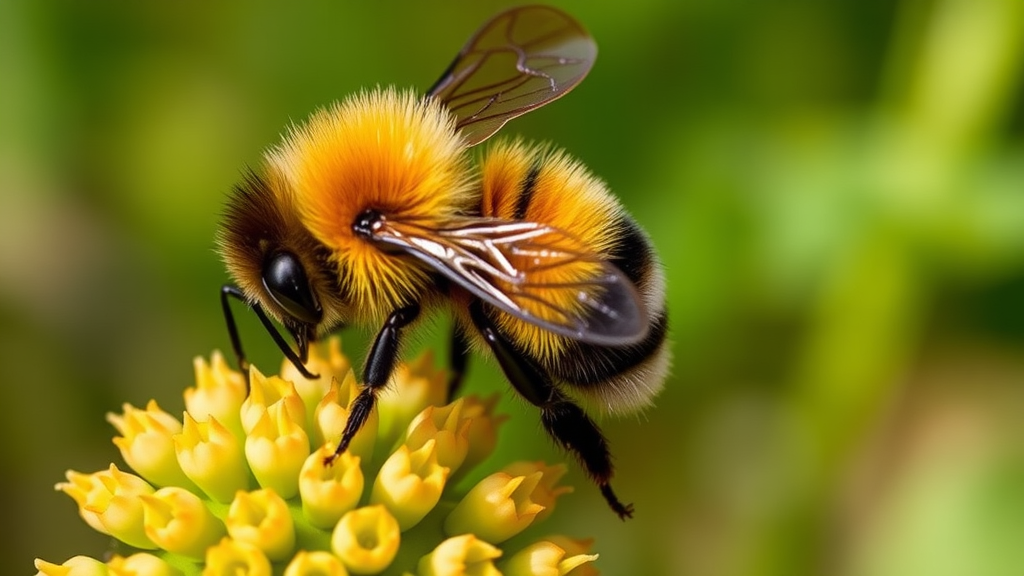
A sweeping new analysis has delivered the clearest attribution yet of a crime long suspected but hard to pin down: climate change itself, acting separately from pesticides, land-use intensification and disease, has steadily stripped away the places in Europe where bumblebees can thrive. By comparing more than a century of real climate records against a hypothetical Europe in which human-driven warming never happened, researchers found that ecological suitability for these iconic pollinators has fallen by an average of five percent across the continent, and by as much as nineteen percent in the hardest-hit localities. The losses concentrate in southern Europe and the lowlands of the continent’s center, exactly the regions where bumblebee declines have been most alarming to field ecologists.
The study, published in Nature Climate Change, tackles one of the most stubborn problems in conservation science: attribution. Pollinating insects face a gauntlet of modern pressures, from agricultural chemicals to habitat fragmentation to parasites such as the bee-processing pathogen Crithidia bombi and spillover from managed honeybees. When a bumblebee population vanishes from a landscape, which of these culprits deserves the blame? Traditional correlative studies cannot easily answer that question, because climate trends move in lockstep with many other environmental changes. The Belgian-led research team, headed by Bastien De Tandt of the Université Libre de Bruxelles and the University of Mons, sidestepped the problem with a counterfactual design borrowed from the climate attribution community.
Technically, the approach rests on running the same ecological models twice. First, the team trained ecological niche models for forty-seven European bumblebee species using occurrence records drawn from a newly synthesized database of wild bee and hoverfly observations across Europe, combined with climatic variables from the ISIMIP3a reanalysis framework, which reconstructs historical weather conditions from 1901 to 2019. These models, built with boosted regression trees, learn the environmental envelope each species occupies, capturing the temperature and precipitation conditions under which bumblebees persist. Performance was validated with spatially blocked cross-validation and metrics including the area under the receiver operating characteristic curve and a prevalence-calibrated Sørensen index, guarding against the optimism that plagues purely random data splits.
Then comes the counterfactual. Using the ATTRICI method, the researchers constructed a parallel climate dataset in which long-term anthropogenic trends have been removed while natural year-to-year variability is preserved. In this counterfactual Europe, weather still fluctuates and seasons still turn, but the warming fingerprint of industrial society is erased. Feeding both datasets through identical niche models produced two parallel histories of habitat suitability, and their difference isolates the specific contribution of human-caused climate change. It is the ecological equivalent of a clinical trial with a control group, and it gives the results a causal weight that earlier correlational studies of bumblebee decline could not claim.
The verdict is sobering but geographically nuanced. At the continental scale, community-level ecological suitability, a measure averaging suitability across all forty-seven species, fell by roughly five percent under the factual climate relative to the counterfactual one. But that continental average conceals sharp regional contrasts. Southern Europe, already identified as a Mediterranean climate-change hotspot in CMIP5 and CMIP6 projections, suffered the steepest declines, with suitability losses reaching nineteen percent locally. Lowland central regions, including the Carpathian Basin and the surrounding plains, also registered pronounced erosion of suitable conditions. These are areas where summer heat extremes have intensified faster than many climate models simulate, and where bumblebees, evolutionarily adapted to cool temperate conditions, bump against their physiological limits.
Bumblebees are, in a sense, mammals of the insect world: thick-furred, cold-adapted descendants of alpine lineages that struggle when temperatures climb. Laboratory protocols developed to test insect heat tolerance have shown that many Bombus species have critically low thermal maxima compared with other insects, and heat waves have been linked to a ‘scarcity syndrome’ of local disappearances documented in France as far back as the early 2000s. The new results suggest those anecdotal local extinctions are the visible edge of a continent-wide redistribution of livable space. As conditions warm, the suitable zone shifts poleward and upward, and species unable to disperse fast enough accumulate a mounting climatic debt.
The mountain and boreal edges of Europe tell a different story. In the Alpine and Boreal biogeographic regions, gains in suitability at higher altitudes and latitudes partially compensated for losses at lower elevations, yielding minimal net change. Cold-adapted species such as Bombus alpinus have shown hints of uphill shifts in the Alps, and bumblebee elevation ranges have climbed measurably in the Pyrenees over the past century. Yet researchers caution that these apparent refuges are finite. Mountains are truncated worlds: a species can only climb so far before it runs out of summit. The modest boreal gains also reflect expansions of a few generalist species, including the tree bumblebee Bombus hypnorum, rather than a broad story of resilience.
What makes the findings particularly consequential is what they imply for the rest of the century. An earlier analysis by overlapping authors projected steep declines in European bumblebee populations through 2100 under future warming scenarios. The new attribution study confirms that the projected future has, in a quantifiable sense, already begun. Climate change is not a looming threat to these pollinators; it is a pervasive, measurable pressure that has been reshaping their distributions for more than a hundred years, compounding the stresses of intensive agriculture, pesticide exposure and dwindling floral resources. Because bumblebees pollinate a large share of wild flowering plants and numerous crops, including tomatoes, berries and legumes that depend on their distinctive buzz pollination, the erosion of their habitat carries direct consequences for both biodiversity and food production.
The methodological template established here is likely to spread. Counterfactual climate datasets and impact-attribution frameworks of the kind used in the Inter-Sectoral Impact Model Intercomparison Project are increasingly available, and the researchers have released their curated occurrence database, models and R scripts openly through Zenodo and GitHub. Similar attribution exercises could now disentangle climate’s role in the fortunes of other threatened insect groups, from hoverflies to butterflies, where blame has been similarly contested. For conservation planners, the regional maps of climate-driven suitability loss offer a practical tool: southern and central lowland populations emerge as priority targets for habitat restoration, connectivity corridors and thermal refugia, while mountain reserves gain added strategic value as potential stepping stones in a warming race. The study’s authors note that all datasets underpinning the work are freely available, and their results demonstrate unambiguously that climate change is already rewriting the map of Europe’s most beloved wild pollinators.
Subject of Research: Attribution of declines in European bumblebee habitat suitability to human-driven climate change since 1901
Article Title: Declines in European bumblebee habitat suitability attributable to climate change
Article References: De Tandt, B., Serres, K., Pietroiusti, R., Erazo, D., Massonnet, F., Michez, D., Thiery, W., Ghisbain, G., & Dellicour, S. (2026). Declines in European bumblebee habitat suitability attributable to climate change. Nature Climate Change. https://doi.org/10.1038/s41558-026-02734-6
Image Credits: AI Generated
DOI: 10.1038/s41558-026-02734-6
Keywords: bumblebees, climate change, habitat suitability, pollinators, ecological niche modelling, counterfactual climate, attribution, biodiversity loss, Europe, Nature Climate Change, conservation biology, ISIMIP3a
Cite Scienmag News
Sloane Callahan. (September 12, 2026). Climate Change Has Eroded a Twentieth of Europe’s Bumblebee Habitat Since 1901. Scienmag. https://scienmag.com/climate-change-has-eroded-a-twentieth-of-europes-bumblebee-habitat-since-1901/
Sloane Callahan. "Climate Change Has Eroded a Twentieth of Europe’s Bumblebee Habitat Since 1901." Scienmag, 12 September 2026, https://scienmag.com/climate-change-has-eroded-a-twentieth-of-europes-bumblebee-habitat-since-1901/. Accessed 4 October 2026.
Sloane Callahan. "Climate Change Has Eroded a Twentieth of Europe’s Bumblebee Habitat Since 1901." Scienmag. September 12, 2026. https://scienmag.com/climate-change-has-eroded-a-twentieth-of-europes-bumblebee-habitat-since-1901/


