

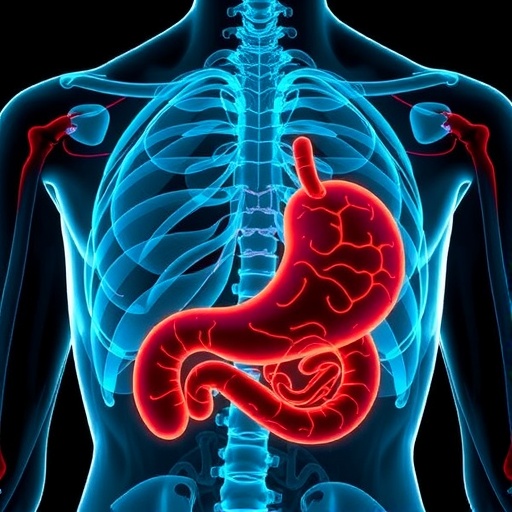
In a groundbreaking study published in Molecular Cancer, researchers have unveiled significant insights into the role of a novel regulatory RNA molecule, CircZFAND6, in the context of gastric cancer. This non-coding RNA has been identified as a crucial player in moderating the aggressive characteristics of gastric cancer cells, particularly in inhibiting metastasis and enhancing the efficacy of targeted therapies known as tyrosine kinase inhibitors (TKIs). The research, led by Deng et al., paves the way for potential therapeutic strategies that leverage the functionalities of CircZFAND6 to combat one of the most challenging malignancies.
Gastric cancer continues to pose a serious public health challenge globally, marking it as one of the leading causes of cancer-related deaths. The complexity of its pathology often renders current treatment modalities, including surgical interventions and chemotherapy, less effective. The emergence of TKIs has offered a glimmer of hope; however, resistance to these therapies is a pressing issue that complicates treatment outcomes. Understanding the molecular underpinnings that contribute to this resistance is imperative in the quest for more effective therapeutic approaches.
Around the world, the scientific community is increasingly turning its attention to the non-coding RNA landscape, recognizing its integral role in gene regulation and cellular function. CircZFAND6, a circular RNA that has garnered attention in recent years, is postulated to possess unique regulatory capabilities that may influence the invasive potential of cancer cells. The study by Deng and colleagues elucidates how CircZFAND6 operates within gastric cancer cells, shedding light on its function as a metastasis suppressor.
Previous research has associated circular RNAs with various biological processes. However, the specific mechanisms through which CircZFAND6 impacts gastric cancer metastasis are still being unraveled. The authors of the study engaged in a series of experiments to evaluate the expression levels of CircZFAND6 in gastric cancer tissues compared to normal gastric tissues. Their findings revealed a notable downregulation of CircZFAND6 in cancerous tissues, correlating with increased metastatic potential.
To delve deeper into the functionality of CircZFAND6, the team employed both in vitro and in vivo models. By manipulating CircZFAND6 levels in gastric cancer cell lines, they were able to observe a direct impact on cell migration and invasion. Increasing CircZFAND6 expression led to a remarkable decrease in cellular motility, indicative of its role in limiting the aggressive behaviors characteristic of cancer cells. Additionally, the researchers noted that knockdown of CircZFAND6 resulted in enhanced invasive properties, thereby affirming its designation as a metastasis inhibitor.
A vital aspect of the study focused on the interaction between CircZFAND6 and key signaling pathways implicated in tumor progression. The authors explored how CircZFAND6 influences the classical pathways often hijacked by cancer cells to bolster their survival and proliferation. Notably, they found that CircZFAND6 modulates the activity of several oncogenic signals, potentially offering a novel mechanism through which therapeutic resistance may be circumvented.
The implications of these findings extend beyond mere academic interest. By enhancing the understanding of CircZFAND6’s function, researchers are positioned to develop innovative treatment strategies aimed at reversing TKI resistance. The ability of CircZFAND6 to sensitize cancer cells to TKIs suggests a promising avenue for future therapies that could improve patient outcomes in gastric cancer.
In addition to its metastasis-suppressing capabilities, the study identified CircZFAND6 as a candidate biomarker for gastric cancer prognosis. The expression levels of CircZFAND6 were shown to correlate with clinical parameters, including tumor stage and patient survival rates. This association underscores the potential utility of CircZFAND6 in clinical settings, where it could inform prognosis and treatment decisions.
The research efforts led by Deng et al. represent a significant step forward in the understanding of gastric cancer biology. The elucidation of CircZFAND6’s role in metastasis and TKI resistance not only highlights the complexity of cancer signaling networks but also emphasizes the potential for targeting RNA molecules in cancer therapy. As research in the field continues to grow, CircZFAND6 may emerge as a key player in personalized medicine approaches for gastric cancer.
Looking ahead, the authors advocate for further investigations to clarify the molecular interactions of CircZFAND6 with other regulatory factors in gastric cancer. Exploring its partnerships with other non-coding RNAs and proteins involved in tumor progression could open doors to new therapeutic strategies aimed at manipulating this pathway. Additionally, understanding how CircZFAND6 is regulated could provide invaluable insights into its potential as a target for intervention.
This pioneering research underscores an essential truth in oncology—the journey towards effective cancer treatment is multifaceted and ever-evolving. By bridging basic science with clinical applications, the insights drawn from studies on CircZFAND6 set the stage for future breakthroughs in the fight against not just gastric cancer, but also other malignancies that may exhibit similar patterns of behavior.
In summary, the work by Deng et al. highlights the promising role of CircZFAND6 in gastric cancer, demonstrating its potential as a suppressor of metastasis and a modulator of TKI resistance. As the scientific community continues to decode the complexities of cancer biology, the identification and characterization of key regulatory molecules like CircZFAND6 will be paramount in the development of novel therapeutic strategies, ultimately improving patient outcomes and reshaping the landscape of cancer treatment.
Subject of Research: The role of CircZFAND6 in gastric cancer metastasis and TKI resistance.
Article Title: CircZFAND6 suppresses gastric cancer metastasis and reduces resistance to TKI therapy.
Article References: Deng, ZJ., OuYang, LY., Guo, JP. et al. CircZFAND6 suppresses gastric cancer metastasis and reduces resistance to TKI therapy. Mol Cancer 24, 305 (2025). https://doi.org/10.1186/s12943-025-02478-5
Image Credits: AI Generated
DOI: https://doi.org/10.1186/s12943-025-02478-5
Keywords: CircZFAND6, gastric cancer, metastasis, TKI therapy, non-coding RNA.


