


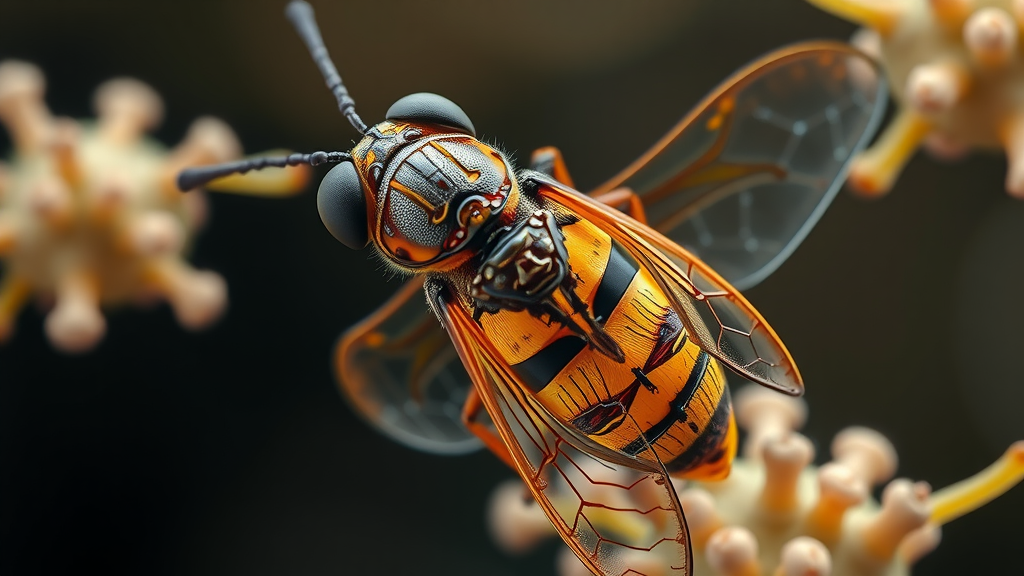
In the world of traditional Chinese medicine, few raw materials are as quietly ubiquitous as Cicadae Periostracum, the papery slough that cicadas abandon when they molt from nymph to adult. For centuries, this discarded exoskeleton has been prescribed for sore throats, hoarseness, skin eruptions and a range of other complaints, and it remains a staple ingredient in modern herbal formulations. Yet the biological identity of the insects that produce this medicine has long rested on morphology alone, a method that is increasingly strained as regional substitutes enter the supply chain. A new study published in BMC Genomics has now sequenced the complete mitochondrial genomes of two of those substitute species, Cryptotympana mandarina and Cryptotympana recta, providing the most detailed genetic portrait to date of the genus that underpins this ancient remedy.
The research team, led by scientists affiliated with the Nanjing University of Chinese Medicine and the Jiangsu Province Academy of Traditional Chinese Medicine, turned to high-throughput sequencing technologies to assemble the two circular mitochondrial genomes in their entirety. The mitogenome of C. mandarina measured 15,574 base pairs, while that of C. recta came in slightly larger at 15,802 base pairs. Despite the difference in length, both genomes conformed to the canonical architecture found across insects: 37 genes in total, comprising 13 protein-coding genes, 22 transfer RNA genes and two ribosomal RNA genes. This conserved gene content confirms that neither species has undergone the rearrangements or gene losses occasionally seen in other insect lineages, and it establishes a reliable baseline for future comparative work within the genus.
Beneath that shared architecture, the researchers probed the fine-grained chemical signature of the DNA itself. Both mitogenomes displayed a pronounced bias toward the nucleotides adenine and thymine, a hallmark of insect mitochondrial DNA, and their AT-skew and GC-skew values were highly similar, indicating that the two species share comparable patterns of nucleotide composition across coding and non-coding regions. Most of the protein-coding genes began with ATN family start codons, the standard initiation signals in arthropod mitochondria. The transfer RNA genes, meanwhile, folded into the familiar cloverleaf secondary structures that allow these molecules to shuttle amino acids during protein synthesis, with a single telling exception: trnS1 lacked the dihydrouridine arm, a deviation that recurs across many insect groups and is considered a normal feature of the gene rather than a sequencing artifact.
The most consequential finding emerged from the team’s search for variable hotspots within the protein-coding genes. Using sliding window analyses of nucleotide diversity, pairwise genetic distance calculations and the ratio of nonsynonymous to synonymous substitutions, known as the Ka/Ks ratio, the researchers identified two genes that stand out from the rest of the mitochondrial toolkit: ATP8 and ND2. These genes are moderately conserved at the sequence level, meaning they are neither so variable that they defy alignment nor so static that they carry no distinguishing signal. Crucially, they contain the highest proportions of variable sites among all 13 protein-coding genes examined. That combination makes them promising supplementary molecular markers, short stretches of DNA that can be amplified and sequenced to tell C. mandarina and C. recta apart with confidence, even when the insects are represented only by fragmented molted shells in a bag of herbal medicine.
The practical stakes of that capability are considerable. Cicadae Periostracum, known in Chinese as chan tui, is officially sourced in the Chinese Pharmacopoeia from Cryptotympana atrata, but C. mandarina and C. recta are commonly used as regional substitutes. Distinguishing among these species by eye is notoriously difficult, particularly for processed material, and misidentification complicates both quality control and the sustainable management of wild populations. Molecular authentication offers a way forward: with reference genomes in hand, regulators and producers can deploy targeted DNA barcoding to verify exactly which species contributed a given batch of Periostracum, protecting consumers and opening the door to the deliberate, traceable development of substitute species as legitimate medicinal resources rather than unregulated adulterants.
Beyond authentication, the study delivered a phylogenetic result with broad reach. By concatenating the mitochondrial protein-coding genes from the two newly sequenced species with data from 43 cicada species retrieved from public databases, the team reconstructed the evolutionary relationships among 45 representative Cicada species using maximum likelihood and Bayesian inference methods. The resulting trees strongly supported a monophyletic relationship among the sampled taxa, meaning the group shares a single common ancestor, and placed C. atrata, the officially recognized source species of Cicadae Periostracum, within a well-resolved framework alongside its close relatives. For a genus whose internal taxonomy has been debated on the basis of external anatomy, the genomic evidence provides an independent line of corroboration that should help stabilize species boundaries and inform future taxonomic revisions.
The methodological pipeline behind the study reflects the current state of the art in mitochondrial genomics. Genomic DNA was sequenced with high-throughput platforms, and the resulting reads were assembled into complete circular molecules and annotated with tools including the MITOS mitochondrial annotation server and BLAST-based similarity searches. Codon usage patterns were quantified through relative synonymous codon usage analysis, nucleotide diversity was mapped across the genome with sliding windows implemented in software such as DnaSP, and the best-fitting models of sequence evolution were selected using the Bayesian Information Criterion and the corrected Akaike Information Criterion before phylogenetic reconstruction. Multiple sequence alignments were performed with MAFFT, and the combination of maximum likelihood and Bayesian approaches allowed the researchers to assess how robustly each node in the species tree was supported. Every step of this workflow is now documented and reproducible, meaning other laboratories can extend the analysis to additional Cryptotympana species or related cicadas with relative ease.
The broader significance of the work lies in what it signals about the intersection of genomics and traditional medicine. As demand for natural health products grows worldwide, the pressure on wild insect populations that supply raw materials intensifies, and the line between legitimate harvest and resource depletion grows harder to police without precise species-level identification. By expanding the genomic resources available for Cryptotympana taxonomy, the study gives conservation biologists a tool for monitoring which species are actually being harvested, gives pharmacognosists a molecular basis for quality assurance, and gives resource developers a roadmap for evaluating whether substitute species such as C. mandarina and C. recta might be cultivated or managed sustainably to relieve pressure on the official source species. In this sense, two small circular genomes of roughly fifteen thousand base pairs each carry implications far beyond their size.
The researchers conclude that their findings provide a molecular foundation for the authentication of Cicadae Periostracum and support the conservation and sustainable use of these medicinal insects. With the complete mitogenomes of C. mandarina and C. recta now publicly available, the genetic gaps that once separated regional substitutes from the pharmacopoeial standard have been substantially narrowed. The identification of ATP8 and ND2 as informative marker candidates offers an immediately actionable outcome for laboratories engaged in herbal medicine verification, while the robust phylogeny of 45 cicada species supplies context for any future species that joins the analysis. What began as an effort to read the DNA of two molting insects ends as a step toward ensuring that a medicine used for centuries can continue to be produced, verified and preserved on a scientific footing fit for the genomic age.
Subject of Research: Complete mitochondrial genome sequencing and phylogenetic analysis of the medicinal cicadas Cryptotympana mandarina and Cryptotympana recta
Article Title: The complete mitochondrial genomes and phylogenetic analysis of Cryptotympana mandarina and C. recta: insights for molecular authentication and potential resource development of Cicadae Periostracum
Article References: Zhang, H.-H., Zhang, M., Fan, B.-B., Wang, C.-X., Yue, F.-R., Xu, J.-D., Zhou, J., Kong, M., Zhou, S.-S., Li, S.-L., & Mao, Q. (2026). The complete mitochondrial genomes and phylogenetic analysis of Cryptotympana mandarina and C. recta: insights for molecular authentication and potential resource development of Cicadae Periostracum. BMC Genomics. https://doi.org/10.1186/s12864-026-13306-5
Image Credits: AI Generated
DOI: 10.1186/s12864-026-13306-5
Keywords: Cryptotympana mandarina, Cryptotympana recta, mitochondrial genome, phylogenetics, Cicadae Periostracum, molecular authentication, traditional Chinese medicine, DNA barcoding, ATP8, ND2, BMC Genomics, medicinal insects
Cite Scienmag News
Juliet Wilcox. (September 13, 2026). Cicada Genomes Decoded to Safeguard a Traditional Medicine’s Future. Scienmag. https://scienmag.com/cicada-genomes-decoded-to-safeguard-a-traditional-medicines-future/
Juliet Wilcox. "Cicada Genomes Decoded to Safeguard a Traditional Medicine’s Future." Scienmag, 13 September 2026, https://scienmag.com/cicada-genomes-decoded-to-safeguard-a-traditional-medicines-future/. Accessed 5 October 2026.
Juliet Wilcox. "Cicada Genomes Decoded to Safeguard a Traditional Medicine’s Future." Scienmag. September 13, 2026. https://scienmag.com/cicada-genomes-decoded-to-safeguard-a-traditional-medicines-future/


