


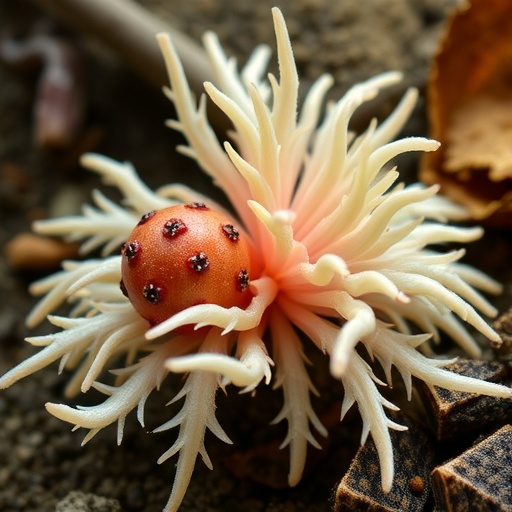
The fishing industry, while crucial to the economy and food supply, generates significant waste, primarily in the form of chitin. Chitin, a biopolymer found abundantly in the exoskeletons of crustaceans, is currently underutilized and discarded as waste, posing environmental challenges. Recent studies have sought to explore innovative ways to repurpose this waste, focusing on its biodegradation through biological means. This article delves into a groundbreaking study conducted by Rocha et al., published in the journal Waste Biomass Valor, which examines the potential of chitinases derived from Cunninghamella echinulata PA3S12MM in the degradation of chitin waste from the fishing industry.
In recent years, there has been a growing recognition of the importance of sustainable practices in waste management. Conventional disposal methods of chitin-rich waste often result in environmental pollution and resource wastage. The exploration of biotechnological solutions, particularly through microbial action, presents a promising alternative. By harnessing the natural ability of certain fungi to break down chitin, researchers are paving the way for a more sustainable and eco-friendly approach to waste management.
The research conducted by Rocha and colleagues employed Cunninghamella echinulata, a species of fungus known for its efficient chitinase production. Chitinases are enzymes that hydrolyze chitin, breaking it down into smaller, manageable molecules. This enzymatic degradation not only facilitates the disposal of chitin waste but also opens avenues for recycling the constituent nutrients, fostering a circular economy within the aquatic food industry.
In their study, the researchers meticulously isolated and characterized the chitinases produced by Cunninghamella echinulata PA3S12MM. Through a series of rigorous experiments, they evaluated the efficiency of these enzymes in degrading chitin under various environmental conditions. The results were promising, demonstrating a high degree of biodegradation, which is critical for industries plagued by significant chitin biomass.
Moreover, the findings suggested that the efficiency of chitin degradation varied with different environmental parameters such as pH, temperature, and substrate concentration. These findings hold implications for potential industrial applications where conditions can be optimized for maximal enzyme activity. By investing in enzyme technology and bioprocessing methods, industries could mitigate waste while simultaneously producing value-added products from chitin.
The implications of this research extend beyond waste management. As fungi like Cunninghamella echinulata can produce chitinases in bulk, the study opens the door for the potential commercialization of these enzymes. Chitinases hold promise not just for waste degradation but also in diverse fields including agriculture, where they can be used as biocontrol agents against pests, or in pharmaceuticals for the development of novel drug delivery systems.
What’s particularly fascinating is how this study bridges the gap between environmental sustainability and economic viability. The dual benefit of waste reduction and the potential for creating commercially valuable products aligns well with contemporary environmental goals. As industries increasingly face pressures to adopt sustainable practices, the adoption of biotechnological solutions such as this provides a compelling case for transition.
Furthermore, the research highlights the unexpected potential of utilizing traditionally discarded materials, like chitin, to foster innovation and drive sustainability in various sectors. As the pressure mounts for industries to move towards eco-friendly practices, studies like these serve as essential blueprints for developing green technologies that not only reduce environmental impact but also contribute to economic resilience.
This research also draws attention to the need for policy support and infrastructure development to promote the integration of biotechnology within waste management systems. Stakeholders in both governmental and industrial sectors should collaborate to create a conducive environment that fosters research and development in biotechnological applications to address waste challenges.
In conclusion, the exploration of chitin biodegradation by Cunninghamella echinulata marks a significant step toward sustainable practices within the fishing industry and beyond. The transformation of chitin waste into useful products not only addresses the ecological concerns posed by waste disposal but also paves the way for new business opportunities in enzyme production and bioprocessing. As we move forward, embracing such innovations will be paramount in forging a more sustainable future for the planet.
The journey of turning the fishing industry’s waste into valuable resources is just beginning. As research continues to unfold, it is poised to inspire further studies and applications, driving the global shift towards sustainability through innovative biotechnological approaches. The opportunity to create a cycle of waste reduction and resource regeneration underscores the necessity for ongoing research and investment in green technologies.
By championing studies like this, we not only support scientific advancement but also encourage a broader societal shift towards responsible consumption and environmental stewardship. The future is bright for biotechnology in waste management, and with further investment and research, chitin waste could soon become a valuable resource rather than a burden on our ecosystems.
Cite Scienmag News
Denise Maddox. (November 23, 2025). Chitin Waste Breakdown by Cunninghamella echinulata Chitinases. Scienmag. https://scienmag.com/chitin-waste-breakdown-by-cunninghamella-echinulata-chitinases/
Denise Maddox. "Chitin Waste Breakdown by Cunninghamella echinulata Chitinases." Scienmag, 23 November 2025, https://scienmag.com/chitin-waste-breakdown-by-cunninghamella-echinulata-chitinases/. Accessed 4 September 2026.
Denise Maddox. "Chitin Waste Breakdown by Cunninghamella echinulata Chitinases." Scienmag. November 23, 2025. https://scienmag.com/chitin-waste-breakdown-by-cunninghamella-echinulata-chitinases/


