


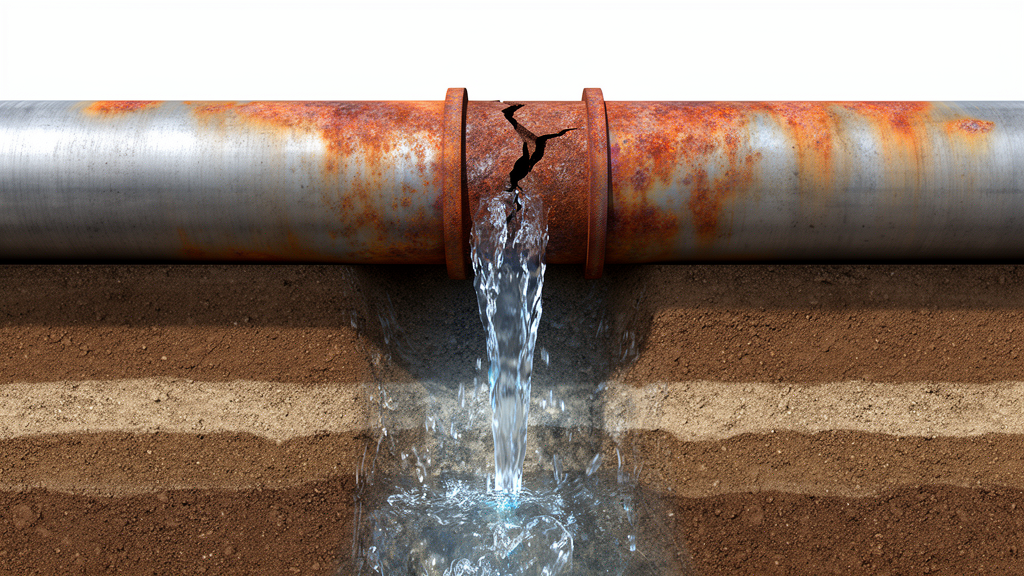
Researchers from Chile and Spain have developed a new methodological approach to estimate the minimum feasible water leakage for individual drinking water utilities and the associated operational cost adjustments. Published in Applied Water Science, the study applies inverse Data Envelopment Analysis (DEA) to a sample of 27 major Chilean water companies. The findings indicate that while 21 of these companies can reduce their water losses without compromising their eco-efficiency, the remaining six are already at their model-feasible minimum leakage levels. For the 21 companies with reduction potential, the average estimated leakage reduction is 20.51%, with individual ranges spanning from 8.76% to 81.55%.
The study addresses a critical gap in water utility management by moving beyond general eco-efficiency scores to identify specific, utility-specific leakage benchmarks. Traditional DEA models assess how efficiently a company converts operational costs into services while managing undesirable outputs like leakage. However, they do not typically determine the lowest leakage level a company can achieve while maintaining its current efficiency score. By employing inverse DEA, the authors reverse the optimization process to identify the necessary changes in inputs and outputs to meet predetermined efficiency targets, specifically focusing on the reduction of water leakage.
The empirical analysis focuses on the Chilean water industry, a sector characterized by prolonged drought conditions but relatively stable leakage rates over the past decade. The sample includes the 27 largest water companies in Chile, which collectively serve 5,903,863 households, representing 97.45% of all urban customers. These utilities operate across the country’s 16 administrative regions, providing a representative cross-section of the industry. The data used for the analysis is drawn from the 2023 Management Report of Water Companies published by the Superintendencia de Servicios Sanitarios, the urban water regulator in Chile.
The methodological framework consists of two primary stages. In Stage 1, the researchers assess the current eco-efficiency of each water company using an input-oriented Variable Returns to Scale (VRS) DEA model. Operational costs are treated as the sole input, while revenue water and wastewater treatment services are desirable outputs, and water leakage is an undesirable output. This stage establishes the baseline efficiency score for each utility, indicating the maximum proportional reduction in operational costs feasible while maintaining service levels and preventing an increase in leakage.
Stage 2 utilizes an inverse DEA model to estimate the frontier-consistent leakage benchmark for each company. This model identifies the lowest leakage level represented within the estimated DEA technology while keeping the desirable outputs and the Stage 1 eco-efficiency score constant. It then calculates the operational-cost adjustment required to reach this benchmark. The results show that 6 out of the 27 companies, including the largest provider in Santiago, cannot reduce their water loss while maintaining their current eco-efficiency and service volumes. For these six companies, their current leakage levels represent the minimum feasible levels under the model constraints.
For the remaining 21 companies, the study estimates significant potential for leakage reduction. The weighted average estimated percentage of water leakage reduction across all 27 companies is 16.31%, rising to 20.51% for the subset of companies that can reduce leakage. At the industry level, the analysis estimates that the current annual water loss of 292,081,000 cubic meters could be reduced to 244,435,000 cubic meters, avoiding approximately 47,646,000 cubic meters of water loss annually. This reduction is equivalent to the annual average water consumption of approximately 236,000 customer accounts, illustrating the substantial magnitude of the potential savings.
The economic implications of these reductions vary significantly across utilities. The total estimated annual increase in operational costs for the 21 companies with reduction potential amounts to US$157,741,000. This corresponds to an average model-implied operational-cost adjustment of 47.3% relative to current operational expenditure. However, individual company adjustments range widely, from a minimum of 3.3% for one utility to a maximum of 132.6% for another. The study notes a moderate positive association between the percentage reduction in water leakage and the corresponding operational-cost adjustment, with a correlation coefficient of 0.57.
The cost-effectiveness of leakage reduction is further detailed by the operational-cost adjustment per cubic meter of water saved. This indicator ranges from US$0.27 to US$38.32 per cubic meter of leakage reduction. The wide variation in these costs highlights the economic complexity of reducing leakage and suggests that a uniform sector-wide target may not be the most efficient policy approach. The authors emphasize that these estimates are benchmark implications within the DEA framework and should not be interpreted as direct predictions of tariff changes or engineering cost functions.
The study also contextualizes these findings within Chile’s regulatory framework. The current average percentage of water loss among the assessed companies is 20.29%, which exceeds the maximum threshold of 15% set by the regulator for tariff determination. However, the average estimated minimum feasible water leakage is 13.02%, indicating that the industry could, on average, adhere to current regulatory standards. Furthermore, the estimated minimum feasible leakage for all companies is below the 25% target agreed upon in a memorandum of understanding between water companies and the regulator, suggesting that this target is feasible without compromising eco-efficiency.
Several limitations are noted in the interpretation of the results. The DEA model constructs a relative production possibility set based on the observed utilities, meaning the estimated benchmarks depend on the sample composition and the 2023 cross-sectional data. The analysis does not incorporate structural variables such as network length, age, pipe material, or pressure regimes, which can materially affect leakage and the resources required for reduction. Additionally, the operational-cost input is an aggregate annual value that does not isolate expenditure specifically related to leakage management or include capital expenditure for asset renewal.
Despite these limitations, the study provides valuable insights for water regulators and managers. By identifying feasible reduction levels tailored to each water company, the approach promotes targeted policies that account for the unique circumstances and operational capacities of individual utilities. The findings underscore the importance of balancing eco-efficiency goals with water affordability, as the significant variation in cost per cubic meter saved suggests that a thorough economic assessment is necessary when establishing leakage reduction targets.
The authors suggest that the adoption of this framework could allow uniform, sector-wide leakage thresholds to be progressively replaced or complemented by company-specific targets. This would reduce the risk of imposing infeasible or disproportionately costly obligations on individual companies. Furthermore, recurrent application of the model could inform the phased design of water tariffs and subsidy schemes, ensuring that affordability is assessed jointly with each leakage-reduction target. Future research should test the dynamic extension of this framework using multi-year panel data and examine its applicability to other water-scarce countries facing similar trade-offs between eco-efficiency and leakage reduction.
Subject of Research: Methodological estimation of minimum feasible water leakage and operational cost adjustments in Chilean drinking water utilities using inverse Data Envelopment Analysis.
Article Title: Estimating minimum feasible water leakage and its economic impact in the drinking water sector: a case study from Chile
Article References: Mocholi, V., Maziotis, A., Sala-Garrido, R., & Molinos-Senante, M. (2026). Estimating minimum feasible water leakage and its economic impact in the drinking water sector: a case study from Chile. Applied Water Science, 16(10), Article 290. https://doi.org/10.1007/s13201-026-02976-x
Image Credits: AI Generated
DOI: 10.1007/s13201-026-02976-x
Keywords: water leakage, Data Envelopment Analysis, eco-efficiency, Chile, water utilities, operational costs, water scarcity, regulatory policy, inverse optimization, drinking water, Estimating, minimum
Cite Scienmag News
Violet Maxwell. (November 8, 2026). Chilean Study Quantifies Minimum Water Leakage and Cost Impacts. Scienmag. https://scienmag.com/chilean-study-quantifies-minimum-water-leakage-and-cost-impacts/
Violet Maxwell. "Chilean Study Quantifies Minimum Water Leakage and Cost Impacts." Scienmag, 8 November 2026, https://scienmag.com/chilean-study-quantifies-minimum-water-leakage-and-cost-impacts/. Accessed 20 November 2026.
Violet Maxwell. "Chilean Study Quantifies Minimum Water Leakage and Cost Impacts." Scienmag. November 8, 2026. https://scienmag.com/chilean-study-quantifies-minimum-water-leakage-and-cost-impacts/




