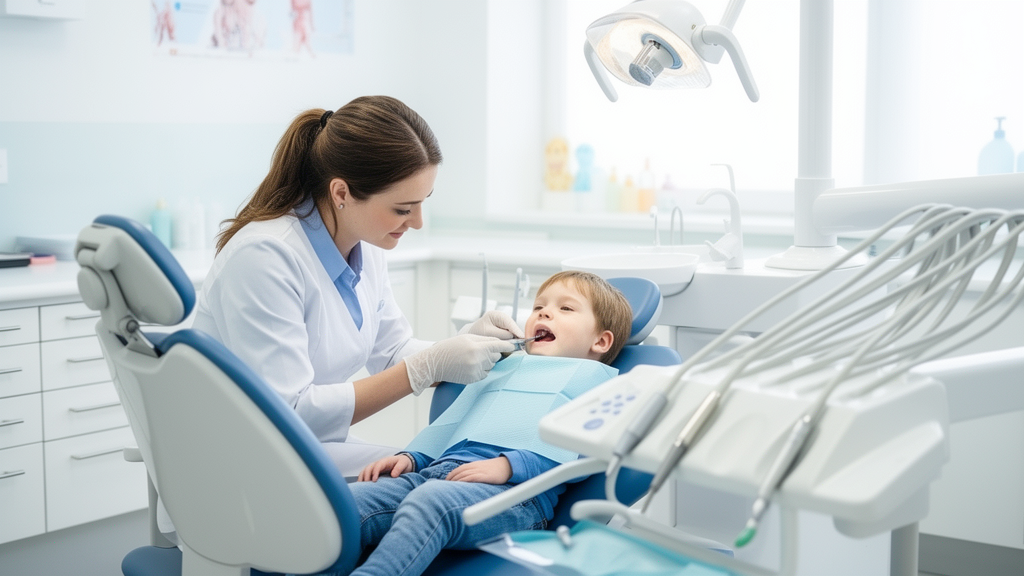
Children with neurodevelopmental disorders who needed dental treatment under general anesthesia for caries in Hokkaido, Japan, lived farther from the treatment facility than children without such disorders, according to a single-center retrospective cross-sectional study published in BMC Pediatrics. Among 398 pediatric patients aged 12 years or younger who underwent dental treatment under general anesthesia for dental caries between 2015 and 2020, those with neurodevelopmental disorders resided a mean of 12.0 kilometers farther from the facility than those without, even though Japan operates a well-established universal healthcare system. The study was released as an accepted manuscript version, which is citable and carries a permanent DOI but remains subject to further edits before the final version of record appears.
Dental caries remains a global public health challenge, and dental treatment under general anesthesia is often necessary for pediatric patients who cannot cooperate with conventional care. The research team, led by Daisuke Oiwa and colleagues, noted that although Japan's universal healthcare system is well established, the provision of dental treatment under general anesthesia is limited and concentrated in urban areas. Hokkaido, where the study was conducted, is characterized by a vast geographic area and a high rurality index, raising the question of whether children with neurodevelopmental disorders face a longer travel burden to reach this specialized service.
The researchers examined pediatric participants aged 12 years or younger who received dental treatment under general anesthesia for dental caries at a single center between 2015 and 2020. The primary outcome was the distance in kilometers from each participant's residence to the treatment facility. The secondary outcome was a travel distance of at least 16 kilometers, and the sensitivity outcome was crossing the boundaries of a secondary healthcare service area, a measure designed to capture travel that extends beyond the local healthcare zone.
The team used multivariable linear regression for the primary outcome and modified Poisson regression for the secondary and sensitivity outcomes, applying a false discovery rate adjustment to the secondary and sensitivity analyses to limit the risk of spurious findings. Among the 398 eligible participants, the median age was 4.0 years and 57.5 percent were male. Neurodevelopmental disorders were present in 16.3 percent of the participants, most commonly autism spectrum disorder and intellectual developmental disorders.
The mean travel distance for the whole group was 11.9 kilometers, with a standard deviation of 25.3 kilometers. In total, 11.1 percent of participants resided at least 16 kilometers away, and 3.0 percent crossed secondary healthcare service area boundaries to reach treatment. In the multivariable analysis, participants with neurodevelopmental disorders resided 12.0 kilometers farther from the treatment facility than those without such disorders, with a 95 percent confidence interval of 4.6 to 19.0 kilometers and a p value of 0.001.
This is an observed association in the study sample, not a demonstrated causal effect, and the single-center retrospective design means families who reached this particular facility may not represent all children needing dental treatment under general anesthesia in the region. In the secondary and sensitivity analyses, the direction of association was similar. Children with neurodevelopmental disorders were more likely to live at least 16 kilometers away and more likely to cross secondary healthcare service area boundaries, but neither finding reached statistical significance after the false discovery rate adjustment.
The threshold-based measures therefore provided supporting evidence of a similar pattern that did not meet the adjusted significance criteria. The study's conclusions carry weight because they emerged from a healthcare system with universal insurance coverage. The authors state that these findings suggest geographic travel burden may differ according to neurodevelopmental disorder status, a measured observation about the families included in this study rather than a forecast about access elsewhere.
Their data indicate that the distance difference persisted despite Japan's well-established universal healthcare system. Several design features should be kept in view when interpreting the results. As a single-center retrospective cross-sectional study, it captured only children who actually underwent dental treatment under general anesthesia for dental caries at one facility during a defined period, so children with neurodevelopmental disorders who lived too far away to access such care at all would not appear in the sample.
The distance measure reflects residence at the time of treatment, and the analyses were adjusted for multiple comparisons in the secondary and sensitivity outcomes but relied on the multivariable model for the primary estimate. The accepted manuscript version is subject to further edits and will be replaced automatically by the final version of record, so specific figures could change slightly in the published final article. Within those limits, the study quantifies how far families in a vast, rural region of Japan traveled for a service that is often necessary when uncooperative pediatric patients cannot receive conventional dental treatment, and it identifies a 12-kilometer difference in mean residential distance associated with neurodevelopmental disorder status.
Subject of Research: Association between neurodevelopmental disorders and travel distance for pediatric dental treatment under general anesthesia in Japan
Article Title: Association between neurodevelopmental disorders and travel distance for dental caries treatment under general anesthesia among Japanese pediatric patients: a single-center retrospective cross-sectional study
Article References: Oiwa, D., Oikawa, S., Nakata, K., Ono, S., & Ohnishi, H. (2026). Association between neurodevelopmental disorders and travel distance for dental caries treatment under general anesthesia among Japanese pediatric patients: a single-center retrospective cross-sectional study. BMC Pediatrics. https://doi.org/10.1186/s12887-026-07856-6
Image Credits: AI Generated
DOI: 10.1186/s12887-026-07856-6
Keywords: dental caries, general anesthesia, neurodevelopmental disorders, autism spectrum disorder, pediatric dentistry, healthcare access, travel distance, Hokkaido, retrospective study, BMC Pediatrics, Association, between
Cite Scienmag News
Ophelia Keating. (October 24, 2026). Children with Neurodevelopmental Disorders Travel Farther for Dental Care Under Anesthesia. Scienmag. https://scienmag.com/children-with-neurodevelopmental-disorders-travel-farther-for-dental-care-under-anesthesia/
Ophelia Keating. "Children with Neurodevelopmental Disorders Travel Farther for Dental Care Under Anesthesia." Scienmag, 24 October 2026, https://scienmag.com/children-with-neurodevelopmental-disorders-travel-farther-for-dental-care-under-anesthesia/. Accessed 24 October 2026.
Ophelia Keating. "Children with Neurodevelopmental Disorders Travel Farther for Dental Care Under Anesthesia." Scienmag. October 24, 2026. https://scienmag.com/children-with-neurodevelopmental-disorders-travel-farther-for-dental-care-under-anesthesia/