


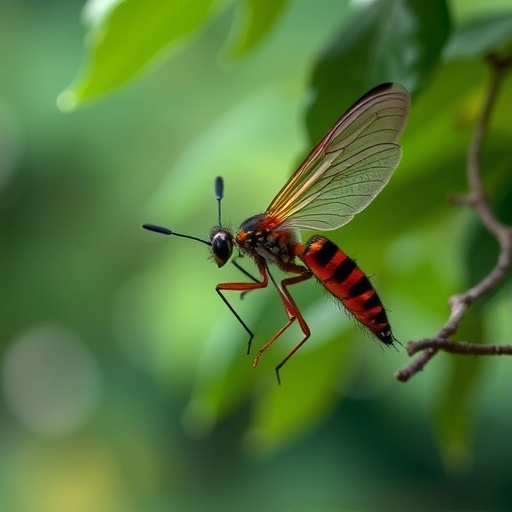
In early 2025, Foshan City in China faced an unprecedented public health challenge with the sudden surge of chikungunya fever cases that quickly escalated into an epidemic. Chikungunya, a mosquito-borne viral disease characterized by fever, joint pain, and rash, had remained a sporadic concern in Southeast Asia and parts of Africa, but its rapid spread in Foshan highlighted both the intricacies of viral transmission and the complexities of urban epidemic management in a densely populated region. This outbreak prompted an intense response from local health authorities and researchers, providing a crucial case study in epidemic control and viral epidemiology.
The chikungunya virus (CHIKV), an alphavirus transmitted primarily through Aedes aegypti and Aedes albopictus mosquitoes, has mechanisms that enable rapid transmission, particularly in urban environments with dense human populations and effective mosquito breeding grounds. Foshan, with its subtropical climate and extensive urbanization, became an ideal incubator for the vector mosquitoes, creating favorable conditions for the virus to amplify quickly once introduced. The viral lifecycle in the vector and host involves complex interactions that have allowed CHIKV to adapt and persist in varying ecological settings, intensifying outbreak potential.
Genomic analyses conducted during the Foshan outbreak revealed genetic variations in the circulating CHIKV strains that may have contributed to enhanced vector competence and increased transmission efficiency. These mutations, particularly in the viral envelope proteins, are thought to facilitate the virus’s binding capacity to mosquito midgut receptors, improving infection rates in Aedes mosquitoes. Understanding these molecular adaptations is vital in predicting potential outbreak regions and preparing targeted vector control strategies to mitigate transmission risk.
The city’s public health response implemented a multi-tiered strategy focusing on vector surveillance, community engagement, clinical management, and epidemiological tracking. Early detection relied heavily on syndromic surveillance systems capable of distinguishing chikungunya cases from other febrile illnesses, notably dengue and Zika virus infections, which share overlapping clinical presentations. Advanced laboratory diagnostics, including RT-PCR and serological assays for chikungunya-specific IgM and IgG, were rapidly deployed to confirm cases and inform public health actions.
Vector control measures emphasized both environmental management and insecticidal interventions. Fogging operations targeted adult mosquito populations, while community-driven elimination of breeding sites, such as stagnant water in containers, underscored the involvement of the general population in mosquito habitat reduction. These efforts were augmented by educational campaigns aimed at fostering personal protective behaviors, such as using mosquito repellents and bed nets, especially during peak mosquito biting hours.
Clinically, the burden of chikungunya cases presented significant challenges due to the disease’s characteristic severe arthralgia and prolonged convalescence in some patients. Treatment remained largely supportive, focusing on symptom relief through analgesics and anti-inflammatory medications, as no specific antiviral therapy is currently available. The epidemic underscored the necessity to enhance clinical protocols for managing chikungunya’s persistent joint manifestations, which can lead to chronic morbidity and substantial impacts on patients’ quality of life.
Epidemiological data from the Foshan outbreak provided insights into patterns of disease spread, including age and sex distribution, and risk factors associated with severe outcomes. Analysis indicated higher attack rates among individuals in densely populated urban districts and occupational groups with increased outdoor exposure. The outbreak also highlighted the role of asymptomatic and subclinical infections in sustaining viral circulation, complicating containment efforts and necessitating more comprehensive population-level studies to estimate true infection prevalence.
From a virological perspective, this epidemic afforded a rare opportunity to study CHIKV pathogenesis in a non-endemic urban setting. Researchers investigated viral kinetics, immune response profiles, and possible co-infections with other arboviruses to elucidate interactions that influence disease severity and progression. Novel findings regarding cytokine expression patterns and immune modulation during acute infection phases have potential implications for future therapeutic interventions and vaccine design.
The Foshan outbreak also challenged existing health infrastructure resilience, emphasizing the urgency for scalable epidemic preparedness frameworks in rapidly developing metropolitan areas. Integration of real-time data analytics, geo-spatial mapping of vector habitats, and mobile health platforms emerged as critical tools in informing targeted interventions and resource allocation. These technological advancements, combined with traditional public health approaches, formed a robust response matrix that ultimately curtailed the epidemic within several months.
Reflecting on the lessons learned, health officials recognized the importance of continuous surveillance not only for chikungunya but also for other emerging arboviral threats exacerbated by climate change and globalization. The Foshan case highlighted how urbanization and ecological disruption facilitate the expansion of vector habitats, urging proactive measures in urban planning and environmental health policies to mitigate future outbreak risks. This holistic perspective is key to sustainable epidemic control in increasingly interconnected and vulnerable urban landscapes.
International collaboration played a pivotal role during the epidemic, with knowledge-sharing and technical support from global health organizations enhancing the city’s response capabilities. The outbreak underscored the value of coordinated efforts spanning local governments, research institutions, and international bodies to address cross-border infectious disease threats, promote standardized diagnostic protocols, and accelerate the development of effective vaccines and antiviral drugs.
Moreover, the psychological and societal impacts of the chikungunya epidemic in Foshan were profound. Public fear and misinformation necessitated transparent communication strategies to maintain trust and encourage community compliance with control measures. Social sciences research integrated into the epidemic response helped identify barriers to compliance and informed culturally sensitive messaging, highlighting the importance of human behavior dynamics in epidemic management.
Moving forward, research priorities based on the Foshan experience include characterizing long-term sequelae of chikungunya infection, optimizing rapid diagnostic tools for field deployment, and exploring novel vector control technologies such as Wolbachia-based biocontrol and genetically modified mosquitoes. Such innovative approaches promise to transform future outbreak responses and reduce the global burden of chikungunya and similar arboviral diseases.
In summary, the chikungunya fever epidemic in Foshan City served as a crucial case study demonstrating the complex interplay of viral evolution, vector ecology, urbanization, and public health response in shaping epidemic trajectories. The outbreak underscored the necessity for integrated, multidisciplinary approaches to arboviral disease preparedness and response, yielding valuable scientific and public health insights applicable to emerging infectious diseases worldwide.
Cite Scienmag News
Kristina Jarvis. (November 10, 2025). Chikungunya Fever Epidemic: Foshan’s Outbreak and Response. Scienmag. https://scienmag.com/chikungunya-fever-epidemic-foshans-outbreak-and-response/
Kristina Jarvis. "Chikungunya Fever Epidemic: Foshan’s Outbreak and Response." Scienmag, 10 November 2025, https://scienmag.com/chikungunya-fever-epidemic-foshans-outbreak-and-response/. Accessed 3 September 2026.
Kristina Jarvis. "Chikungunya Fever Epidemic: Foshan’s Outbreak and Response." Scienmag. November 10, 2025. https://scienmag.com/chikungunya-fever-epidemic-foshans-outbreak-and-response/


