


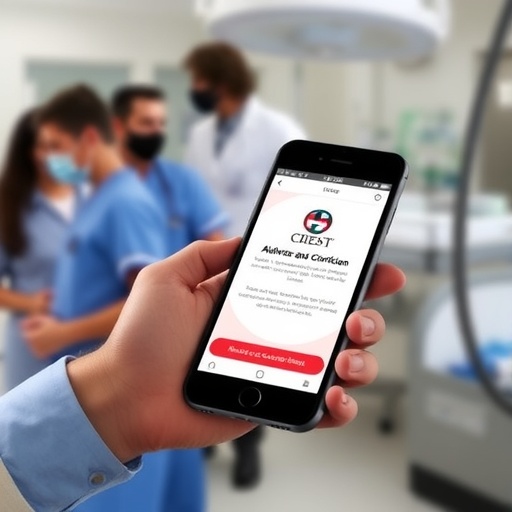
In a landmark advancement for critical care education, the American College of Chest Physicians (CHEST) has officially launched a specialized certification exam tailored specifically for advanced practice providers (APPs), including nurse practitioners (NPs) and physician assistants (PAs) operating within intensive care environments. This groundbreaking initiative is designed to elevate the proficiency and knowledge base of APPs, bridging the education gap between initial program graduation and on-the-job critical care expertise. As healthcare systems increasingly rely on multidisciplinary teams to manage complex, high-acuity patients, this certification stands as a pivotal tool for ensuring that APPs deliver care aligned with the highest clinical standards.
The newly introduced CHEST Critical Care APP (CCAPP) Certification Exam is the culmination of a rigorous, evidence-based process dedicated to identifying the core domains essential for critical care practice. By harnessing data-driven methodologies and adhering to professional certification standards, the developers distilled the exam content into 11 comprehensive domains. These domains encompass the breadth of physiological systems, disease processes, and ethical considerations integral to ICU practice, establishing a robust framework that resonates across diverse critical care settings. This promotes a uniform benchmark for expertise, crucial for APPs who frequently encounter a spectrum of pathophysiological conditions demanding rapid, informed interventions.
Fundamental among the domains assessed are key organ systems such as the neurologic, cardiovascular, and pulmonary systems, acknowledging their paramount importance in critical illness management. Detailed understanding of neurologic function and failure is essential for APPs to interpret complex clinical scenarios like traumatic brain injury and stroke within the ICU. Cardiovascular monitoring and shock management constitute another pillar of the exam, requiring mastery in hemodynamic assessment and therapeutic modalities including vasoactive agents. The pulmonary system domain underlines ventilatory strategies, oxygenation parameters, and the application of mechanical ventilation, all critical facets of respiratory failure management.
Equally vital are the gastrointestinal, renal, endocrine, and metabolic domains, which address the intricate interplay of organ dysfunction that frequently occurs in critically ill patients. APPs must competently manage enteral and parenteral nutrition, electrolyte imbalances, acute kidney injury, and metabolic derangements — conditions that can profoundly alter patient outcomes. The inclusion of hematologic and oncologic disorders reflects the complexities of managing ICU patients with malignancies or hematological abnormalities, where risks of bleeding, thrombosis, and immunosuppression prevail.
Infectious diseases represent a core challenge within the critical care milieu, demanding nuanced knowledge of pathogen identification, antimicrobial stewardship, and infection prevention. The exam’s infectious disease domain integrates these principles and emphasizes vigilance in managing sepsis and septic shock, conditions that account for significant ICU morbidity and mortality. Moreover, emergent infectious threats such as COVID-19 and other viral syndromes are encompassed within this scope, ensuring that APPs remain adept at contemporary critical care infectious disease challenges.
The diagnostic and procedural domain assesses APPs’ competencies in the acquisition and interpretation of critical clinical data, alongside proficiency in bedside procedures. Ultrasound techniques, arterial line placement, central venous catheterization, and endotracheal intubation represent quintessential skills that impact both diagnosis and therapeutic decision-making. The rigor of procedural validation ensures APPs meet the demands of fast-paced environments where timely interventions are lifesaving.
Special consideration is given to the unique patient populations encountered in surgical, trauma, and obstetric ICUs. APPs in these areas must navigate the complexities introduced by recent surgery, polytrauma, or pregnancy-related critical illness. Tailored clinical knowledge supports nuanced management strategies that address altered physiology and recovery trajectories unique to these cohorts. This domain ensures APPs are equipped to provide specialized care that goes beyond general critical care principles.
Pharmacology and toxicology are indispensable aspects of critical care, where precise medication selection, dosing adjustments, and toxicity monitoring are daily necessities. APPs must master the pharmacodynamics and pharmacokinetics of vasoactive agents, sedatives, analgesics, and antibiotics. Additionally, understanding the pathophysiology and management of toxic ingestions or drug interactions is vital, as these can precipitate or worsen critical illness states.
Patient-centered care, health equity, and ethics round out the domains with emphasis on compassionate, equitable, and ethical practice. This domain integrates communication skills, shared decision-making, cultural competence, and ethical frameworks, which are indispensable in critical care settings where patients are vulnerable and families face profound challenges. APPs must balance rapid clinical decisions with respect and holistic support, advocating for patient autonomy and justice.
The certification exam is offered online, providing flexibility for APPs to complete the test within a designated window from mid-August through the end of September. This format increases accessibility and supports the professional development aspirations of APPs nationwide. Given the rigorous preparation this exam demands, CHEST has concurrently released comprehensive educational resources tailored to address the educational void between academic training and clinical practice. These materials serve as a vital bridge, enabling APPs to deepen their foundational knowledge and practical skills before or after the examination.
Leaders of the CCAPP Steering Committee highlight that traditional acute care training programs often underprepare graduates for the complexities of ICU care, leaving a significant knowledge gap that formerly could only be filled through hands-on experience. The formalization of this certification not only validates APPs’ expertise but also contributes to improved patient outcomes by ensuring providers meet consistent standards of care.
Furthermore, CHEST’s initiative aligns with broader healthcare trends emphasizing multidisciplinary team collaboration and formal recognition of advanced practice providers’ contributions in high-acuity contexts. As patient acuity and complexity escalate globally, structured certification pathways reinforce clinical competence, confidence, and career advancement for APPs, enhancing the overall quality and safety of care delivered in critical care units.
The American College of Chest Physicians has long been a global leader in educational innovation, research, and clinical practice guidelines related to chest diseases and critical care. This strategic certification initiative reflects their commitment to advancing healthcare education and meeting the evolving needs of a dynamic and diverse workforce.
For APPs considering application, the deadline for the 2025 certification exam is August 5, ensuring ample time to prepare and engage with the educational modules provided by CHEST. This program represents not just a credential but a commitment to excellence, enabling APPs in critical care to authentically demonstrate their knowledge and skills to patients, colleagues, and healthcare institutions alike.
News Publication Date: Not specified in provided content
Web References:
- CHEST Critical Care APP Certification Exam
- Educational Materials for APPs in Critical Care
- APP Resources Webpage
- American College of Chest Physicians
Cite Scienmag News
Courtney Benton. (June 26, 2025). CHEST Introduces Advanced Education and Certification App for Critical Care Professionals. Scienmag. https://scienmag.com/chest-introduces-advanced-education-and-certification-app-for-critical-care-professionals/
Courtney Benton. "CHEST Introduces Advanced Education and Certification App for Critical Care Professionals." Scienmag, 26 June 2025, https://scienmag.com/chest-introduces-advanced-education-and-certification-app-for-critical-care-professionals/. Accessed 3 September 2026.
Courtney Benton. "CHEST Introduces Advanced Education and Certification App for Critical Care Professionals." Scienmag. June 26, 2025. https://scienmag.com/chest-introduces-advanced-education-and-certification-app-for-critical-care-professionals/


