


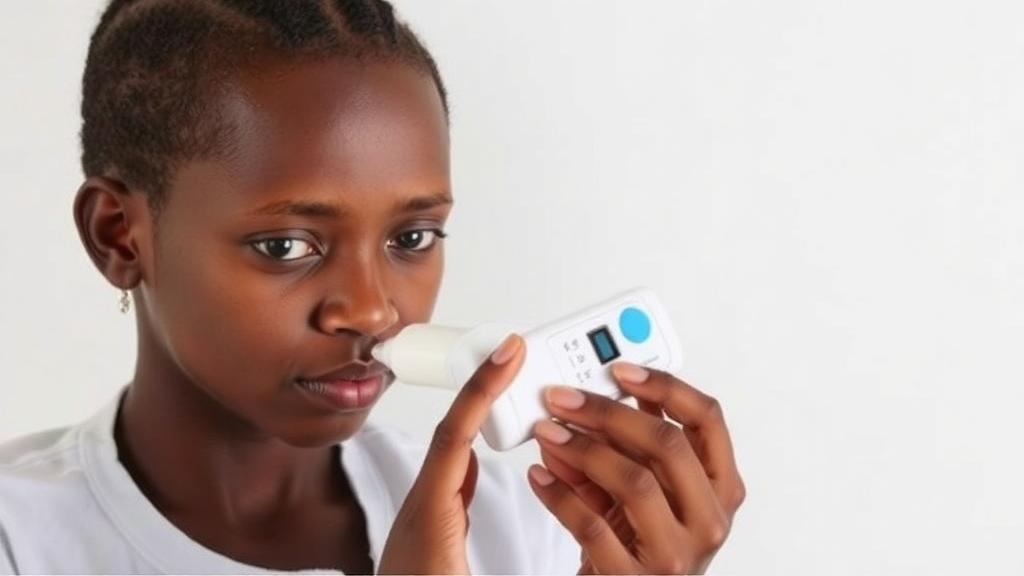
Tuberculosis still kills more people than any other infectious disease, yet the single greatest obstacle to controlling it is not treatment but diagnosis. A new narrative review published in EClinicalMedicine argues that the world will never reach the End TB Strategy targets unless rapid, accurate testing reaches the clinics where patients actually first seek care, and it maps a fast-changing pipeline of technologies that could make that possible. The review, led by Nazir Ismail, Rebecca Berhanu, Madhukar Pai and Shaheed Omar together with international collaborators, synthesizes evidence published between 2020 and 2026 on near-patient and point-of-care diagnostics, alternative sample types, and the economics of scaling them up in low- and middle-income countries.
The scale of the diagnostic delay is stark. Across high-burden countries, the median time from the first symptoms to a diagnosis stretches to 28 days in low-income settings, compared with just 10 days in upper-middle-income countries, and health system delays alone average 14 days versus 4. Every week of delay means more severe disease, more transmission in households and communities, and a higher risk of death, as well as possible long-term lung damage after treatment. The review highlights evidence that fewer than half of patients presenting with TB symptoms are ever offered a test, and standardized patient studies show that private providers frequently hand out empirical antibiotics instead of pursuing TB testing. Women often delay care because of caregiving burdens, power imbalances and limited financial autonomy, while men are held back by work pressures, costs and stigma. Distance to facilities compounds all of these factors.
Rapid molecular tests have already proven their worth. Since the World Health Organization recommended Xpert MTB/RIF in 2010 as the initial diagnostic test, replacing smear microscopy, and extended that endorsement to Xpert Ultra and India’s Truenat platform in 2020 and 2021, meta-analyses show these WHO-recommended diagnostics cut diagnostic delays by roughly two days and halve the time to diagnosis. Mortality benefits at the individual level are clearest among people living with HIV, but population-level studies consistently link the expansion of molecular testing with falling TB deaths. The economics are compelling: in South Africa, an investment of US$315 million in molecular diagnostics generated an estimated US$6.4 billion in societal benefits over a decade. Yet in 2024 only 54 percent of people newly diagnosed with TB were tested with a rapid molecular assay, and just 8 of 30 high-burden countries report such tests available at more than half of their diagnostic sites.
The bottleneck, the authors argue, is that current molecular platforms are too expensive, too infrastructure-hungry and too centralized. Xpert instruments cost between roughly US$17,000 and US$90,000, and Truenat systems between US$11,000 and US$18,000, which is prohibitive for low-volume rural clinics. A new generation of near-point-of-care molecular tests aims to change that by using isothermal amplification, a simpler and cheaper chemistry than real-time PCR, in compact, portable, battery-operable devices. The FIND pipeline directory now lists 73 technologies for TB diagnostic confirmation, comprising 51 near-point-of-care and 22 point-of-care platforms, although relatively few have been rigorously evaluated in the peer-reviewed literature.
The most advanced of these is MiniDock, made by PlusLife, a swab-based assay that the WHO recommended in early 2026. Using sputum, MiniDock achieves 85 percent sensitivity and 98 percent specificity in people with presumptive TB, falling to 79 percent sensitivity among people living with HIV. With tongue swabs, sensitivity is lower at 76 percent but specificity remains excellent at 99 percent. The EasyNAT MTC assay from Ustar Biotechnologies matched Xpert’s sensitivity in a single-site study in China, and a more portable, cheaper version called PortNAT is in development. Other systems, including FlashDetect, SARAGENE and UniAmp, are in the pipeline but lack published clinical performance data. None of the currently available near-point-of-care platforms detect drug resistance, which means patients with resistant infections would still need reflex testing on higher-complexity platforms.
Alongside these molecular advances, a parallel revolution is happening in sample types. Sputum, the traditional cornerstone of pulmonary TB diagnosis, is simply unavailable from many of the people who need testing most: the very ill, people living with HIV, children and those without obvious symptoms. Urine offers a striking practical advantage. A systematic review found that 98 percent of adults living with HIV could provide urine compared with 82 percent who could produce sputum, and among unselected individuals the gap widened to 99 percent versus 54 percent. Adding urine lateral flow lipoarabinomannan testing to sputum Xpert raised diagnostic yield from 71 to 78 percent, prompting the WHO to strongly recommend concurrent urine and sputum testing for adults with HIV. Urine-based Xpert Ultra, though less sensitive, offers the added advantage of rifampicin resistance detection.
For children, stool has emerged as a game-changing alternative to invasive gastric aspiration. Stool Xpert Ultra alone has moderate sensitivity, but combining stool with respiratory-specimen testing achieves 80 percent sensitivity in parallel, and testing two stool samples instead of one improves performance by 20 to 25 percent. A landmark Thai study showed that combinations of minimally invasive specimens matched the yield of two gastric aspirates. On this evidence, the WHO now recommends concurrent respiratory and stool molecular testing for all children with presumptive TB. Oral sampling is also maturing: tongue swabs consistently outperform cheek swabs and oral rinses, morning collection improves sensitivity, and among people unable to produce sputum, tongue swabs identified TB in 18 to 25 percent of cases, supporting a complementary rather than standalone role.
Lipoarabinomannan, or LAM, antigen tests occupy a different niche. These simple urine dipstick-style immunoassays detect a component of the TB bacterium’s cell wall and can be deployed anywhere, but their sensitivity is far lower than molecular tests. Determine TB-LAM, the only commercially available lateral flow LAM assay, detects just 42 percent of cases among people living with HIV with presumptive TB, though its benefit is greatest in hospitalized patients with advanced immunosuppression, where it has been shown to reduce mortality. Next-generation assays aim to close the gap: Silvamp TB LAM II reaches 56 percent sensitivity in people living with HIV, while BP-LAM, which incorporates urine concentration and novel monoclonal antibodies, achieved 63 percent sensitivity overall with consistent performance across HIV status, though its evidence remains limited to preprint data. Cross-reactivity with non-tuberculous mycobacteria remains a concern across the class.
Cost-effectiveness, the review stresses, is not determined by test price alone but by testing volume, instrument placement and linkage to care. In low-volume settings the cost per TB diagnosis can exceed seven times that of high-volume centers, so tiered strategies matter. Digital chest X-ray with computer-aided detection followed by confirmatory Xpert can halve screening costs with only modest yield loss, and CRP-based triage offers a similar advantage for symptomatic people. Here the new platforms change the arithmetic dramatically: PlusLife test cartridges cost US$3.60 and instruments roughly US$350, a fraction of the roughly US$10,000 price of conventional machines, potentially making decentralized molecular testing cost-effective even in quiet primary care clinics. Meanwhile, innovation is shifting south: nearly two-thirds of near-point-of-care and point-of-care technologies in the FIND pipeline are expected to originate from Africa, Southeast Asia and the Western Pacific, with China, India, Japan and South Korea already supplying WHO-endorsed products.
Translating these tools into practice still demands regulatory and health-system reform. Critical pathway analyses across nine high-burden countries found delays of two to eight years in national policy adoption, and dependence on imported diagnostics persists, though India’s regulatory framework has enabled rapid local deployment of Truenat and other homegrown assays. Regional harmonization through the Africa Medicines Agency and pooled procurement mechanisms could accelerate access, and at a workshop in Bangkok in July 2026, representatives from 13 countries outlined plans collectively targeting three million near-point-of-care tests. The review’s authors are clear about the remaining frontier: evidence on real-world impact, especially in children and community screening, is still thin, and the ultimate prize is a true point-of-care self-test that patients can use themselves. With shrinking donor budgets forcing countries to invest domestically, the convergence of cheap instruments, painless sampling and southern-led innovation may finally be the combination that brings TB diagnosis to everyone who needs it.
Subject of Research: Innovations in point-of-care diagnostic testing for pulmonary tuberculosis in low- and middle-income countries
Article Title: Diagnostic testing for pulmonary tuberculosis in low and middle-income countries: innovations to achieve universal access—a narrative review
Article References: Ismail, N. A., Berhanu, R. H., von Knorring, N., Loembe, M. M., Kohli, M., Hasan, R., Shanmugam, S. K., Sheokand, S., Katamba, A., Pai, M., & Omar, S. V. (2026). Diagnostic testing for pulmonary tuberculosis in low and middle-income countries: innovations to achieve universal access—a narrative review. eClinicalMedicine, 100, Article 104232. https://doi.org/10.1016/j.eclinm.2026.104232
Image Credits: AI Generated
DOI: 10.1016/j.eclinm.2026.104232
Keywords: tuberculosis, diagnostics, point-of-care testing, molecular assays, low- and middle-income countries, Xpert, Truenat, MiniDock, lipoarabinomannan, tongue swabs, stool testing, WHO
Cite Scienmag News
Ophelia Keating. (October 3, 2026). Cheap Portable Tests Could Finally Close the Tuberculosis Diagnosis Gap in Poorer Countries. Scienmag. https://scienmag.com/cheap-portable-tests-could-finally-close-the-tuberculosis-diagnosis-gap-in-poorer-countries/
Ophelia Keating. "Cheap Portable Tests Could Finally Close the Tuberculosis Diagnosis Gap in Poorer Countries." Scienmag, 3 October 2026, https://scienmag.com/cheap-portable-tests-could-finally-close-the-tuberculosis-diagnosis-gap-in-poorer-countries/. Accessed 4 October 2026.
Ophelia Keating. "Cheap Portable Tests Could Finally Close the Tuberculosis Diagnosis Gap in Poorer Countries." Scienmag. October 3, 2026. https://scienmag.com/cheap-portable-tests-could-finally-close-the-tuberculosis-diagnosis-gap-in-poorer-countries/


