


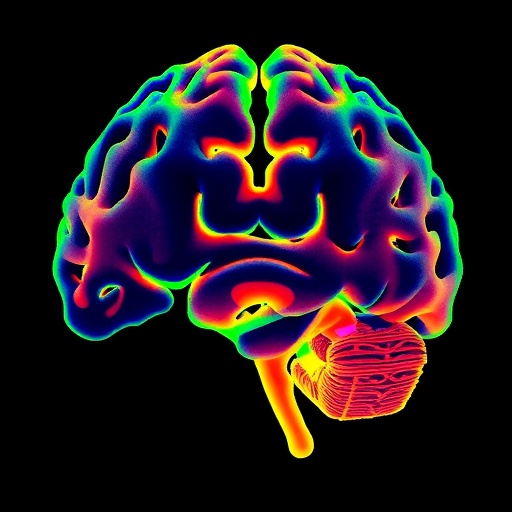
In a groundbreaking study published in Experimental & Molecular Medicine, a team of neuroscientists has unveiled the pivotal role of cerebellar tonic inhibition in orchestrating the maturation of information processing and motor coordination. The cerebellum, long recognized for its critical involvement in fine-tuning motor commands and maintaining balance, has now been shown to rely on complex inhibitory mechanisms to develop its functional capabilities fully. This work opens new avenues for understanding neurodevelopmental processes and sheds light on potential therapeutic targets for motor dysfunction.
The brain’s cerebellum has traditionally been studied for its contributions to movement precision and timing; however, the intricate cellular and molecular processes that underlie its maturation remain incompletely understood. Tonic inhibition, a form of persistent inhibitory signaling mediated mainly through extrasynaptic GABA_A receptors, suppresses neural excitability in a sustained manner, contrasting phasic inhibition which is rapid and transient. The research team led by Kwon et al. has elegantly demonstrated that this sustained inhibitory tone is indispensable for the developmental refinement of cerebellar circuits and their output functions.
At the core of their study lies the meticulous dissection of GABAergic mechanisms within cerebellar granule cells and Purkinje neurons. Granule cells, the most numerous neurons in the brain, form the input layer of the cerebellar cortex, while Purkinje cells serve as the main output neurons, sending inhibitory signals to deep cerebellar nuclei. By employing a combination of electrophysiological recordings, molecular biology techniques, and behavioral assays, the investigators established that tonic inhibition modulates the maturation timeline of these neuronal populations, ultimately sculpting the cerebellar information processing landscape.
One of the most fascinating findings revealed by the researchers involved the developmental regulation of tonic GABA_A receptor subunits expression. These subunits display dynamic patterns during early postnatal life, corresponding with critical periods of synaptic pruning and circuit refinement in the cerebellum. Modulation of tonic inhibition during this window was shown to significantly impact the cerebellum’s capacity to filter and process afferent sensory input, thereby influencing the precision of motor coordination.
Further mechanistic insights were gained through targeted manipulation of the cerebellar tonic inhibitory tone. Using pharmacogenetic tools to either enhance or diminish tonic inhibition specifically within the cerebellar cortex, the researchers observed profound effects on motor learning paradigms in vivo. Enhancing tonic inhibition accelerated the refinement of motor skills, whereas reducing it led to persistent deficits in coordination and learning flexibility. These outcomes underscore the critical influence of inhibitory balance on cerebellar developmental trajectories.
Intriguingly, the study also delved into the downstream intracellular signaling pathways activated by tonic GABAergic modulation. The activation of certain kinase cascades within cerebellar neurons appears to mediate the structural and functional maturation of synapses during development. These pathways facilitate the stabilization of synaptic contacts and the pruning of redundant connections, processes essential for establishing efficient cerebellar networks capable of precise motor output.
Through high-resolution imaging and electrophysiological mapping, the team documented that tonic inhibition influences not only the firing properties of individual neurons but also the overall oscillatory dynamics within cerebellar circuits. Such oscillations are critical for timing-dependent synaptic plasticity, which in turn governs the adaptive adjustments in motor learning and coordination. The findings propose that tonic inhibition serves as a fundamental neurophysiological mechanism coordinating both cellular and network-level maturation.
This research also bears implications for various neurodevelopmental disorders characterized by cerebellar dysfunction, such as ataxia, autism spectrum disorders, and certain forms of epilepsy. Aberrations in tonic inhibitory signaling could underlie the disrupted cerebellar information processing observed in these conditions. The study’s translational potential is significant, suggesting that therapeutic modulation of cerebellar tonic inhibition may restore or enhance motor and cognitive functions in affected individuals.
From an evolutionary perspective, tonic inhibition may represent a conserved strategy to ensure the fidelity of developing neural circuits in regions beyond the cerebellum. By maintaining a delicate inhibitory-excitatory balance, tonic inhibition could prevent premature or excessive neuronal activity that might otherwise impede the fine-tuning necessary for mature neural connectivity. This study emphasizes that the cerebellum’s reliance on tonic inhibition reflects the broader principles of brain circuit maturation and stability.
Methodologically, the team adopted an interdisciplinary approach that combined in vivo optogenetics with slice electrophysiology and behavioral assessment, allowing them to precisely modulate and observe tonic inhibitory effects within defined neuronal populations. This comprehensive strategy provided strong causal evidence linking tonic inhibition to developmental outcomes rather than merely correlative associations, elevating the robustness of the conclusions drawn.
The authors also examined how environmental factors and sensory experiences might interact with cerebellar tonic inhibition to shape developmental trajectories. Preliminary data suggest that sensory deprivation or altered motor activity can modulate tonic inhibitory strength, thus impacting the maturation of cerebellar circuits. These findings highlight the cerebellum’s plasticity in response to external stimuli and propose that tonic inhibition may serve as a gatekeeper mechanism regulating experience-dependent development.
This study’s insights extend into the realm of artificial intelligence and robotics, where biological principles are increasingly integrated into the design of adaptive motor control systems. Understanding the mechanisms by which the cerebellum matures its processing capabilities through tonic inhibition could inspire new algorithms for autonomous machines capable of refined motor coordination and learning from dynamic environments.
In conclusion, the research presented by Kwon and colleagues signifies a paradigm shift in our comprehension of cerebellar development. Tonic inhibition emerges as a central editor in the neural manuscript of motor control, guiding the transition from nascent, immature circuits to fully functional, adept networks. By dissecting the molecular, cellular, and systems-level mechanisms underpinning this process, the study marks a milestone in neuroscience, offering promising avenues for therapeutic innovations and bridging fundamental science with technological applications.
Cite Scienmag News
Cassandra Pierce. (February 18, 2026). Cerebellar Tonic Inhibition Drives Motor and Processing Maturation. Scienmag. https://scienmag.com/cerebellar-tonic-inhibition-drives-motor-and-processing-maturation/
Cassandra Pierce. "Cerebellar Tonic Inhibition Drives Motor and Processing Maturation." Scienmag, 18 February 2026, https://scienmag.com/cerebellar-tonic-inhibition-drives-motor-and-processing-maturation/. Accessed 4 September 2026.
Cassandra Pierce. "Cerebellar Tonic Inhibition Drives Motor and Processing Maturation." Scienmag. February 18, 2026. https://scienmag.com/cerebellar-tonic-inhibition-drives-motor-and-processing-maturation/


