


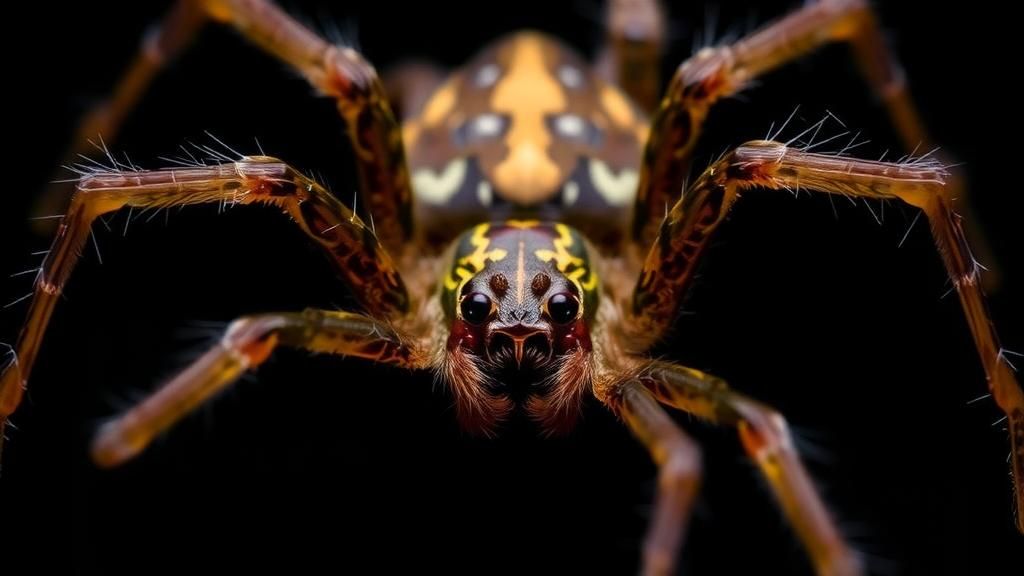
Cellar spiders are among the most familiar and least appreciated animals that share our homes. Their tangled, irregular webs appear in corners of basements and garages across the world, and the species most people encounter, Pholcus phalangioides, has traveled with humans for centuries. Yet these delicate arachnids are hiding a remarkable evolutionary story in their cells. A new study published in Comparative Cytogenetics has mapped the chromosomes of seven European species of Pholcus, including spiders from mainland Europe, Crete, the Canary Islands, and Madeira, and the results show how chromosome reshuffling may help drive the birth of new species in one of the most successful spider genera on Earth.
The research team, led by cytogeneticists studying the family Pholcidae, examined karyotypes, sex chromosomes, nucleolus organizer regions, and the behavior of chromosomes during male meiosis. Pholcus is the most species-rich genus in the family, with more than 350 described species, and until now its European representatives were poorly characterized at the chromosomal level. The study increased the number of cytogenetically analyzed Pholcus species to fourteen, providing the most complete picture yet of how genomes have been rearranged across the dominant species groups of the genus in the region.
The starting point for understanding the findings is the peculiar chromosome system of haplogyne spiders, the clade to which pholcids belong. Haplogynes include more than 6,150 described species and display astonishing karyotype diversity. Diploid chromosome numbers in the group range from 2n = 5, the lowest recorded in any spider, to 2n = 152, the highest. Their karyotypes are typically dominated by biarmed chromosomes, meaning metacentric and submetacentric chromosomes with centromeres positioned centrally or near the center. Most strikingly, haplogynes often possess a sex chromosome system designated X1X2Y, in which males carry two different X chromosomes and one Y chromosome, elements that do not recombine during meiosis and are presumed to be non-homologous.
All seven species examined in the study proved remarkably conservative in their basic chromosome architecture. Every male carried 25 chromosomes with the X1X2Y sex chromosome system, a karyotype that is considered ancestral for the genus. The X1 chromosome was the longest element in the set, while the X2 and Y chromosomes were medium-sized and similar in length. Chromosome pairs decreased gradually in size across the karyotype. This uniformity in number contrasts sharply with the diversity in chromosome shape, and it is precisely this difference between the two species and among island lineages that carries the evolutionary signal the researchers were seeking.
The most consequential discovery concerns a single large acrocentric chromosome pair, one with its centromere pushed to one end, found in nearly every species studied. Comparative evidence suggests this pair arose in the ancestor of Pholcus through a pericentric inversion, a chromosome rearrangement in which a segment including the centromere is flipped, converting a biarmed chromosome into a monoarmed one. Remarkably, in some lineages the process has run in reverse. In the synanthropic P. phalangioides, the Madeiran population retains the large acrocentric pair, while in the Czech cytotype that pair has reverted to a biarmed shape, almost certainly through another pericentric inversion. A similar reversion occurred independently in P. opilionoides. The existence of two distinct cytotypes within a single nominal species, differing in both chromosome morphology and ribosomal DNA pattern, is the first report of intraspecific chromosomal variation in any pholcid spider.
Closely related species frequently differ in the morphology of one or several chromosome pairs while keeping the chromosome number unchanged. Such differences most plausibly arise through pericentric inversions and translocations, rearrangements that leave the diploid count intact but reorganize gene order along the chromosomes. This is more than a curiosity: chromosome rearrangements of this kind are well known to suppress recombination in heterozygous individuals and can contribute to the formation of reproductive barriers between diverging populations. The study found, for example, that P. fuerteventurensis from the Canary Islands differs from its Madeiran relatives in the shape of three chromosome pairs, and that P. opilionoides and P. creticus differ in the morphology of five pairs beyond the fate of the acrocentric pair itself.
The sex chromosomes told an equally dynamic story. While the X1 and Y chromosomes retain the ancestral metacentric morphology, the X2 chromosome has changed repeatedly, becoming submetacentric, subtelocentric, or fully acrocentric in different lineages. Because rearrangements involving sex chromosomes can have especially strong effects on reproductive isolation, the X2 chromosome emerges as a key player in the diversification of the genus. During male meiosis, the three sex chromosomes form a trivalent through achiasmatic pairing, meaning they align end to end without the crossovers that join ordinary chromosome pairs. Intriguingly, the mode of pairing of the monoarmed X2 varied among species: in some, both chromosome ends participated in pairing, while in others only the end of the long arm did so. The researchers showed that the restricted pattern occurs even without the hypotonic treatment used in chromosome preparation, confirming it is a genuine biological feature rather than an artifact.
Nucleolus organizer regions, or NORs, the chromosomal sites harboring the genes for 18S, 5.8S, and 28S ribosomal RNA, added another layer of complexity. Detected by fluorescent in situ hybridization with an 18S rDNA probe, a method more accurate than traditional silver staining, the NOR patterns proved exceptionally diverse. The team reconstructed the ancestral state for the genus as five or six terminal NORs, including three located on the X chromosomes. During subsequent evolution the number of NORs has frequently been reduced. In the Macaronesian clade, the remarkably fast-radiating lineage of the Canary Islands and Madeira, only a single NOR-bearing pair remains, and in the Madeiran species as well as P. creticus, the NORs linked to the sex chromosomes have been entirely lost. The researchers suggest that genetic drift in small island populations, which acts more strongly on sex chromosomes than autosomes, may explain the repeated loss, and that the ribosomal DNA sequences essential for sex chromosome pairing may persist even after the visible NOR loci degenerate.
The meiotic choreography of these spiders proved as distinctive as their karyotypes. Sex chromosomes showed positive heteropycnosis, a more intensive staining, as early as spermatogonial mitosis, often clustering in the middle of the metaphase plate and remaining together through cell division. During the specialized diffuse stage of the first meiotic prophase, characteristic of haplogyne spiders, the autosomes decondense while the sex chromosomes stay overcondensed, forming a compact body at the periphery of the nucleus. After meiosis I, the two X chromosomes remain associated through the second division while the Y chromosome migrates separately, ensuring that sperm receive the correct complement of sex chromosomes.
What makes this study compelling beyond its technical detail is the window it opens onto speciation in real time. The Macaronesian clade of Pholcus, with more than 20 described species largely confined to the Canaries and Madeira, diversifies at one of the highest rates recorded in spiders, yet its species do not differ substantially in the number of chromosome changes from their slow-evolving continental relatives. Chromosome rearrangements, rather than sheer quantity, may therefore hold the key to understanding how populations become reproductively isolated. For the humble cellar spider spinning its web in a corner of a living room, the genome carries a record of inversions, translocations, and lost ribosomal clusters that stretches back millions of years, and it continues to change in ways that may quietly be producing the next generation of species.
Subject of Research: Karyotype evolution and male meiosis in European species of the spider genus Pholcus
Article Title: Karyotype differentiation and male meiosis in European clades of the spider genus Pholcus ( Araneae , Pholcidae )
Article References: Král, J., Ávila Herrera, I. M., Šťáhlavský, F., Sadílek, D., Pavelka, J., Chatzaki, M., & Huber, B. A. (2022). Karyotype differentiation and male meiosis in European clades of the spider genus Pholcus (Araneae, Pholcidae). Comparative Cytogenetics, 16(4), 185-209. https://doi.org/10.3897/compcytogen.v16i4.85059
Image Credits: AI Generated
DOI: 10.3897/CompCytogen.v16i4.85059
Keywords: Pholcus, cellar spiders, karyotype evolution, sex chromosomes, X1X2Y system, nucleolus organizer regions, pericentric inversion, male meiosis, Pholcidae, Macaronesia, speciation, cytogenetics
Cite Scienmag News
Gavin Prescott. (October 19, 2026). Cellar Spiders Reveal Hidden Chromosome Rules Behind Spider Evolution. Scienmag. https://scienmag.com/cellar-spiders-reveal-hidden-chromosome-rules-behind-spider-evolution/
Gavin Prescott. "Cellar Spiders Reveal Hidden Chromosome Rules Behind Spider Evolution." Scienmag, 19 October 2026, https://scienmag.com/cellar-spiders-reveal-hidden-chromosome-rules-behind-spider-evolution/. Accessed 19 October 2026.
Gavin Prescott. "Cellar Spiders Reveal Hidden Chromosome Rules Behind Spider Evolution." Scienmag. October 19, 2026. https://scienmag.com/cellar-spiders-reveal-hidden-chromosome-rules-behind-spider-evolution/


