

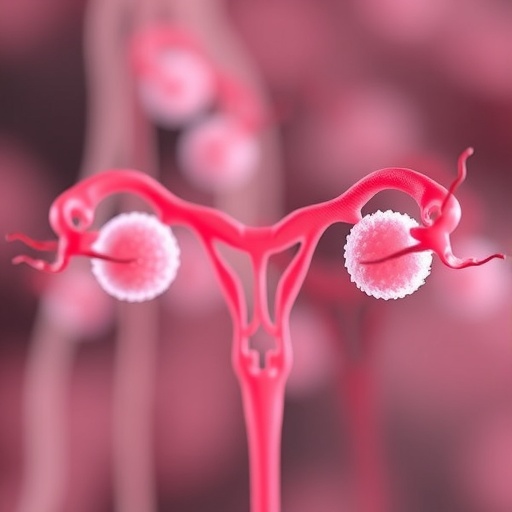
Recent advancements in regenerative medicine have uncovered novel approaches to address the critical issue of premature ovarian insufficiency (POI), particularly that induced by cyclophosphamide. A groundbreaking study led by Zhang, Chen, and Yang has illuminated the potential of oxidoreductase enzymes within cell therapies to stimulate ovarian rejuvenation. Their research provides profound insights into the mechanisms that could transform treatments for women suffering from the debilitating effects of POI, highlighting significant breakthroughs that could reshape fertility preservation strategies and reproductive health.
Cyclophosphamide, a chemotherapeutic agent often employed in cancer treatments, has been widely recognized for its detrimental effects on ovarian function. The risk of POI is markedly increased in patients undergoing cyclophosphamide therapy, as the drug can lead to the loss of ovarian follicles and disrupt hormonal balance. This adverse outcome of cancer therapies has garnered attention from researchers seeking ways to mitigate the side effects and preserve fertility. The study conducted by Zhang et al. adds a vital perspective to the ongoing endeavor to protect and rejuvenate ovarian function in these patients.
The crux of this study revolves around the innovative application of oxidoreductase enzymes. These enzymes play a pivotal role in redox reactions, which are fundamental biochemical processes that manage cell health, metabolism, and survival. Their delivery through advanced cell therapies opens the door to new therapeutic avenues. By harnessing the natural capacity of these enzymes to restore cellular balance, the researchers propose a transformative approach to treating conditions like POI that arise from drug-induced ovarian damage.
In their investigations, the authors employed a range of in vitro and in vivo models to assess the impact of oxidoreductase enzyme delivery. The results were remarkable, evidencing a marked improvement in ovarian function and follicle preservation. These findings underscore the substantial potential of oxidoreductase therapies not only to counteract the destructive impacts of cyclophosphamide but also to re-establish normal reproductive physiology in affected individuals. Such advances may lead to a paradigm shift in how fertility preservation is approached in oncological settings.
The implications of this research extend beyond the laboratory bench. With an increasing number of women opting for fertility treatments or facing age-related ovarian decline, finding effective solutions to maintain ovarian health is crucial. The ability to rejuvenate ovaries and restore hormonal balance through enzymatic intervention could revolutionize fertility treatments. It offers hope for women who, due to medical interventions for cancer or other conditions, may fear losing their ability to conceive naturally.
Oxidative stress is a well-established factor contributing to cellular damage and apoptosis, particularly in ovarian cells. By targeting oxidative stress through the supplemental application of oxidoreductases, the Zhang et al. study reveals a promising strategy to enhance ovarian resilience. This approach not only represents a step toward better management of POI but also highlights the broader potential for leveraging enzymatic therapy in an array of reproductive health challenges.
Zhang’s team also delved into the underlying mechanisms through which oxidoreductases exert their beneficial effects, providing a mechanistic insight that could facilitate the development of more targeted treatments. Understanding these pathways is essential for designing clinical applications that maximize therapeutic efficacy while minimizing potential side effects. This level of detail enriches our comprehension of ovarian biology and its response to oxidative imbalances, paving the way for more informed treatment protocols.
As researchers worldwide continue to tackle the formidable challenges posed by POI, the findings from this study offer a fresh perspective on potential interventions that could transform patient care. The burgeoning synergy between regenerative medicine and reproductive health underscores an exciting frontier in medical research, where the integration of novel therapies can lead to improved quality of life for countless individuals facing infertility.
In the realm of clinical application, the translation of these findings into practice will require extensive studies, including human trials that assess not only efficacy but also safety. Given the complex interplay of hormonal regulation and ovarian functionality, careful consideration must be taken to ensure that these innovative therapies align with existing treatment paradigms. However, the groundwork laid by Zhang and colleagues provides a compelling foundation for future research endeavors.
Furthermore, as the fertility landscape evolves, the incorporation of such advanced therapies signals a shift toward personalized medicine—a paradigm that tailors treatment plans to the unique biological and genetic profiles of individual patients. This trend is increasingly important, as it recognizes that a one-size-fits-all approach is inadequate in managing conditions like POI, which can vary widely in etiology and presentation.
Overall, the ramifications of Zhang et al.’s research stretch far and wide, offering hope not only to oncological patients but also to those facing age-related fertility challenges. As further investigations are undertaken to validate and build upon these findings, the potential for oxidoreductase therapies to become integral to reproductive health strategies becomes even clearer.
In closing, the innovative research by Zhang, Chen, and Yang serves as a beacon of hope for the future of reproductive health, especially for women adversely affected by the side effects of life-saving treatments. The marriage of biochemical innovation with clinical application exemplifies the remarkable possibilities inherent in modern medicine, where the quest for fertility can take a markedly optimistic turn.
As we look ahead, continued collaboration among researchers, clinicians, and patients will be essential to ensure that these advancements translate into real-world benefits. The scientific community stands poised on the brink of a new era in fertility preservation, driven by pioneering research like that of Zhang et al., demonstrating that the synergy of creativity and science can indeed rejuvenate critical aspects of human health.
Subject of Research: Premature ovarian insufficiency and oxidoreductase delivery through cell therapies.
Article Title: Oxidoreductase delivery by cell therapies in cyclophosphamide-induced premature ovarian insufficiency: a mechanistic insight into ovarian rejuvenation.
Article References:
Zhang, YY., Chen, J., Yang, W. et al. Oxidoreductase delivery by cell therapies in cyclophosphamide-induced premature ovarian insufficiency: a mechanistic insight into ovarian rejuvenation.
J Ovarian Res (2025). https://doi.org/10.1186/s13048-025-01912-y
Image Credits: AI Generated
DOI: 10.1186/s13048-025-01912-y
Keywords: oxidoreductase, ovarian insufficiency, cell therapies, cyclophosphamide, ovarian rejuvenation, reproductive health, regenerative medicine.


