

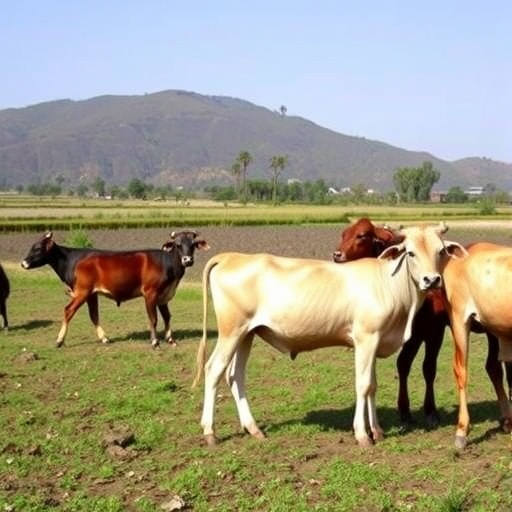
In the intricate landscape of livestock production, understanding the nuances of various cattle production systems becomes pivotal for ensuring both economic viability and sustainable agricultural practices. A recent study titled “Characterization of cattle production systems in the Gurage area, Central Ethiopia,” by researchers Kerga, Sorsa, and Asalefew, illuminates these aspects with a comprehensive analysis that could set a precedent for future agricultural policies and practices in the region.
The Gurage area, nestled in Central Ethiopia, presents a unique backdrop against which diverse cattle production systems thrive. The researchers undertook an extensive investigation into these systems, focusing on their characteristics, operational dynamics, and the challenges faced by local farmers. By employing robust methodological frameworks, the study aims to capture the multifactorial influences impacting cattle rearing in this particular geography.
At the heart of this study is the classification of cattle production systems into distinct categories. The researchers identified a range of systems, from traditional pastoralism to more intensive dairy farming practices that have emerged in response to shifting market demands. This classification not only facilitates a clearer understanding of the local cattle economy but also serves as an essential tool for policymakers aiming to enhance livestock production efficiency while promoting sustainable resource management.
One of the defining features of cattle production in the Gurage area is its adaptation to the semi-arid climate. Farmers in this region have developed resilient strategies that allow them to manage water scarcity and pasture availability. The study details how indigenous knowledge systems are integrated into modern agricultural practices, highlighting the importance of traditional ecological knowledge alongside scientific advancements. This synergy is particularly crucial as climate change poses increasing challenges to livestock production globally.
Moreover, the researchers conducted surveys and interviews with local farmers to assess their perceptions and experiences regarding cattle management practices. This qualitative data brings to light the socio-economic factors affecting farmers’ decisions around cattle breeding, feeding, and health management. The findings reveal a complex interplay between cultural values, market access, and resource availability, shaping the choices that farmers make in their day-to-day operations.
The study also sheds light on the economic implications of different cattle production systems. Through detailed economic analysis, the researchers evaluated the profitability of traditional versus modern production methods. They found that while traditional systems provide a degree of food security and cultural identity, modern practices offer enhanced economic returns. This juxtaposition raises critical questions about the trajectory of agricultural development in the region, especially in terms of investment and support for farmers transitioning towards more intensive systems.
In evaluating the health management challenges faced by cattle in the Gurage area, the researchers underscored the necessity for better veterinary services and health education for farmers. Livestock diseases not only jeopardize animal welfare but also have direct repercussions on agricultural productivity and food security. The study highlights the role of government and non-governmental organizations in establishing more robust veterinary infrastructures that can assist farmers in mitigating these risks.
Furthermore, the implications of market access on cattle production systems cannot be underestimated. The study discusses how farmers’ ability to connect with broader markets influences their cattle rearing practices and overall economic sustainability. Improved infrastructure and marketing strategies are crucial for enabling farmers to obtain fair prices for their livestock, allowing them to invest further in their production systems.
The role of gender dynamics in cattle production is another critical aspect addressed in the research. The authors found that women often play a significant role in cattle management, yet their contributions frequently go unrecognized in formal agricultural discourse. By advocating for gender-inclusive policies that acknowledge the vital role of women in agriculture, the study contributes to a broader understanding of social equity within rural development contexts.
As the study concludes, it beckons future research in the field of livestock production to build upon the groundwork laid in the Gurage area. The unique characteristics of cattle production in this region present an opportunity for interdisciplinary collaborations that include agricultural science, economics, and social studies. This holistic approach could yield innovative solutions tailored to local needs while contributing to global discussions on sustainable livestock production.
In light of the findings, the researchers call for targeted interventions that address the identified challenges within ranching practices in the Gurage area. These recommendations aim to bolster the income of local farmers while ensuring the longevity of their production systems. In this way, the study not only serves as a scholarly contribution but also as a strategic blueprint for future agricultural development efforts in the region.
Overall, the characterization of cattle production systems in Gurage presents a rich tableau of interactions between culture, economy, and agriculture. The insights gleaned from this research have the potential to inform policymakers, development practitioners, and researchers alike, paving the way for sustainable and resilient agricultural practices in Ethiopia and beyond.
Understanding the socio-economic fabric of cattle farming in Gurage provides a crucial lens through which agricultural practices can be improved. By recognizing the value of both traditional and modern systems, there is an opportunity to create a more integrated approach to agricultural development that respects local customs while embracing technological advancements.
The detailed findings of this study are an essential addition to the body of knowledge surrounding livestock production systems and their management. By bridging the gaps between scientific research and practical application, such studies can catalyze meaningful change in the agricultural landscape, ultimately leading to improved livelihoods for farmers and enhanced food security for communities.
The implications of the work carried out by Kerga, Sorsa, and Asalefew extend beyond the confines of Ethiopia, inviting global discourse on the future of cattle production amidst the challenges of climate change and economic development. As the world seeks sustainable agricultural solutions, local case studies like this one offer invaluable lessons that can be tailored to various contexts, making the study a cornerstone for future research in the field.
Subject of Research: Cattle production systems in the Gurage area, Central Ethiopia
Article Title: Characterization of cattle production systems in the Gurage area, Central Ethiopia
Article References:
Kerga, T., Sorsa, A. & Asalefew, E. Characterization of cattle production systems in the Gurage area, Central Ethiopia.
Discov Agric 3, 262 (2025). https://doi.org/10.1007/s44279-025-00415-0
Image Credits: AI Generated
DOI: https://doi.org/10.1007/s44279-025-00415-0
Keywords: Cattle production, Gurage area, Ethiopia, agricultural systems, sustainable agriculture, livestock management, socio-economic factors.


