

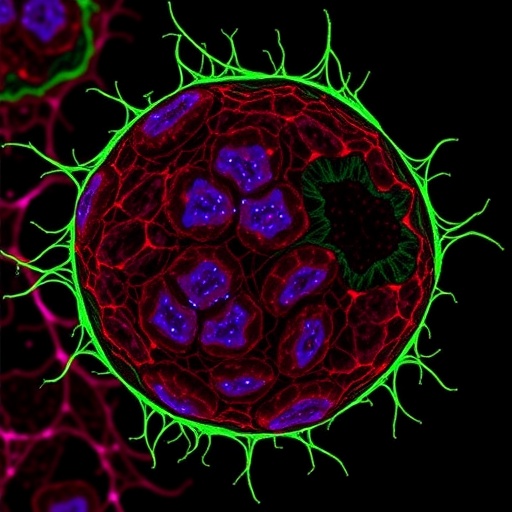
In an era where inflammatory bowel disease (IBD) continues to challenge clinicians with its complex pathophysiology and rising prevalence worldwide, groundbreaking research sheds new light on the molecular intricacies that drive this debilitating condition. A recent study published in Cell Death Discovery by Liu, Q., He, J., Liu, L., and colleagues in 2025 unveils a surprisingly critical role for caspase 6 deficiency in exacerbating IBD through mechanisms fundamentally linked to enterocyte necroptosis and the subsequent translocation of bacteria across the intestinal barrier. This discovery not only advances our molecular understanding of IBD but potentially paves the way for innovative therapeutic approaches aimed at this enzyme’s signaling pathways.
Inflammatory bowel disease, encompassing both ulcerative colitis and Crohn’s disease, has long been characterized by chronic inflammation of the gastrointestinal tract, which results in symptoms ranging from abdominal pain and diarrhea to severe systemic complications. Despite extensive research focusing on immune regulation and microbial dysbiosis, the cell death pathways implicated in damaging the intestinal epithelium have remained poorly understood. The recent findings by Liu et al. directly address this knowledge gap by identifying that caspase 6, an executioner caspase traditionally implicated in apoptosis, plays a disproportionately protective role in maintaining intestinal epithelial integrity during inflammatory stress.
The research team employed sophisticated genetic knockout models to investigate the consequence of caspase 6 deficiency in experimental colitis settings. Unexpectedly, mice lacking caspase 6 developed significantly aggravated disease phenotypes compared to controls, with pronounced weight loss, heightened inflammatory cytokine profiles, and deteriorated histopathological features. Central to these pathological changes was an enhanced necroptotic death of enterocytes, a form of regulated necrosis distinct from apoptosis, characterized by cellular swelling and membrane rupture, which promotes inflammation rather than resolves it.
Necroptosis of enterocytes was shown to compromise the intestinal barrier function, facilitating the translocation of luminal bacteria into the underlying mucosal tissues. This bacterial breach further amplified local and systemic inflammatory cascades, creating a vicious cycle with dire consequences for intestinal homeostasis. Liu and colleagues convincingly demonstrated that caspase 6 deficiency removes an important checkpoint against this cell death pathway, thereby accelerating disease progression—a finding that contrasts with the classical perception of caspase 6 solely as a pro-apoptotic factor.
Mechanistically, the study unraveled signaling cross-talk between caspase 6 and the necroptotic machinery, specifically implicating receptor-interacting serine/threonine-protein kinase 3 (RIPK3) and mixed lineage kinase domain-like pseudokinase (MLKL). Caspase 6 deficiency led to enhanced activation of these necroptosis effectors, which not only disrupt epithelial cell viability but also disrupt tight junction proteins critical for barrier function. This molecular interplay highlights a nuanced regulatory network where caspase activity intersects with alternative cell death pathways, challenging existing paradigms and expanding our conceptual framework of intestinal epithelial biology.
The clinical relevance of these findings is profound, considering that therapeutic strategies targeting apoptosis or inflammation alone have frequently failed to achieve durable remission in many IBD patients. By elucidating a previously underappreciated role of caspase 6 in mitigating necroptotic damage and bacterial infiltration, this study advocates for a paradigm shift that incorporates modulation of necroptosis as a therapeutic target. Targeted pharmacological activation or restoration of caspase 6 function could emerge as a novel intervention to fortify intestinal barriers and interrupt the cycle of inflammation and tissue injury.
Moreover, the work emphasizes the importance of comprehensive bacterial profiling in IBD patients, as the bacterial translocation identified in murine models mirrors clinical observations of microbiota-driven exacerbation of gut inflammation. Therapeutic strategies combining caspase 6 modulation with microbiota-targeted treatments might offer synergistic potential, addressing both the root cause and downstream consequences of epithelial barrier disruption.
This discovery also raises intriguing questions for further research. One critical area now is to determine whether human cohorts with varying degrees of caspase 6 expression or activity correlate with IBD severity or responsiveness to current treatments. Moreover, the identification of small molecules or biologics capable of selectively enhancing caspase 6 activity in intestinal epithelial cells represents an exciting frontier, with potential applicability extending beyond IBD to other necroptosis-linked pathologies.
Liu et al.’s study reinstates the complexity of cell death regulation in intestinal health and disease and challenges the notion that caspases are solely executioners of apoptosis with limited functional versatility. Their work underscores how cell death modalities and bacterial interactions intertwine to dictate disease trajectory and outcome. This nuanced understanding may prompt reevaluation of existing cell death-targeted therapies and inspire development of multifaceted treatment modalities integrating modulation of necroptosis, caspase signaling, and microbiota composition.
Additionally, the comprehensive experimental design—encompassing genetic, histological, molecular, and microbiological analyses—sets a high standard for future research probing the molecular underpinnings of intestinal pathology. The use of both in vivo and ex vivo approaches strengthens the robustness of the data, offering convincing evidence for the translational relevance of caspase 6 in human IBD.
In summary, the groundbreaking identification of caspase 6 deficiency as a key driver of enterocyte necroptosis and bacterial translocation in inflammatory bowel disease sheds new light on the cellular and molecular events fueling this devastating illness. By unraveling this connection, Liu and colleagues open compelling avenues for targeted therapies that transcend traditional anti-inflammatory strategies. Their work enriches the landscape of IBD research, offering hope for innovative interventions that restore intestinal barrier function and ultimately improve patient outcomes in a disease that affects millions worldwide.
Subject of Research:
Role of caspase 6 in inflammatory bowel disease pathogenesis, specifically its influence on enterocyte necroptosis and bacterial translocation.
Article Title:
Caspase 6 deficiency exacerbates inflammatory bowel disease via enterocyte necroptosis and bacterial translocation.
Article References:
Liu, Q., He, J., Liu, L. et al. Caspase 6 deficiency exacerbates inflammatory bowel disease via enterocyte necroptosis and bacterial translocation. Cell Death Discov. (2025). https://doi.org/10.1038/s41420-025-02877-z
Image Credits:
AI Generated


