

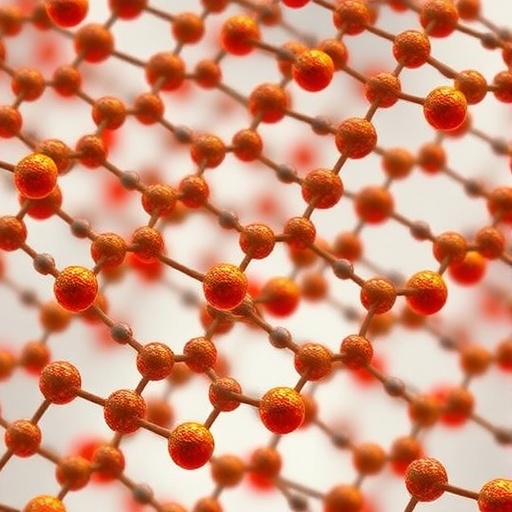
In an era where nutrition and advanced biotechnology converge, researchers are making groundbreaking strides in the extraction of vital bioactive compounds from natural sources, promising revolutionary enhancements in food science and health industries. A compelling new study published in early 2026 reveals a sophisticated approach to isolating carotenoids—powerful antioxidants and pigments—from Rhodotorula toruloides, a reddish yeast known for its metabolic richness. Employing state-of-the-art nanotechnology, the research introduces casein-functionalized manganese ferrite nanostructures, engineered to selectively capture these delicate molecules with unprecedented efficiency and specificity.
Carotenoids are celebrated not just for their vibrant colors, ranging from deep reds to bright yellows, but also for their potent antioxidant properties and their prospective roles in preventing chronic diseases, including cancer and cardiovascular ailments. Yet, their extraction from biological matrices like microbial cultures often faces significant challenges, such as low yield, thermal degradation, and cumbersome purification processes. The integration of nanotechnology, specifically magnetic nanoparticles, into biotechnology workflows ushers in a new paradigm, offering selective binding and facile recovery through magnetic fields, thereby overcoming many traditional obstacles.
The researchers’ innovative nanostructures fuse the magnetic properties of manganese ferrite with the biocompatibility and binding versatility of casein, a milk-derived protein known for its natural affinity towards hydrophobic molecules like carotenoids. This hybrid design allows for strong interactions with carotenoids, enhancing extraction selectivity while maintaining the delicate integrity of these molecules. The manganese ferrite core endows the particles with superparamagnetic behavior, enabling quick separation from complex mixtures simply by applying an external magnetic field, facilitating a streamlined and gentle purification step.
Furthermore, the functionalization process optimizing casein coating on the nanoparticles ensures stability in aqueous environments, minimizes aggregation, and maximizes active surface area for carotenoid binding. The synergy between the protein corona and the magnetic core creates a robust platform that captures carotenoids effectively from Rhodotorula toruloides cultures, which are commonly used in various biotechnological applications due to their high carotenoid content and easy cultivation.
The extraction method detailed by the team harnesses these nanostructures within a controlled experimental setup designed to maximize the interaction between the nanomaterials and the carotenoid-rich biomass. By finely tuning parameters such as pH, temperature, and incubation time, they achieved optimal adsorption kinetics, demonstrating rapid and selective capture. This level of control and efficiency represents a significant leap from conventional solvent extraction, which often involves time-consuming, hazardous chemical use and limited selectivity.
Subsequent characterization of the carotenoid-loaded nanoparticles using advanced spectroscopic and microscopic techniques validated the effective immobilization and preservation of carotenoids. High-performance liquid chromatography (HPLC) further confirmed the purity and yield improvements over traditional extraction, underlining the process’s scalability and industrial relevance.
Beyond extraction efficiency, this technology opens new avenues for sustainable and environmentally friendly practices. Conventional carotenoid extraction methods rely heavily on organic solvents, raising concerns about environmental impact and solvent residues in final products. In contrast, the magnetic nanoparticle-assisted method dramatically reduces organic solvent consumption and facilitates clean, recyclable workflows, aligning well with green chemistry principles and FDA regulations regarding food-grade product safety.
Intriguingly, the choice of Rhodotorula toruloides as the carotenoid source is emblematic of growing interest in microbial factories for bioactive compounds. These microorganisms offer controllable production environments, rapid growth rates, and genetic modifiability, offering a renewable platform superior in sustainability compared to plant sources that are seasonal and land-intensive. The synergistic combination of engineered microbes and nanotechnological extraction tools might well define the future of nutraceutical manufacturing.
Delving deeper into the material science pillars underpinning the study, manganese ferrite nanoparticles stand out for their magnetic robustness, chemical stability, and biocompatibility. Unlike iron oxide nanoparticles that might suffer from oxidation or limited functionalization options, manganese ferrite presents a versatile core easily tailored through surface chemistry. The conjugation with casein not only enhances biocompatibility but also offers multiple functional groups for binding and interaction, making these nanostructures a multi-faceted platform.
The potential versatility of these functionalized nanomaterials extends beyond carotenoid extraction. Their selective capture capability hints at future applications in isolating other hydrophobic bioactive compounds, such as polyphenols, vitamins, and plant pigments, from diverse biological matrices. This technology could eventually revolutionize extraction protocols across food science, pharmacology, and cosmetics industries, where purity, efficiency, and environmental impact are paramount.
Moreover, the magnetic separation technique integrates seamlessly with downstream processing machinery, lending itself readily to automation and continuous processing lines. This feature can significantly reduce production costs and increase throughput, catalyzing broader commercial adoption. Modern food and pharmaceutical production demands scalability and reliability—criteria well met by this magnetic nanoparticle extraction approach.
Importantly, the study also addresses stability and recyclability of the nanoparticles. Researchers demonstrated that after multiple cycles of carotenoid binding and release, the casein-functionalized particles retained their integrity and function. This recyclability not only curtails costs but also enhances sustainability, offering a circular approach to bioactive compound harvest.
The selectivity of the system stems from the molecular-level interactions between carotenoid molecules and the protein corona on the nanoparticle surface. Casein’s hydrophobic pockets and charged residues enable affinity adsorption mechanisms tailored to the chemical nature of carotenoids. This biomimetic strategy reflects an elegant fusion of material engineering and molecular recognition principles, a testament to the interdisciplinary ingenuity driving modern bioseparations.
The implications of this research stretch far beyond a single compound or microorganism. This methodology illustrates a promising blueprint for harnessing nanostructured materials to solve fundamental challenges in natural product extraction—preserving compound bioactivity, enhancing yield, and reducing environmental footprints. Such innovation is poised to invigorate food science sectors dedicated to delivering healthier, more natural, and sustainably sourced nutritional products to global consumers.
In sum, the casein-functionalized manganese ferrite nanostructure platform marks a significant technological breakthrough in the selective extraction and purification landscape of carotenoids from microbial sources. Its marriage of magnetic responsiveness, biocompatibility, and molecular specificity sets new standards for efficiency, environmental stewardship, and scalability in bioactive compound extraction.
As industries pivot toward holistic wellness and ecologically conscientious production, this exciting development promises to empower next-generation nutraceuticals and functional foods, advancing human health through cutting-edge science. The future of food biotechnology gleams bright, colored vibrantly with carotenoids—extracted precisely, sustainably, and smartly by the power of nanotechnology.
Subject of Research: Selective extraction of carotenoids from Rhodotorula toruloides using casein-functionalized manganese ferrite nanostructures.
Article Title: Casein-functionalized manganese ferrite nanostructures for selective extraction of carotenoids from Rhodotorula toruloides.
Article References:
Ochoa-Viñals, N., Alonso-Estrada, D., García-Cruz, A. et al. Casein-functionalized manganese ferrite nanostructures for selective extraction of carotenoids from Rhodotorula toruloides. Food Sci Biotechnol (2026). https://doi.org/10.1007/s10068-025-02084-7
Image Credits: AI Generated
DOI: 18 January 2026


