


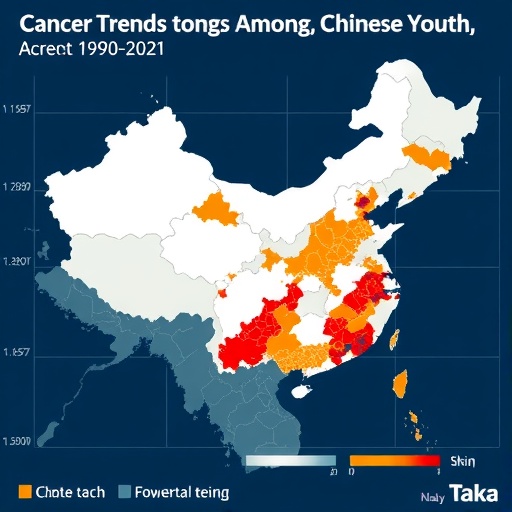
A recent comprehensive study published in BMC Cancer reveals critical insights into how the cancer burden among adolescents and young adults (AYAs) in China has evolved from 1990 to 2021. This study, drawing on data from the Global Burden of Disease (GBD) 2021 project, highlights dynamic changes in cancer incidence, mortality, and disability burdens, pointing to an emerging public health challenge in this unique age group defined as individuals aged 15 to 39 years. These findings carry significant implications for cancer prevention strategies and healthcare resource allocation in China’s rapidly changing social landscape.
The research reveals a troubling increase in the incidence rate of cancer among AYAs in China across the past three decades. The age-standardized incidence rate (ASIR) rose from 36.74 cases per 100,000 population in 1990 to a striking 51.51 per 100,000 in 2021. This upward trend signals that more young people are being diagnosed with cancer than ever before, emphasizing the urgency of understanding specific etiological factors driving this rise. The data points to shifts in lifestyle, environmental exposures, and possibly the influence of infectious agents as contributing components.
Interestingly, despite the increase in cancer diagnoses, mortality rates from cancer in this demographic have shown a substantial decline. The age-standardized mortality rate (ASMR) fell from 22.53 deaths per 100,000 individuals in 1990 to 14.89 per 100,000 in 2021. Mortality reduction likely reflects advancements in cancer detection, clinical management, and treatment modalities over time, underscoring improvements in the healthcare infrastructure and accessibility for young patients. This decline in fatal outcomes highlights vital progress but does not eliminate the ongoing burden posed by cancer.
The study also details a significant decrease in the disability-adjusted life years (DALYs) associated with cancer among AYAs, dropping from 1,331.48 to 689.68 per 100,000 population. DALYs represent the combined years of life lost due to premature mortality and years lived with disability. A reduction in this measure points to improved survival with better quality of life post-diagnosis, driven by factors such as enhanced supportive care, early intervention strategies, and rehabilitation programs for young cancer patients.
Among the numerous cancer types tracked, breast cancer emerged as the leading contributor to incidence burden within the AYA population, with an ASIR of 6.03. This rise calls for heightened awareness and targeted screening initiatives given the social and economic impacts breast cancer can impose at such formative life stages. On the other hand, cancers affecting the trachea, bronchus, and lung, alongside leukemia, were identified as the primary causes of mortality and disability burden, reflecting their aggressive nature and challenges in treatment.
Delving into risk factors, the study underscores tobacco use and dietary risks as the largest contributors to the overall cancer burden among AYAs. These lifestyle-related determinants exert a profound influence on cancer development, especially given China’s ongoing urbanization and nutritional transitions. Tobacco remains a pervasive carcinogen linked especially to lung, bronchus, and tracheal cancers, making tobacco control a cornerstone of cancer prevention in this cohort.
Infectious agents also remain critical risk factors, with unsafe sexual practices notably driving cervical cancer incidence among young women. Cervical cancer continues to be preventable through vaccination, screening, and education, which speaks to the potential for substantial public health gains if these measures are effectively implemented and expanded across vulnerable populations.
The study employed advanced statistical approaches such as joinpoint regression and estimated annual percentage change (EAPC) analyses to characterize temporal trends rigorously. Moreover, predictive modeling using auto-regressive integrated moving average (ARIMA) models enabled projections of future cancer burden trajectories, establishing a data-driven foundation for policymakers and clinicians to anticipate emerging needs in cancer care and prevention for AYAs.
The unique epidemiological patterns observed in this young cohort differ markedly from those typically seen in older adults, which underscores the necessity for age-specific cancer control strategies. Adolescents and young adults face distinct biological, behavioral, and psychosocial factors that influence onset, progression, and outcomes of cancer, necessitating specialized clinical approaches and research agendas.
As lifestyle factors such as diet, tobacco consumption, and sexual behavior evolve in China’s rapidly modernizing society, traditional cancer risk paradigms may shift as well. The interplay between environmental exposures, genetic susceptibility, and socioeconomic transitions creates a complex backdrop against which cancer incidence grows, highlighting the importance of integrated cancer control policies that encompass prevention, early detection, and comprehensive treatment.
Given the observed trends, intensified efforts in public health education focused on modifiable risks among youth are crucial. Campaigns addressing tobacco cessation, healthy dietary habits, vaccination, and safe sex practices have the potential to mitigate the future cancer burden, emphasizing prevention tailored to the demographic realities of Chinese AYAs.
At the clinical level, expanding access to screening technologies and improving diagnostic accuracy for early-stage cancers could further reduce mortality rates. Coupling these with innovations in therapeutics and personalized medicine holds promise for enhancing survival and quality of life, as demonstrated in the declining mortality and DALY figures reported.
This study marks a significant step in quantifying and understanding the shifting landscape of cancer burden among one of the most dynamic population segments in China. The findings prompt a call to action for researchers, clinicians, and policymakers alike to elevate cancer prevention and control efforts specifically designed for AYAs.
In summary, while cancer incidence among Chinese adolescents and young adults continues to rise, encouraging reductions in mortality and disability indicate that progress is achievable. Nevertheless, the sustained impact of lifestyle, environmental, and infectious risk factors necessitates a renewed commitment to targeted interventions, ensuring that gains in cancer control are inclusive and far-reaching for this vulnerable age group.
With the cancer burden poised to increase unless addressed, this research delivers a crucial evidence base to inform future strategies. It shines a spotlight on an urgent public health challenge, stressing that comprehensive approaches integrating prevention, screening, and treatment are requisite to curbing cancer’s growing imprint on young lives in China.
Cite Scienmag News
Nathaniel Bowman. (October 10, 2025). Cancer Trends Among Chinese Youth, 1990-2021. Scienmag. https://scienmag.com/cancer-trends-among-chinese-youth-1990-2021/
Nathaniel Bowman. "Cancer Trends Among Chinese Youth, 1990-2021." Scienmag, 10 October 2025, https://scienmag.com/cancer-trends-among-chinese-youth-1990-2021/. Accessed 4 September 2026.
Nathaniel Bowman. "Cancer Trends Among Chinese Youth, 1990-2021." Scienmag. October 10, 2025. https://scienmag.com/cancer-trends-among-chinese-youth-1990-2021/


