


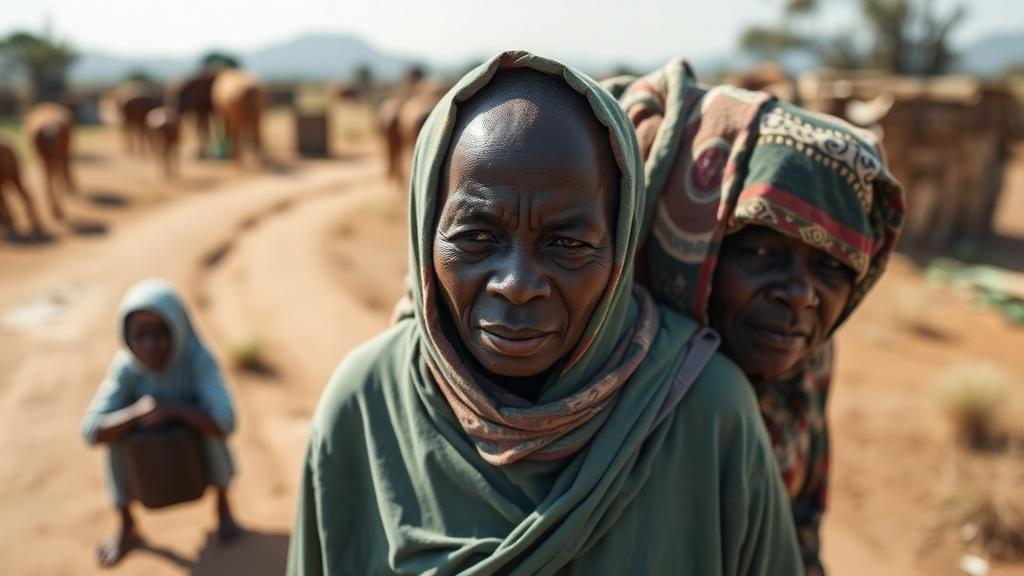
A diagnosis of cancer is never just a medical event. It reaches into every corner of a person’s life, from their finances and family relationships to their deepest psychological reserves. A new study from Limpopo Province in South Africa has now documented just how heavy that burden becomes for patients treated in rural district hospitals, where oncology infrastructure is thin and supportive services are often out of reach. The research, published in the Journal of Cancer Research and Clinical Oncology, offers one of the most detailed cross-sectional portraits to date of what researchers call biopsychosocial distress, the combined biological, psychological and social toll that cancer exacts on patients living in resource-constrained settings.
The study was conducted by Takalani Friddah Rafundisani, Dorah Ursula Ramathuba and Maria Sonto Maputle, all of the Department of Advanced Nursing at the University of Venda in Thohoyandou. Between October 2017 and January 2018, the team surveyed 207 oncology patients attending seven district hospitals in the Vhembe district of Limpopo, a largely rural province in the north-east of South Africa. Participants were recruited through purposive and convenience sampling, and data were gathered with a structured self-report questionnaire. The researchers then applied descriptive statistics and chi-square tests to identify patterns and associations within the data, producing a statistical snapshot of distress across the physical, emotional and social dimensions of patients’ lives.
The demographic profile of the participants alone tells a story of profound vulnerability. Most respondents were female, accounting for 62 percent of the sample, and the largest age group was 51 years or older, representing 42 percent of participants. A striking 84 percent had only secondary education, half were unemployed, and not a single participant held medical insurance. Nearly half of the cohort, 45.8 percent, depended on social grants as their primary means of support. In a health system where cancer care frequently requires travel to distant facilities, repeated treatments and costly auxiliary medications, the absence of insurance combined with unemployment creates a situation in which the disease and its financial consequences compound one another relentlessly.
The clinical picture was equally sobering. Nearly half of the patients, 49.7 percent, had been diagnosed with stage II cancer, while a further 21.7 percent were already at stage III when their disease was detected. Late presentation is a well-recognized problem in rural South Africa, where limited oncology infrastructure and inequitable access to cancer care can delay diagnosis until the disease has advanced. By the time of the survey, 75.8 percent of participants had received at least two chemotherapy sessions, meaning most were in the midst of active treatment while simultaneously coping with the socioeconomic strains described above. The researchers note that this combination of advanced disease at diagnosis and fragile economic circumstances sets the stage for the intense distress their survey documented.
When the researchers asked patients directly about their experiences, the results were stark. Fear of premature death emerged as the most frequently reported concern following diagnosis, cited by 87.9 percent of participants. Pain and discomfort were reported by 88.9 percent, making physical suffering nearly universal in this cohort. Beyond pain, the disease and its treatment disrupted nearly every domain of daily life: 79.7 percent of patients reported negative impacts on their social life, 74.8 percent on their financial status, 76.4 percent experienced physical pain, 72.9 percent reported fatigue, 72.9 percent described harm to their psychological well-being, and 70.5 percent reported damage to their emotional health. These overlapping figures illustrate why the authors frame the problem as biopsychosocial rather than purely medical; the same patient is often contending with pain, exhaustion, anxiety and impoverishment all at once.
The statistical analysis went beyond description to identify significant associations between diagnosis and specific forms of distress. Emotional and psychological distress was significantly linked to the cancer diagnosis itself, with a p-value below 0.02. Loss of interest in daily activities was significantly associated with older patients, also at p < 0.02, while younger patients reported significantly greater interference with their social lives, at p < 0.017. Fear of death was likewise significantly associated with emotional burden, at p < 0.033. Across a range of variables, limited social support showed associations with distress, with p-values ranging from below 0.01 to 0.09. These age-related patterns carry practical implications: older patients may need interventions targeting apathy and disengagement from daily routines, whereas younger patients, who often hold central roles in family and community networks, may be particularly damaged by the social disruption that cancer imposes.
The findings arrive against a broader backdrop of cancer inequity in South Africa. The country’s oncology services are concentrated in urban academic centers, and patients in rural provinces such as Limpopo often travel long distances for diagnosis and treatment. The authors point out that limited infrastructure and inequitable access contribute to delayed diagnosis and increased distress, particularly among rural communities. In Vhembe district, where the study took place, care is delivered through district hospitals that are not equipped to provide the comprehensive supportive services, psychological counseling, palliative care and structured pain management, that international guidelines consider integral to cancer treatment. The result is a system that can deliver chemotherapy but struggles to address the suffering that surrounds it.
What makes this study valuable is its insistence that pain and fear are not incidental byproducts of cancer but measurable clinical outcomes in their own right. The near-universal reporting of pain and discomfort, 88.9 percent, suggests that basic symptom control is falling short in these district-level settings. Meanwhile, the finding that every single participant lacked medical insurance underscores how financial toxicity, the economic harm caused by illness and treatment, operates in a context where social grants rather than salaries or insurance sustain households. The authors argue that integrating psychosocial care, palliative services, pain management, social support and patient education into district-level oncology care is essential to improve quality of life and patient outcomes, a prescription that shifts the focus from survival alone to the lived experience of surviving.
Methodologically, the study has the strengths and limits inherent to its design. As a non-experimental, cross-sectional descriptive survey, it captures a single moment in time and cannot establish causation; the significant associations it reports, such as those linking fear of death to emotional burden, describe relationships rather than causal pathways. The use of purposive and convenience sampling means the 207 participants may not represent all cancer patients in the province, and self-report questionnaires depend on patients’ willingness and ability to articulate their experiences. Nevertheless, the consistency of the findings, with distress reported across every measured domain by roughly seven in ten patients or more, paints a coherent and troubling picture that is difficult to dismiss as sampling artifact.
The broader lesson extends well beyond Limpopo. Cancer incidence is rising across low- and middle-income countries, and health systems are increasingly able to deliver life-prolonging treatment to patients who, a generation ago, would have died quickly. But this study is a reminder that extending survival without extending support produces a different kind of suffering, one measured in sleepless nights, emptied savings accounts, withdrawn patients and families strained to breaking. For the patients of Vhembe district, the researchers’ message is clear: chemotherapy alone is not enough. A cancer care system worthy of the name must treat the fear of death as seriously as the tumor, the empty wallet as seriously as the blood count, and the isolated patient as seriously as the diseased cell. Whether South Africa’s rural health services can rise to that challenge will determine whether the distress documented in this study remains a permanent feature of cancer care in the region, or a problem that committed policy finally begins to solve.
Subject of Research: Biopsychosocial distress among oncology patients in rural Limpopo Province, South Africa
Article Title: A cross-sectional analysis of biopsychosocial distress among oncology patients in Limpopo, South Africa
Article References: A cross-sectional analysis of biopsychosocial distress among oncology patients in Limpopo, South Africa. (n.d.). https://doi.org/10.1007/s00432-026-06598-3
Image Credits: AI Generated
DOI: 10.1007/s00432-026-06598-3
Keywords: cancer, oncology, biopsychosocial distress, psychosocial support, rural health, South Africa, Limpopo, palliative care, pain management, quality of life, health equity, chemotherapy
Cite Scienmag News
Nathaniel Bowman. (October 13, 2026). Cancer Patients in Rural South Africa Carry a Heavy Burden of Fear, Pain and Poverty. Scienmag. https://scienmag.com/cancer-patients-in-rural-south-africa-carry-a-heavy-burden-of-fear-pain-and-poverty/
Nathaniel Bowman. "Cancer Patients in Rural South Africa Carry a Heavy Burden of Fear, Pain and Poverty." Scienmag, 13 October 2026, https://scienmag.com/cancer-patients-in-rural-south-africa-carry-a-heavy-burden-of-fear-pain-and-poverty/. Accessed 13 October 2026.
Nathaniel Bowman. "Cancer Patients in Rural South Africa Carry a Heavy Burden of Fear, Pain and Poverty." Scienmag. October 13, 2026. https://scienmag.com/cancer-patients-in-rural-south-africa-carry-a-heavy-burden-of-fear-pain-and-poverty/


