

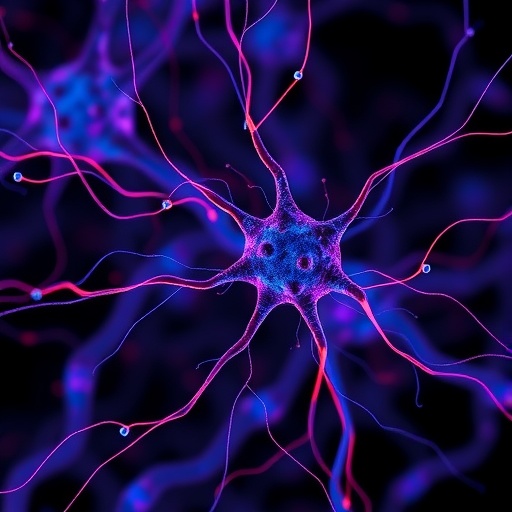
In a major breakthrough for the field of connectomics, a new automated approach has demonstrated the ability to classify neuronal cell types with remarkable precision based solely on synaptic connectivity patterns. This method, known as Neuronal Type Assignment from Connectivity (NTAC), offers a transformative alternative to the traditionally labor-intensive and morphology-dependent process of neuron classification. Leveraging the inherent wiring diagram of the brain, NTAC unlocks a wealth of information embedded in the connectome, enabling rapid and accurate neuron typing even in complex and highly repetitive circuits.
The painstaking task of neuronal cell typing has long been a critical bottleneck in neuroscience research. Historically, experts relied on detailed anatomical descriptions and morphological distinctions to differentiate neuron types—a process that is both time-consuming and prone to ambiguities. Morphology-based classification frequently faces challenges in brain regions where neuron shapes are highly similar or where distinct cell types are architecturally interwoven. NTAC circumvents these limitations by analyzing the “connectivity fingerprints” intrinsic to each neuron’s synaptic network, thus harnessing the underlying functional architecture rather than superficial structural cues.
Developed through an international collaboration among researchers at the Japan Advanced Institute of Science and Technology (JAIST), Princeton Neuroscience Institute, University of Edinburgh, and the Technical University of Catalonia, NTAC epitomizes the convergence of computational neuroscience and graph theory. By representing the connectome as a graph, where neurons are nodes and synapses are weighted edges, the algorithm identifies unique connectivity patterns that correlate with neuronal identity. This graph-theoretic framework enables NTAC to decipher the complex interplay of neural connections, delivering a robust method for neuron classification that is both scalable and universal.
NTAC operates in two primary modes: semi-supervised and unsupervised. The semi-supervised mode capitalizes on a small subset of pre-typed neurons, using their established types as anchors to propagate labels across the connectivity graph with exceptional accuracy. This approach drastically reduces the need for extensive manual labeling, facilitating rapid classification in large datasets. Conversely, the unsupervised mode requires no prior labeling and clusters neurons purely based on the similarity of their synaptic connectivity profiles. Even without any ground truth input, NTAC reveals natural groupings that align closely with biologically recognizable cell types, offering profound insights into the organizational principles of neural circuits.
The efficacy of NTAC was rigorously tested on state-of-the-art connectomic datasets derived from Drosophila (fruit fly) brains, a widely used model organism in neuroscience. The results were striking: in the optic lobe—an area notorious for its intricate and overlapping neuronal morphology—NTAC’s connectivity-based classification vastly outperformed traditional morphology-based methods, such as those reliant on NBLAST, a structural similarity tool. While morphology-based classifiers struggled to achieve even 50% accuracy in this challenging context, NTAC soared above 90% with a fraction of labeled data and without the need for extensive computational resources, running efficiently on ordinary laptop hardware.
Notably, in the fully unsupervised setting, NTAC achieved an impressive 70% accuracy rate in identifying neuronal types based solely on their synaptic connectivity, a performance far exceeding the sub-10% accuracy typical of unsupervised morphology-based classification algorithms. When applied to the full brain connectome, encompassing thousands of distinct neuron types, NTAC maintained a commendable accuracy of 52%. These results underscore the feasibility of automating neuronal classification at scale, overcoming the barriers posed by traditional approaches and opening new avenues for large-scale connectome analysis.
Dr. Gregory Schwartzman, Associate Professor at JAIST and lead author of the study, highlights the significance of these findings in the context of burgeoning connectomic datasets. “As detailed brain wiring maps grow exponentially, the manual annotation of neuron types is becoming an unmanageable task. NTAC demonstrates that the connectivity patterns alone contain sufficient information to accurately identify neurons, which could dramatically accelerate connectomic analysis and deepen our understanding of brain function.” This system, he elaborates, is “not only highly accurate but also computationally efficient, which makes it accessible for widespread use.”
Beyond fruit fly models, NTAC holds promise for revolutionizing the study of mammalian and, ultimately, human brains. While full connectomes for large mammals remain a formidable challenge, preliminary applications of NTAC to datasets such as the brain-and-cord connectome (BANC) already showcase its scalability and potential for broad adoption. As efforts intensify to map intricate mammalian neural circuits, this connectivity-centered classification tool could provide the necessary leverage to unlock the complexity of these systems, moving the field closer to the ultimate goal of comprehensive human brain mapping.
The broader implications of NTAC extend beyond classification accuracy. By focusing on connectivity rather than morphology, this method aligns closely with the functional realities of neural circuits. Synaptic interactions define information flow and processing within the brain, and NTAC’s approach inherently captures these dynamics. Future expansions integrating multimodal data—including gene expression profiles, electrophysiological properties, and morphological data—could enrich the fidelity of neuronal classification, creating a unified framework that blends structural and functional neural traits.
As connectomics propels forward, NTAC exemplifies how computational innovation can address foundational biological questions. The ability to automatically and reliably assign neuron types based on synaptic architecture alone not only accelerates data analysis but also deepens our conceptual understanding of brain organization. Such developments are poised to catalyze breakthroughs in neuroscience, informing everything from fundamental brain biology to targeted therapeutics for neurological disorders.
Looking ahead, the research team envisions refining NTAC further by incorporating advanced machine learning techniques and expanding its application to multiple species and brain regions. This progress will support the scaling of connectomic analyses to mammalian brains and potentially contribute to clinical neuroscience by helping to identify cell-type specific biomarkers linked to disease. The convergence of data science, neurobiology, and connectomics heralds a new era where neuronal classification can be both systematic and insightful.
The publication of this work in Nature Communications not only spotlights a leap forward in computational neuroanatomy but also marks a vital step in the global quest to map the brain’s complex wiring. With the marriage of graph algorithms and neuroscience embodied in NTAC, the long-standing barriers in neuronal cell typing are poised to dissolve, ushering in a more efficient, accurate, and comprehensive understanding of the brain’s cellular landscape.
Subject of Research: Not applicable
Article Title: NTAC: Neuronal type assignment from connectivity
News Publication Date: 6-Jan-2026
References: DOI: 10.1038/s41467-025-68044-1
Image Credits: Gregory Schwartzman (connectome image from flywire.ai)
Keywords
Life sciences, Bioengineering, Technology, Medical technology, Cellular neuroscience, Neurons


