

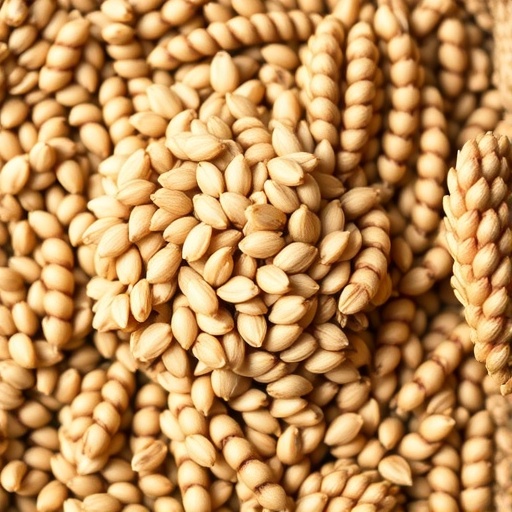
In the evolving landscape of sustainable agriculture, perennial grains have emerged as a promising solution to many environmental challenges posed by conventional cropping systems. Among these, intermediate wheatgrass (IWG), commercialized under the trademark Kernza, has captivated scientists and consumers alike for its ecological benefits and potential to revolutionize cereal grain production. A recent study conducted by researchers at Cornell University probes a pivotal question for the future of Kernza: Are consumers willing to embrace this novel grain in their diets, and what role do taste and sustainability information play in their purchasing decisions?
Intermediate wheatgrass stands apart from traditional annual cereals due to its deep, extensive root systems and perennial growth habit. Unlike annual wheat, which requires replanting each year, IWG can thrive in the soil for three to five years or more. This unique characteristic endows it with several environmental advantages—chiefly, enhanced soil carbon sequestration, minimized erosion, and the potential to reduce nutrient runoff into waterways. These factors contribute significantly to soil health and have implications for mitigating climate change. However, despite these ecological merits, the grain’s commercial success is contingent on more immediate concerns that affect consumers—the taste and price of bread products made with Kernza.
Cornell researchers designed an innovative field study in upstate New York to gauge consumers’ willingness to pay for bread containing varying proportions of IWG flour. Participants, drawn from the adult population, engaged in a carefully controlled bread tasting coupled with a real-money auction system. This experimental design compelled participants to reveal genuine market behavior by bidding actual money for artisanal sourdough loaves. The breads included whole wheat, spelt, and two experimental variants containing 15% and 25% IWG flour blended with conventional wheat flour, all produced by a local wood-fired bakery renowned for its quality.
Communication of environmental benefits proved to be a crucial factor in consumer valuation. Before tasting, participants were provided with plain yet informative language describing the sustainability advantages of Kernza. This included its capacity for continuous soil occupation, enhanced biodiversity, and direct benefits in reducing chemical runoff. The messaging was cautiously crafted, drawing on descriptions used by corporations such as General Mills that have begun incorporating Kernza into their product lines without overstating claims. This clear, evidence-based approach resulted in a measurable increase in willingness to pay by 5 to 10 percent compared to control breads without IWG.
Most notably, the bread containing 15% IWG flour preserved a price premium even after the sensory evaluation, signaling that it met or exceeded the flavor expectations of the tasting panel. This finding underscores an important consumer reality: sustainability alone does not guarantee market success if the product fails to satisfy fundamental taste and texture criteria. Conversely, the 25% IWG bread did not fare as well in sensory ratings and elicited weaker bids, highlighting that higher concentrations of IWG may compromise the gluten network necessary for the airy, elastic structure consumers expect from baked bread.
The technical challenges behind these sensory differences relate to the biochemical composition of intermediate wheatgrass. IWG’s gluten-forming proteins are inherently less robust than those in traditional wheat, resulting in denser, less elastic dough. This limitation caps the practical substitution ratio where IWG can be incorporated before negatively impacting palatability. Addressing this issue will likely require further plant breeding efforts to enhance gluten properties without compromising the perennial traits responsible for its environmental benefits.
The study’s findings provide a cautiously optimistic outlook for perennial grains’ niche market emergence, especially within the premium bread sector, which boasts a market value exceeding $1 billion in the United States alone. A consistent supplementary willingness to pay between 5 and 10 percent could justify commercial production and encourage farmers to diversify their cropping practices towards more sustainable options. However, the researchers emphasize that for widespread adoption, bridging the yield gap between perennial grains and annual staples remains paramount. Currently, IWG yields lag behind those of wheat, corn, and rice. Additionally, grain productivity in IWG tends to decline over successive years of cultivation, posing further agronomic hurdles.
The path ahead for perennial grains like Kernza is thus framed by intertwined challenges across the production, processing, and consumer acceptance spectrum. Continued investment in breeding programs aims to boost yield stability and dough quality traits, making Kernza a more viable crop at scale. Simultaneously, market development through informed consumer outreach and product innovation is critical to stimulate reliable demand—a necessary signal for farmers contemplating the risk of transitioning to new crops.
This research not only elevates the conversation around kernels of sustainability in the agricultural system but also underscores a fundamental truth: The future of food hinges as much on consumer perception and sensory experience as on environmental stewardship. Labels signaling “sustainable” or “local” carry increased weight when the product genuinely delivers on taste, texture, and quality. Otherwise, any initial enthusiasm risks erosion akin to the soil conservation benefits that Kernza promises to uphold.
In sum, this pioneering study from Cornell University illuminates the complex dynamic between ecological innovation and market viability. Intermediate wheatgrass, with its environmental promise and culinary potential, embodies both the opportunities and challenges within sustainable food systems. Whether Kernza can evolve from a scientific curiosity into a staple for the conscious consumer will depend largely on the nuanced balance between authentic environmental impact and the immutable demands of flavor and texture that define our eating experiences.
Subject of Research: Consumer acceptance and willingness to pay for bread made with climate-friendly intermediate wheatgrass (Kernza) incorporating environmental sustainability messaging.
Article Title: New Cornell Study Explores Consumer Willingness to Pay for Perennial Grain Bread with Sustainability Benefits
News Publication Date: February 2026
Web References:
References:
Li, J., et al. (2026). Consumer valuation of perennial grain bread: The role of taste and environmental benefits. Agricultural Economics. DOI: 10.1111/agec.70102
Image Credits: Not provided
Keywords: Intermediate wheatgrass, Kernza, perennial grains, sustainable agriculture, consumer willingness to pay, bread sensory evaluation, environmental benefits, soil carbon sequestration, gluten network, food market innovation, climate-friendly crops, agricultural economics


