


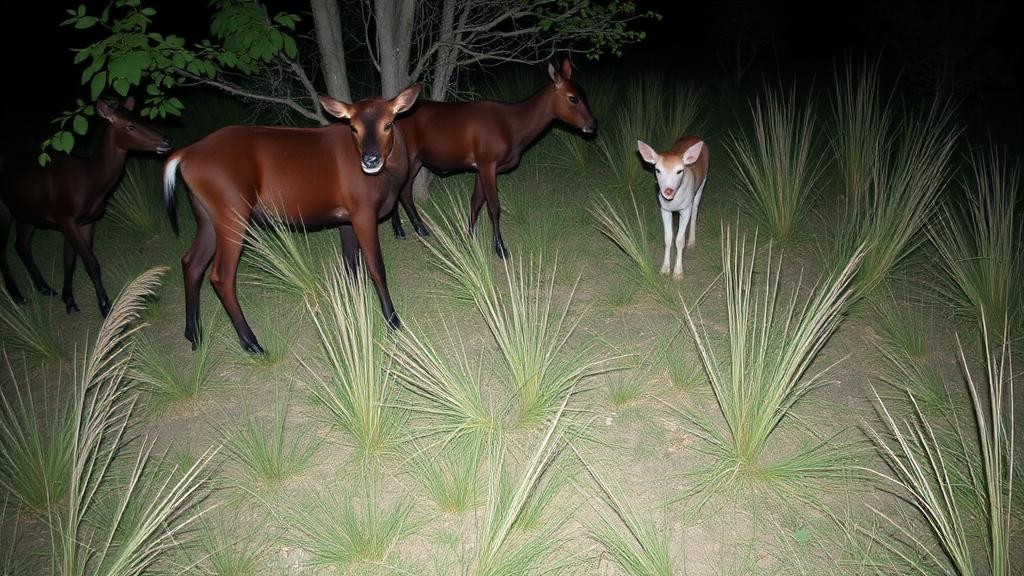
Across the sun-scorched pastures of the Iberian Peninsula, where cattle, sheep and pigs graze alongside wild boar, red deer and badgers, scientists have been testing two very different ways of spying on wildlife: camera traps that photograph animals as they move through the landscape, and environmental DNA (eDNA) metabarcoding, which reads the genetic traces animals leave behind in the water they drink. A new study published in Frontiers in Ecology and Evolution compared these methods across 13 open-air farms in Spain and found that each technique tells a strikingly different story about which species share these landscapes.
The research, led by Alberto Perelló of the Instituto de Investigación en Recursos Cinegéticos and João Queirós of the University of Porto, was motivated by a pressing problem. Livestock-wildlife interfaces are hotspots for pathogen transmission between domestic and wild animals, and understanding which species are present is the first step toward managing disease risk. Grazing livestock currently occupies roughly half of the world’s agricultural land, while several wildlife species have expanded dramatically due to changes in management, climate and habitat. This convergence creates abundant opportunities for interaction, particularly around limited water sources during the dry Mediterranean summer, when animals aggregate and pathogens can accumulate at shared drinking points.
To evaluate monitoring approaches, the team deployed 27 to 30 camera traps at each of the 13 farms, positioning them preferentially at high-risk locations such as food and water resources, with the remainder distributed randomly. The cameras operated continuously for two consecutive days, capturing three rapid-fire images per activation. In parallel, researchers collected water from one lentic water body per site, including artificial ponds and livestock watering troughs, filtering it through specialized capsules designed to capture DNA. The filtration process yielded an average of just over 10 liters of water per site, processed in roughly 18 minutes.
In the laboratory, the team extracted DNA from the filtration capsules and amplified a region of the 12S rRNA gene using the Vert01 primer set, which targets vertebrates broadly. The amplified DNA was then sequenced on an Illumina MiSeq platform, generating between 56,376 and 867,234 reads per study site. Bioinformatic processing with OBITools software removed low-quality sequences and assigned taxonomy by comparing the remaining reads against a local reference database of Iberian vertebrate species. Contaminants and sequences below a 0.1 percent abundance threshold were filtered out to minimize false positives.
The results revealed a clear asymmetry. Camera traps detected significantly higher taxa richness than eDNA for wild mammals, total mammals and birds. Wild mammal richness averaged 7.84 taxa per site using cameras versus just 2 via eDNA, while bird richness averaged 7.61 versus 0.85. Of the 22 mammal taxa detected across all sites when combining both methods, only nine were detected by both approaches in at least one location, with coincidence between methods ranging from 11 to 85 percent depending on the site. No bird taxa were detected by both methods at any site.
Perhaps most intriguingly, the study found that species ecology shaped detection patterns in opposite ways depending on the method. Camera traps recorded significantly higher relative detection rates for non-gregarious taxa, such as solitary carnivores like the red fox and European badger, averaging 51.31 relative abundance compared to 31.51 for gregarious species. eDNA showed the reverse pattern, with gregarious taxa, including livestock and wild ungulates, dominating the molecular signal at 83 percent relative read abundance versus just 0.10 percent for non-gregarious taxa. The researchers caution that this association likely reflects taxonomic identity, abundance, biomass and frequency of water point use rather than gregarious behavior itself, since the gregarious category was dominated by livestock and ungulates while non-gregarious mammals were mostly carnivores.
The eDNA data revealed that 88 percent of total reads and 54 percent of operational taxonomic units corresponded to mammals, with 99.68 percent of mammal reads assigned to the order Artiodactyla, the even-toed ungulates that include cattle, sheep, goats, pigs and deer. Within this group, cattle accounted for 55 percent of reads and wild boar for 28 percent, reflecting the overwhelming contribution of abundant, water-associated species to the environmental DNA pool. Amphibians were detected at 10 of 13 sites, reptiles at only 2 sites, and a single fish species at 5 sites.
Beyond species detection, the study explored whether livestock density influenced the molecular characteristics of water samples. Linear models showed that livestock density was significantly associated with both DNA concentration measured by Qubit fluorometer and the A260/230 purity ratio measured by Nanodrop spectrophotometer. However, the authors urge caution in interpreting these findings, as Qubit measurements quantify total double-stranded DNA rather than vertebrate DNA specifically, meaning the observed relationships cannot be directly attributed to increased availability of target genetic material.
The researchers acknowledge several limitations. The eDNA sampling was restricted to a single water point per site with two filtration replicates, while camera traps covered a substantially broader area. The molecular marker used could not distinguish between domestic pigs and wild boar, both identified as Sus scrofa, complicating interpretation at pig-dominated farms. The study also did not employ occupancy models to account for imperfect detection, and the relatively small number of 13 study sites limits statistical power and generalizability.
Despite these constraints, the findings carry important implications for wildlife monitoring programs in livestock-dominated environments. The lack of concordance between camera trapping and eDNA at the site level underscores that these methods capture complementary aspects of biodiversity rather than interchangeable measures of the same thing. Relying exclusively on eDNA-based techniques risks producing biased biodiversity estimates in these settings, as the genetic signal from abundant taxa that frequently visit water points may drown out the presence of rarer or more elusive species. The authors recommend combining both approaches within an integrated wildlife monitoring framework, leveraging the strengths of each to build a more complete picture of the vertebrate communities that share these working landscapes, and ultimately to inform biosecurity strategies that reduce the risk of cross-species pathogen transmission.
Subject of Research: Comparative performance of environmental DNA metabarcoding and camera trapping for biodiversity monitoring at livestock-wildlife interfaces in the Iberian Peninsula
Article Title: Environmental DNA metabarcoding performance for biodiversity monitoring at livestock–wildlife interfaces
Article References: Environmental DNA metabarcoding performance for biodiversity monitoring at livestock–wildlife interfaces. (n.d.). https://doi.org/10.3389/fevo.2026.1933292
Image Credits: AI Generated
DOI: 10.3389/fevo.2026.1933292
Keywords: environmental DNA, eDNA metabarcoding, camera trapping, livestock-wildlife interface, biodiversity monitoring, Iberian Peninsula, wildlife disease surveillance, gregarious species, pathogen transmission, One Health, vertebrate detection, Mediterranean ecosystems
Cite Scienmag News
Margaret Porter. (October 15, 2026). Camera Traps Outperform eDNA for Wildlife Monitoring at Livestock-Wildlife Interfaces. Scienmag. https://scienmag.com/camera-traps-outperform-edna-for-wildlife-monitoring-at-livestock-wildlife-interfaces/
Margaret Porter. "Camera Traps Outperform eDNA for Wildlife Monitoring at Livestock-Wildlife Interfaces." Scienmag, 15 October 2026, https://scienmag.com/camera-traps-outperform-edna-for-wildlife-monitoring-at-livestock-wildlife-interfaces/. Accessed 15 October 2026.
Margaret Porter. "Camera Traps Outperform eDNA for Wildlife Monitoring at Livestock-Wildlife Interfaces." Scienmag. October 15, 2026. https://scienmag.com/camera-traps-outperform-edna-for-wildlife-monitoring-at-livestock-wildlife-interfaces/


