

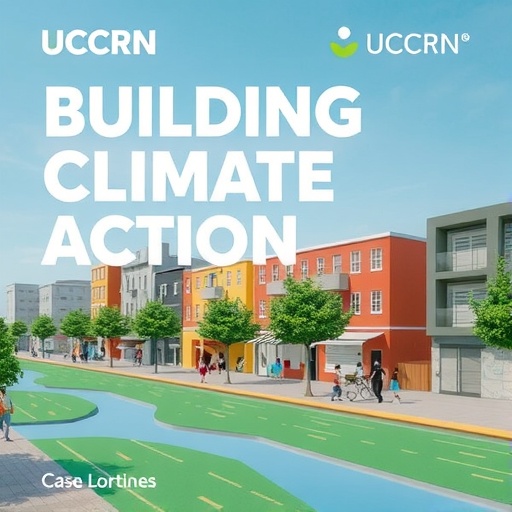
In an epoch where urban landscapes continue to swell, grappling with climate change has transformed from a peripheral concern into a central pillar of sustainable development. The latest comprehensive study, presented by Rosenzweig, Solecki, Friedman, and colleagues in the upcoming issue of npj Urban Sustainability, delves into the pressing need for robust evidence underpinning urban climate action. Their pioneering contribution, the UCCRN City Solutions Case Study Atlas, emerges as an instrumental resource, providing city planners, policymakers, and researchers with a rich compendium of actionable insights derived from empirical case studies worldwide.
Urban areas today embody both the sources and victims of climate-related challenges. Cities, while accounting for more than 70% of global carbon emissions, also face heightened vulnerability to climate-induced risks such as flooding, heatwaves, and extreme storms. Addressing these multifaceted threats demands more than aspirational goals. It requires the systematic assembly and pragmatic application of evidence that informs policies, interventions, and resilience-building strategies tailored to unique urban contexts. The UCCRN Atlas steps directly into this intersection by curating case studies that exemplify success stories and cautionary tales alike.
The atlas harnesses interdisciplinary approaches, melding climate science with socio-economic data, engineering innovations, and governance models. This comprehensive framework transcends simplistic metrics, capturing not only emissions reductions but also co-benefits such as social equity, economic resilience, and ecosystem preservation. By aggregating diverse examples across continents, the study underscores patterns and lessons that are transposable to other urban settings, thereby catalyzing a global knowledge exchange.
One of the remarkable aspects of the UCCRN City Solutions Case Study Atlas is its methodological rigor. Every entry within the atlas undergoes meticulous validation through peer review and field verification, ensuring that policy impacts and scientific claims withstand scrutiny. This emphasis on evidence quality positions the atlas as a gold standard resource. Urban planners seeking to justify investment in green infrastructure, for instance, can rely on detailed cost-benefit analyses presented alongside real-world performance data.
Moreover, the atlas does not shy away from confronting failures and challenges. Recognizing that innovation is often accompanied by setbacks, it offers transparent accounts where intended outcomes were not realized, or unintended consequences emerged. Such candor is invaluable for advancing adaptive learning processes in urban climate governance and helps avoid the pitfalls of one-size-fits-all solutions.
The UCCRN initiative also addresses the temporal dimension of urban sustainability. By incorporating longitudinal studies, the atlas captures how climate actions unfold over years and decades, revealing patterns of resilience accumulation or erosion. This temporal depth aids decision-makers in balancing short-term exigencies with long-term sustainability imperatives, a notoriously difficult equilibrium in political and planning arenas.
Beyond technical explanations, the research champions the inclusion of community voices. Many of the case studies spotlight participatory governance models where residents co-design climate interventions, increasing local buy-in and social cohesion. This human-centric approach is critical, as climate action divorced from community realities risks failure or inequitable outcomes.
Technological advancements play a pivotal role as well. The atlas features innovative examples of digital tools used to map vulnerability, monitor urban heat islands, and simulate intervention impacts. These technologies not only improve precision but democratize access to climate data, enabling more inclusive urban planning processes.
The compilation further explores financing mechanisms that have successfully mobilized resources for urban climate projects. From public-private partnerships to green bonds, the case studies elucidate innovative funding models that overcome fiscal constraints and align financial incentives with sustainability goals. Understanding these mechanisms is essential as cities seek scalable and replicable solutions amid budgetary pressures.
In analyzing policy environments, the atlas deciphers enablers and barriers within governance structures. It identifies regulatory frameworks, institutional collaborations, and political leadership as decisive factors differentiating effective climate actions from stalled efforts. These insights offer strategic guidance to municipal officials navigating complex bureaucracies and competing interests.
Spatial planning emerges as another critical dimension examined in the atlas. It reveals how integrating climate considerations into land use, transportation, and housing policies can reduce emissions while enhancing urban livability. The case studies serve as compelling blueprints demonstrating practical synergies between climate mitigation and broader urban objectives.
The contributions further emphasize the need for continuous monitoring, evaluation, and knowledge updating. The collective authors advocate for institutionalizing iterative assessment processes that feed back into policy refinement, thus fostering resilient cities capable of dynamic adaptation in the face of evolving climate realities.
Importantly, the atlas is designed to be accessible and user-friendly. With an intuitive interface and rich multimedia content, it caters not only to experts but also to a broader audience including community leaders, journalists, and educators. This strategic communication approach enhances its potential virality and uptake beyond academic circles.
As urbanization accelerates and climate impacts intensify, the imperative to ground action in evidence has perhaps never been greater. The UCCRN City Solutions Case Study Atlas stands as a beacon, illuminating pathways forward while growing the global knowledge base essential for sustainable urban futures. Its emphasis on transparency, interdisciplinarity, and inclusivity sets a new benchmark for climate action resources, promising to spur transformative advances across cities worldwide.
By synthesizing myriad experiences, the atlas catalyzes a paradigm shift from isolated responses toward integrated, evidence-backed urban climate strategies. Stakeholders across sectors are empowered to leverage these insights, tailoring interventions to their unique socio-environmental and economic contexts with confidence and precision. This represents a critical step toward bridging the gap between climate science and city-level implementation.
The forthcoming publication is poised to generate considerable impact, shaping not only academic discourse but also real-world policies and practices. As urban centers confront the dual challenge of mitigating greenhouse gases and adapting to climate impacts, tools like the UCCRN Atlas provide the empirical foundation necessary for meaningful progress. This initiative exemplifies how rigorous research, global collaboration, and innovative dissemination can align to address one of humanity’s most urgent existential crises.
In summary, the UCCRN City Solutions Case Study Atlas is a monumental contribution that advances urban climate action from ambition to actionable evidence. Its diverse and detailed case studies present a mosaic of strategies, outcomes, and lessons that collectively chart a promising course toward resilient, equitable, and sustainable cities in an uncertain climate future. This transformative resource offers hope, inspiration, and practical guidance for policymakers, planners, and communities worldwide striving to safeguard urban life on a warming planet.
Subject of Research: Urban climate action and evidence-based strategies for sustainable city resilience.
Article Title: Building and using the evidence base for urban climate action: the UCCRN City Solutions Case Study Atlas.
Article References:
Rosenzweig, C., Solecki, W., Friedman, E. et al. Building and using the evidence base for urban climate action: the UCCRN City Solutions Case Study Atlas. npj Urban Sustain (2026). https://doi.org/10.1038/s42949-026-00342-z
Image Credits: AI Generated


