

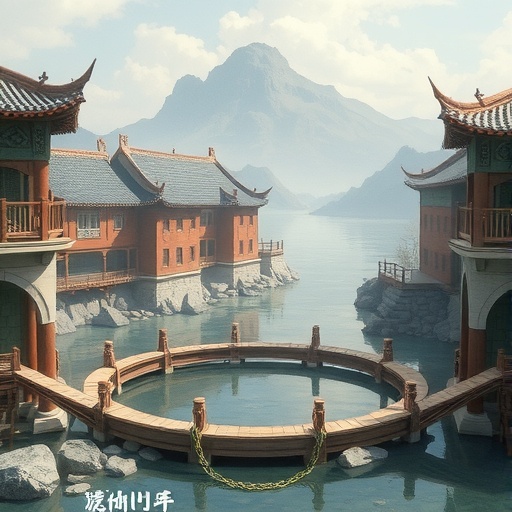
The Bronze Age site of Xiaohe has emerged as a focal point for understanding the interplay between funerary practices and symbolism, particularly in relation to the concept of water. In her upcoming paper titled “Reflections on water: funerary practice and symbolism at the Bronze Age site of Xiaohe,” archaeologist G. Caspari delves into the intricate relationship between these two elements. The research sheds new light on how ancient cultures perceived and utilized water in their burial rites, revealing deep-seated beliefs that transcend time and place.
One of the central themes of Caspari’s study is the symbolic representation of water in burial rituals. Across multiple cultures, water has often been linked to purification, rebirth, and transition between life and death. This paper argues that at Xiaohe, the utilization of water in funerary contexts played a significant role in shaping the identities of the deceased. The author draws on both archaeological evidence and ethnographic comparisons to illustrate how water was not only a physical presence but also served as a conduit for spiritual beliefs.
The Xiaohe site, located in the arid reaches of the Taklamakan Desert, offers a unique contrast to the theories surrounding water in funerary traditions. Despite the harsh environment, the deliberate placement of water-related artifacts suggests a profound understanding of the life-giving and spiritual properties of water. Caspari discusses how these artifacts, including containers and ritual items, were positioned strategically during burial practices to ensure that the deceased were adequately provided for in the afterlife.
Evidence from excavations reveals that the people of Xiaohe incorporated elements such as water bowls and vessels into their burial sites. These items were often crafted with intricate designs that hinted at their dual function—both practical and symbolic. Caspari argues that the presence of these objects alongside skeletal remains highlights the reverence afforded to water and its vital role in the cult of the dead. This aspect not only suggests a complex belief system but also offers insights into the social structures that governed these ancient communities.
Water’s role in reflection and meditation is another poignant theme in Caspari’s article. Drawing from both archaeological findings and contemporary interpretations, the author posits that the ancient inhabitants of Xiaohe may have engaged in water-centric practices that encouraged contemplation of mortality and the afterlife. This interpretation opens the door to understanding how these rituals provided emotional watersheds for grieving families, a framework for processing loss, and a means of honoring the deceased.
Furthermore, Caspari examines the geographic significance of water in the arid landscape surrounding Xiaohe. The presence of rivers and oases likely shaped not only the daily lives of these ancient peoples but also their cosmological views. Water became a powerful emblem of life amid an otherwise inhospitable environment. The metaphorical and literal significance of such resources likely informed their rituals, intertwining the practical need for water with the spiritual domain that encapsulated their views on death and the afterlife.
Caspari’s research also delves into the rituals surrounding the placement of water offerings within the graves. The paper meticulously details different methodologies used in excavating and analyzing these offerings, which can include investigating the chemical composition of residue found in vessels to understand what liquids may have been used. Such analyses not only provide insight into the rituals but also offer clues about dietary practices and cultural links to trade routes that may have facilitated the importation of exotic goods.
The study highlights case studies from other Bronze Age societies, drawing parallels with practices observed in the ancient Mediterranean and Near East, where water was often integral to funerary rites. By situating the Xiaohe practices within a broader archaeological discourse, Caspari emphasizes the diversity of belief systems surrounding death while underscoring the shared importance of water across cultures. The ritual similarities suggest that while the specific practices may differ, the underlying themes of purification and transition unify these ancient peoples.
Though much remains to be discovered at the Xiaohe site, Caspari’s contributions are paving the way for future research into the significance of water in bygone societies. By amalgamating archaeological findings with cultural anthropology, she champions a holistic approach to understanding how ancient peoples conceptualized death and the afterlife. Through this framework, contemporary researchers are encouraged to consider not just what artifacts were left behind, but what beliefs and values those artifacts embodied.
In conclusion, “Reflections on water: funerary practice and symbolism at the Bronze Age site of Xiaohe” promises to be a critical addition to the field of Asian archaeology. With its rich exploration of water’s symbolic role in funerary practices, this study not only contributes to our understanding of Xiaohe but also to a broader inquiry into how ancient societies grappled with existence, death, and the unknown beyond. As the lines between archaeological research and empathy blur, Caspari’s findings resonate with modern audiences, inviting them to reflect on their own relationships with water, mortality, and the rituals that connect us all.
The anticipation surrounding this work is palpable, as it is expected to generate discussions across multiple disciplines, from archaeology to anthropology, and even beyond to philosophy and environmental studies. Caspari’s intricate revelations make it clear that as we uncover the past, we also engage in an ongoing dialogue about our present and future, forming a bridge across time that enriches our collective understanding of what it means to be human.
The exploration of funerary practices in relation to water at Xiaohe only highlights the importance of interdisciplinary scholarship. As scholars from various fields come together to investigate such topics, they uncover patterns and insights that reflect not only historical complexities but also contemporary socio-cultural dynamics. Caspari’s work is undoubtedly a catalyst for future interdisciplinary endeavors.
Ultimately, the findings from the Xiaohe site raise powerful questions about our relationship with the elements, our environment, and the legacies we leave behind. As we navigate through an increasingly fractured world, the reflections that emerge from Xiaohe serve as poignant reminders of our shared humanity and our collective quest for understanding, even in the shadows of mortality. By embracing the archaeological past, we may find pathways to heal and unite in the face of our most profound existential concerns.
Subject of Research: Funerary practices and symbolism at the Bronze Age site of Xiaohe.
Article Title: Reflections on water: funerary practice and symbolism at the Bronze Age site of Xiaohe.
Article References:
Caspari, G. Reflections on water: funerary practice and symbolism at the Bronze Age site of Xiaohe.
asian archaeol 9, 87–95 (2025). https://doi.org/10.1007/s41826-025-00105-2
Image Credits: AI Generated
DOI: 15 May 2025
Keywords: Funerary practices, symbolism, Bronze Age, water, Xiaohe, archaeology, mortality, ancient cultures, ritual


