


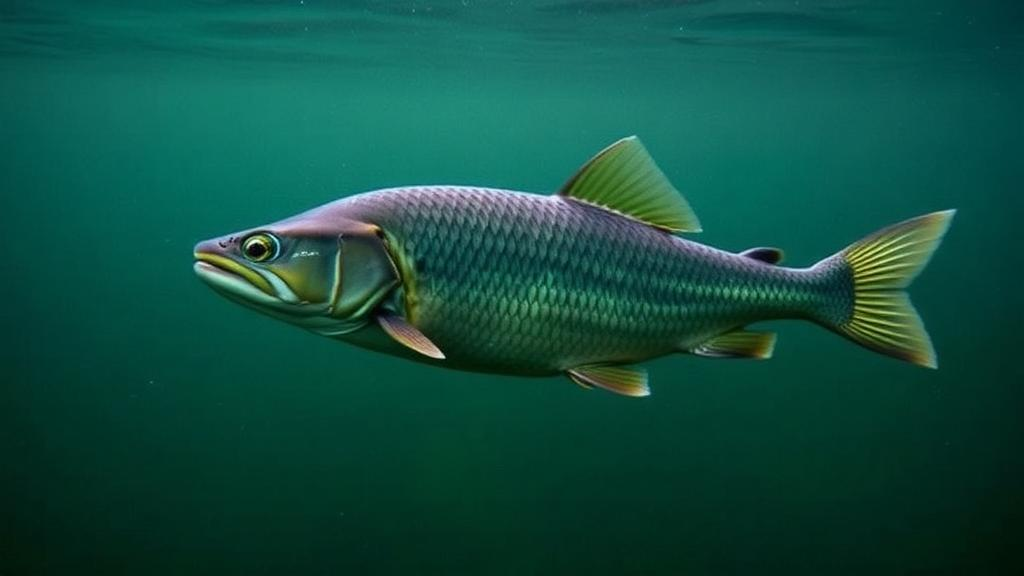
Freshwater ecosystems are among the most imperiled environments on Earth, and the wildlife they support is vanishing faster than almost any other group. The most recent Living Planet Report by WWF found that freshwater wildlife populations declined by 85 percent globally between 1970 and 2020, while in Europe roughly half of all freshwater species now carry a threatened status. Against this backdrop, a new review published in Discover Conservation by Reagan Pearce of University College London and colleagues examines one of conservation’s most ambitious tools: the reintroduction of locally or nationally extinct species. The review sifts through decades of global fish reintroduction projects to extract the lessons that could guide the United Kingdom’s first-ever reintroduction of an extirpated freshwater fish, the burbot, a serpentine predator that vanished from English rivers in the 1960s.
Species reintroductions are a specialized form of translocation, the movement of organisms from one place to another. Where translocation can serve many purposes, a reintroduction specifically returns a species to an area it once occupied but from which it has been lost. The practice has a surprisingly long history. Australasia hosted the first recorded conservation translocations when, in the 1880s, large numbers of kakapo and kiwi were moved to an offshore island to shield New Zealand’s native birds from introduced mammalian predators. Deliberate releases aimed at restoring wild populations date back to the 1910s, but it was the successes of the 1960s and 1970s that elevated reintroduction into a mainstream conservation strategy. In the United States, a captive breeding and release program for the peregrine falcon, combined with the ban of the pesticide DDT, lifted breeding pairs from around 40 in 1975 to more than 1,600 by 1999. The Arabian oryx, extinct in the wild by the mid-1970s, was returned to Oman in 1982 from captive stock and rebuilt to a wild population of 1,100 individuals.
Formal frameworks eventually caught up with practice. The International Union for the Conservation of Nature issued its first position statement on translocations in 1987, established a dedicated specialist group within a year, and made official reintroduction guidelines policy in 1995, updated in 2013. According to the IUCN’s Conservation Translocation Specialist Group, more than 1,500 species have now been translocated worldwide. The guidelines emphasize deciding when translocation is appropriate, careful release strategy and site selection, post-release monitoring, feasibility and risk assessment, and the dissemination of results. Yet success is notoriously hard to define, because projects differ enormously in planning, methods, budgets, and monitoring. An analysis of 293 animal translocation studies by Berger-Tal and colleagues identified more than 1,200 individual difficulties, underscoring that every project faces a unique tangle of species requirements, design choices, and resource constraints. The key pillars of success emerged as good quality release habitat, deep understanding of the species’ biology and behavior, and efficient post-release monitoring.
Reintroductions also carry a well-documented taxonomic bias. Of the 293 animal translocations analyzed in one major review, 106 involved mammals and 66 birds, while only 35 involved fish. A separate study of 699 reintroductions from IUCN data confirmed that mammals and birds are overrepresented relative to their prevalence in nature while fish are underrepresented, and intriguingly, more than half of the reintroduced birds were classified as Least Concern, suggesting that national priorities rather than global extinction risk often drive these projects. Beyond taxonomy, reintroductions face recurring social and biological hazards. Disease risk must be weighed, both from released animals introducing pathogens and from parasites that might block survival in a new environment. Public attitudes can be decisive: the reintroduction of Eurasian lynx to the Vosges Massif in France between 1983 and 1993 was undermined by illegal killing that organizers had failed to anticipate because they had not adequately researched local sentiment, and the population never became self-sustaining. Climate change adds a further layer of complexity, prompting the IUCN to add new categories such as assisted colonisation and ecological replacement to its guidelines.
When the review turns specifically to fish, the record becomes both richer and more sobering. Cochran-Biederman and colleagues previously identified 260 individual fish reintroductions from 75 published studies spanning 1989 to 2013, and Pearce’s team added 64 more cases published through 2024, bringing the global total to 324 documented projects. Of the original 260 cases, 42 percent were classified as failures. Among the 64 additional cases, 39 percent were successes, 23 percent partial successes, and 17 percent failures, with 21 percent impossible to classify because published information was insufficient. Success was judged primarily on reproductive outcomes: survival of released fish for at least six months, spawning after reaching sexual maturity, and recruitment of offspring into the breeding population. Strikingly, in more than half of the partially successful cases, it was a lack of evidence for reproduction, rather than demonstrated failure, that prevented full success, pointing to chronic weaknesses in monitoring rather than necessarily in the biology.
The causes of failure were more varied than the drivers of success, but one variable towered above the rest: whether the initial cause of the species’ decline had been addressed. Among failed cases, 65 percent had not tackled the original driver of loss, while 68 percent of successful projects had. Habitat quality ranked second, with confirming the presence of required physical habitat the single most important action for avoiding spawning failure. Stocking variables mattered too, in ways that should give hatchery managers pause: 71 percent of recruitment failures were associated with hatchery-reared fish, implicating the genetics and rearing conditions of source populations. Intrinsic species traits played a role, with migratory species surviving at least six months after release more often than non-migratory ones, 94 percent versus 83 percent, but habitat and stocking variables were ultimately considered the most influential factors determining outcomes.
Geography matters as much as biology. North America dominates the fish reintroduction literature, accounting for 75 percent of the cases in the earlier review and 45 percent of the newer additions, with Oceania contributing 38 percent of the latter, mostly from Australia. Europe, despite having 37 percent of its freshwater fishes threatened, contributed only about 12 percent of documented cases. North American projects frequently rely on piscicides such as rotenone to remove invasive fish before native species are returned; 20 percent of the recent North American cases used a piscicide and another 24 percent used mechanical mixed methods. These chemicals can harm non-target zooplankton and macroinvertebrates and sometimes fail to eradicate the target species, and public trust in their use is fragile even where they have achieved dramatic results, such as the 95 percent reduction of invasive sea lamprey in the upper Great Lakes. European projects offer complementary lessons: German work on the European weatherfish showed the value of careful stocking strategy and habitat assessment, a central German project for the bleak demonstrated environmental DNA monitoring as an inexpensive detection tool, and Hungarian efforts combined translocation, captive breeding, and restocking to support the endemic European mudminnow.
The United Kingdom presents a distinctive case. The country has a growing reintroduction culture, from white-tailed eagles in 1975 through red kites, Eurasian beavers, pine martens, and the short-haired bumblebee, whose return required improved management of 850 hectares of flower-rich grassland that also benefited the rare shrill carder bee. Yet no extirpated fish species has ever been reintroduced to Britain. The candidate is the burbot, the only freshwater member of the cod family, which historically inhabited 42 eastern-flowing rivers in England before being driven out by widespread river channelization and the severing of river-floodplain connections that destroyed its spawning and larval habitats. The last recorded catch came from the Old West River near Aldreth, Cambridgeshire, in 1969. The obstacle is formidable: rivers in Great Britain now average one artificial barrier, whether weir, dam, or lock, for every 1.5 kilometers, leaving only about 1 percent of rivers in England, Scotland, and Wales free-flowing, and the burbot’s life cycle depends precisely on the lateral floodplain connectivity that has been lost.
The review argues that any English burbot project should follow a structured adaptive framework such as the Open Standards for the Practice of Conservation, which mirrors the IUCN’s planning and implementation stages. The groundwork is already partly laid: research since the 2000s has identified the loss of lateral floodplain spawning habitat as the cause of decline, candidate sites of sufficient quality have been identified, and the closest genetic relatives of the extinct English population have been traced to the western European subclade. Stocking strategy remains a critical open question. Continental projects show that annual releases for at least ten years are needed before the first evidence of natural reproduction appears; Belgium releases larvae annually into the Grote Nete system, trading numbers for lower rearing costs, while Germany stocks fingerlings, which survive better because of their greater swimming capacity. Monitoring will need to combine electrofishing, environmental DNA, bioacoustics, and visual surveys across life stages, a resource-intensive mix that Belgian and Dutch projects have shown is essential given how difficult spawning sites are to locate.
Ultimately, the review’s central message is that reintroductions are not short-term fixes but long-term socio-ecological investments. American projects such as the lake sturgeon and barrens topminnow reintroductions in Tennessee succeeded largely because public engagement built durable support, while the multi-state bull trout effort in the United States, organized into six recovery units and 109 core areas with structured decision-making, demonstrates the coordination that large-scale fish recovery demands. For the burbot, early national surveys found more than 90 percent of anglers supported reintroduction, but attitudes must be re-measured locally, and floodplain restoration will require engaging landowners and flood authorities, work that aligns conveniently with England’s Natural Flood Management and Environmental Land Management policies. Above all, the authors urge that findings from every project, successful or not, be shared through open conservation databases so that the hard-won lessons of three decades of fish reintroductions can finally flow into the rivers that need them most.
Subject of Research: Global fish species reintroductions and their lessons for a potential burbot reintroduction in UK rivers
Article Title: An updated review of fish species reintroductions: global lessons to inform future riverine fish conservation in the UK
Article References: Pearce, R. H., Sayer, C. D., & Chadwick, M. A. (2026). An updated review of fish species reintroductions: global lessons to inform future riverine fish conservation in the UK. Discover Conservation, 3(1), Article 2. https://doi.org/10.1007/s44353-025-00072-w
Image Credits: AI Generated
DOI: 10.1007/s44353-025-00072-w
Keywords: fish reintroduction, burbot, conservation translocation, freshwater biodiversity, UK rivers, IUCN guidelines, habitat restoration, stocking genetics, post-release monitoring, environmental DNA, rewilding, Discover Conservation
Cite Scienmag News
Margaret Porter. (October 2, 2026). Bringing Lost Fish Home: Global Lessons for Reintroducing Britain’s Extinct River Species. Scienmag. https://scienmag.com/bringing-lost-fish-home-global-lessons-for-reintroducing-britains-extinct-river-species/
Margaret Porter. "Bringing Lost Fish Home: Global Lessons for Reintroducing Britain’s Extinct River Species." Scienmag, 2 October 2026, https://scienmag.com/bringing-lost-fish-home-global-lessons-for-reintroducing-britains-extinct-river-species/. Accessed 4 October 2026.
Margaret Porter. "Bringing Lost Fish Home: Global Lessons for Reintroducing Britain’s Extinct River Species." Scienmag. October 2, 2026. https://scienmag.com/bringing-lost-fish-home-global-lessons-for-reintroducing-britains-extinct-river-species/


