


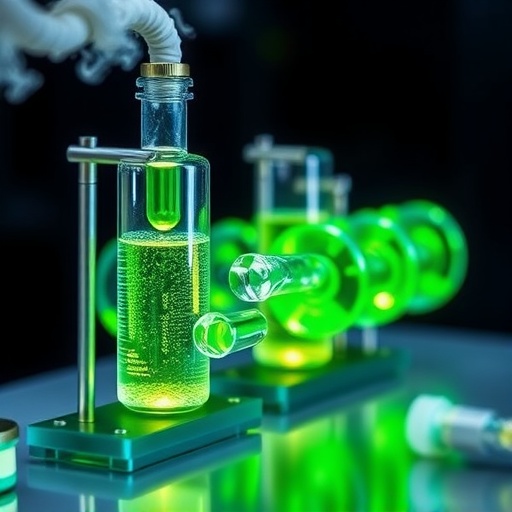
In recent years, the Fischer-Tropsch synthesis (FTS) has garnered significant attention as an efficient means for converting carbon sources, such as coal, natural gas, and biomass, into clean fuels and numerous chemicals essential for our modern world. This process transforms synthesis gas, a mixture of carbon monoxide and hydrogen, into hydrocarbons through facilitated reactions that require finely-tuned catalysts. Among the various catalysts employed in industrial applications, iron-based catalysts have emerged as frontrunners due to their cost-effectiveness and adaptability, particularly for syngas with a low hydrogen to carbon monoxide ratio prevalent in coal and biomass-derived contexts.
Despite their advantages, iron catalysts face inherent challenges during the catalytic process, primarily due to frequent phase transitions among metallic iron, iron oxides, and iron carbides. These transitions not only complicate the understanding of the underlying mechanisms but also undermine the stability of the catalysts over time. Moreover, side reactions—such as the water-gas shift (WGS) and CO disproportionation—result in excessive CO₂ emissions, significantly impacting carbon utilization efficiency. This generates an increasing demand for methods to optimize these catalysts for better performance and sustainability.
The research surrounding iron catalysts has highlighted the critical role of the various active phases generated during FTS, especially iron carbides, which are now recognized as the primary contributors to catalytic activity. Within iron carbides, distinct phases such as ε-Fe₂C, χ-Fe₅C₂, and θ-Fe₃C demonstrate unique catalytic performances and can easily interconvert under operational conditions. These transformations raise important questions regarding how best to stabilize the most catalytically favorable phase to maximize product yield and optimize selectivity.
To tackle the persistent problems of high CO₂ selectivity, the latest advances in iron-based FTS catalysis propose several innovative strategies. Firstly, a primary focus is on stabilizing phase-pure iron carbides. This approach minimizes their oxidation into less active species, such as Fe₃O₄, thereby inhibiting the formation of primary CO₂. This stabilization not only preserves the active phases but also enhances their catalytic functionalities, contributing to better carbon efficiency.
Secondly, researchers are increasingly applying hydrophobic surface modifications to iron catalysts. By engineering the surface properties to reduce water adsorption, these modifications effectively suppress CO₂ generation through secondary pathways, such as the water-gas shift reaction. This is especially significant in scenarios where the presence of water can detrimentally influence catalyst performance and stability.
Furthermore, the innovative use of two-dimensional materials such as graphene has sparked renewed interest in FTS research. Graphene confinement offers numerous advantages, including enhanced thermal stability, structural robustness, and improved electronic properties. Encapsulating iron carbides within graphene not only tunes their electronic environment but also acts to inhibit CO₂-generating pathways. Such advancements underline the multifunctional capabilities of graphene and similar materials in reinforcing the efficacy of iron-based catalysts, allowing for selective production of desired long-chain hydrocarbons.
The implications of these strategies are substantial. By fostering active phase stability, employing hydrophobic modifications, and leveraging advanced material science, researchers have laid the groundwork for creating next-generation iron-based catalysts that are not only more efficient but also environmentally sustainable. Emphasizing low CO₂ selectivity while maintaining high catalytic activity is now a cornerstone of ongoing FTS development, vital for meeting the rising global demand for cleaner energy sources.
As these methods continue to evolve, they present an opportunity for creating FTS processes that align with the broader objectives of achieving net-zero emissions. For instance, the ability to significantly reduce CO₂ emissions while simultaneously improving product yield is crucial for catalyzing societal shifts towards sustainable fuels and chemicals. In this context, the transition to using iron-based catalysts with greater carbon efficiency could be pivotal in supporting global efforts for carbon reduction.
The relevance of these advancements in iron-based FTS catalysis spans multiple sectors, including energy production, manufacturing, and environmental conservation. Enhanced carbon utilization efficiency not only benefits industrial processes but also contributes to the overarching goal of mitigating climate change impacts. As the quest for cleaner energy solutions accelerates, the focus on refining iron catalysts remains a fundamental aspect of research and development, promising to reshape the future of fuel synthesis.
Collectively, the recent findings and innovations mentioned herein underscore the importance of combining various strategies to boost the performance of iron-based FTS catalysts. By addressing both the mechanistic intricacies and the environmental implications, researchers are advancing towards a more sustainable model of carbon resource utilization. The integration of hydrophobic engineering, phase stabilization, and advanced material applications represents a holistic approach that could redefine the efficiency of Fischer-Tropsch synthesis, ensuring that the technology continues to evolve in alignment with ecological priorities.
In summary, the advancements in stabilizing active iron carbide phases, applying innovative surface modifications, and utilizing advanced materials like graphene stand poised to catalyze significant progress in Fischer-Tropsch synthesis. By mitigating CO₂ emissions and maximizing carbon efficiency, these innovations play a crucial role in the collective effort to develop sustainable energy solutions that are essential for future generations.
Cite Scienmag News
Bethany Barker. (September 25, 2025). Breakthroughs in Iron-Based Fischer-Tropsch Synthesis Achieve Enhanced Carbon Efficiency. Scienmag. https://scienmag.com/breakthroughs-in-iron-based-fischer-tropsch-synthesis-achieve-enhanced-carbon-efficiency/
Bethany Barker. "Breakthroughs in Iron-Based Fischer-Tropsch Synthesis Achieve Enhanced Carbon Efficiency." Scienmag, 25 September 2025, https://scienmag.com/breakthroughs-in-iron-based-fischer-tropsch-synthesis-achieve-enhanced-carbon-efficiency/. Accessed 4 September 2026.
Bethany Barker. "Breakthroughs in Iron-Based Fischer-Tropsch Synthesis Achieve Enhanced Carbon Efficiency." Scienmag. September 25, 2025. https://scienmag.com/breakthroughs-in-iron-based-fischer-tropsch-synthesis-achieve-enhanced-carbon-efficiency/


